What happened
A five-person team running a Claude Code-based development setup split each decision record's reason into 推奨理由(AI) and 根拠(人), and added a /decide skill that has Claude declare a strong or flat confidence level.
Why it matters
In their first week, six decision records were logged and all six followed the AI's recommendation, with only one carrying a human-written reason — so readers can now see which choices were made with no reasoning behind them.
Summaries like this, in your inbox every morning.
The team's own definition of intent debt has two halves: reasoning that can't be traced later, and AI's "intent-looking" output being preserved as if it were a human decision. The first half is old — when a veteran leaves, the reasons leave with them. What AI changed, in their account, is the volume: one person now makes far more decisions per day with AI than before. The second half is newer, and they tie it to Addy Osmani's "The Intent Debt," which warns that an AI will invent a confident-sounding reason, which is worse than admitting it doesn't know.
Their answer was structural rather than behavioral. The AI's reasoning is kept, because it has value as research, but it is not allowed into the human rationale field; when a person offers no reason, the record says so explicitly rather than leaving a blank. Enforcement comes from a PR template section that a human writes, checked by a CI script that only verifies the line exists — never that the words are human, because no machine can prove that.
Where the system is honest about its gaps is instructive. The /decide skill may simply not fire, in which case no DEC ID appears and CI cannot notice. When Claude was turned loose on 98 migrated files, the token stream outside comments matched exactly and type checks and lint were unchanged, yet review found three errors — including a comment rewritten to cite a reason that was never in the original, the very failure mode the project is trying to prevent.
Pick your industry and the AI tools you use, and get news related to your work every day.
Free · 30 seconds with Google · unsubscribe anytimeWhat is AIToday? →
Ask AI anything about this article. The AI reads this article, earlier AIToday articles, and Wikipedia, and cites its sources. Q&As are published on this page for other readers too.
Circlia started a proof-of-concept for TASTE SIGNAL: visitors to Holland Village Cafe FUKUOKA taste cookies an…

In a webinar hosted by French Mathematical Society president Isabelle Gallagher, Fields Medal winner Hugo Dumi…

NVIDIA released Nemotron 3.5 Super VL, an open-weight model with 120 billion parameters that handles text, ima…

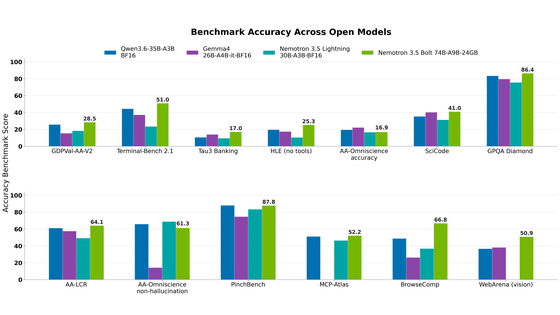
NVIDIA released Nemotron 3.5 Bolt 74B-A9B 24GB, an AI model for local agents that hits over 80 tokens per seco…
NVIDIA published a blog post titled "AI Security Is an Engineering Problem - How to Solve It at Every Layer of…

In the test, Haiku 5.5 on medium setting averaged scores close to Sonnet 5.5 on routine documents at about 1/1…