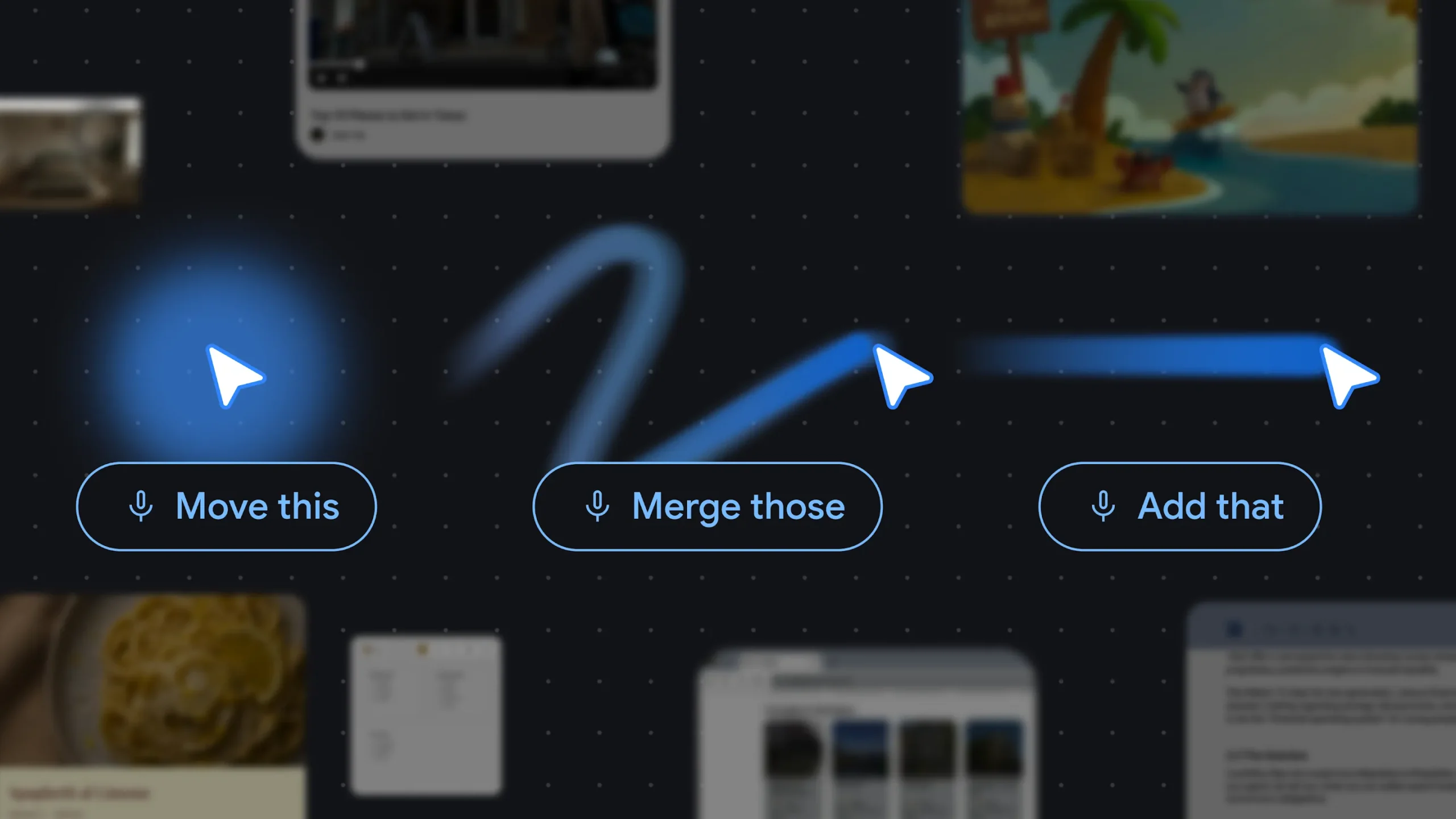
Deepmind researchers are integrating Pointer Engineering into Gemini in Chrome, where users can select parts of a webpage and ask questions about them. The feature will launch on the upcoming Googlebook as 'Magic Pointer.'
Instead of dragging content into an AI tool via detailed prompts, users point at on-screen elements and issue shorthand commands like 'Fix this' or 'Move that here,' combined with speech and gestures. Pixels are converted into 'structured entities' such as places, dates, or objects—for example, a handwritten note becomes an interactive to-do list.
The approach streamlines short, chat-like everyday interactions but does not replace prompt engineering; more complex tasks still require precise descriptions, according to Deepmind.
Summaries like this, in your inbox every morning.
Pick your industry and the AI tools you use, and get news related to your work every day.
Free · 30 seconds with Google · unsubscribe anytimeWhat is AIToday? →
Ask AI anything about this article. The AI reads this article, earlier AIToday articles, and Wikipedia, and cites its sources. Q&As are published on this page for other readers too.
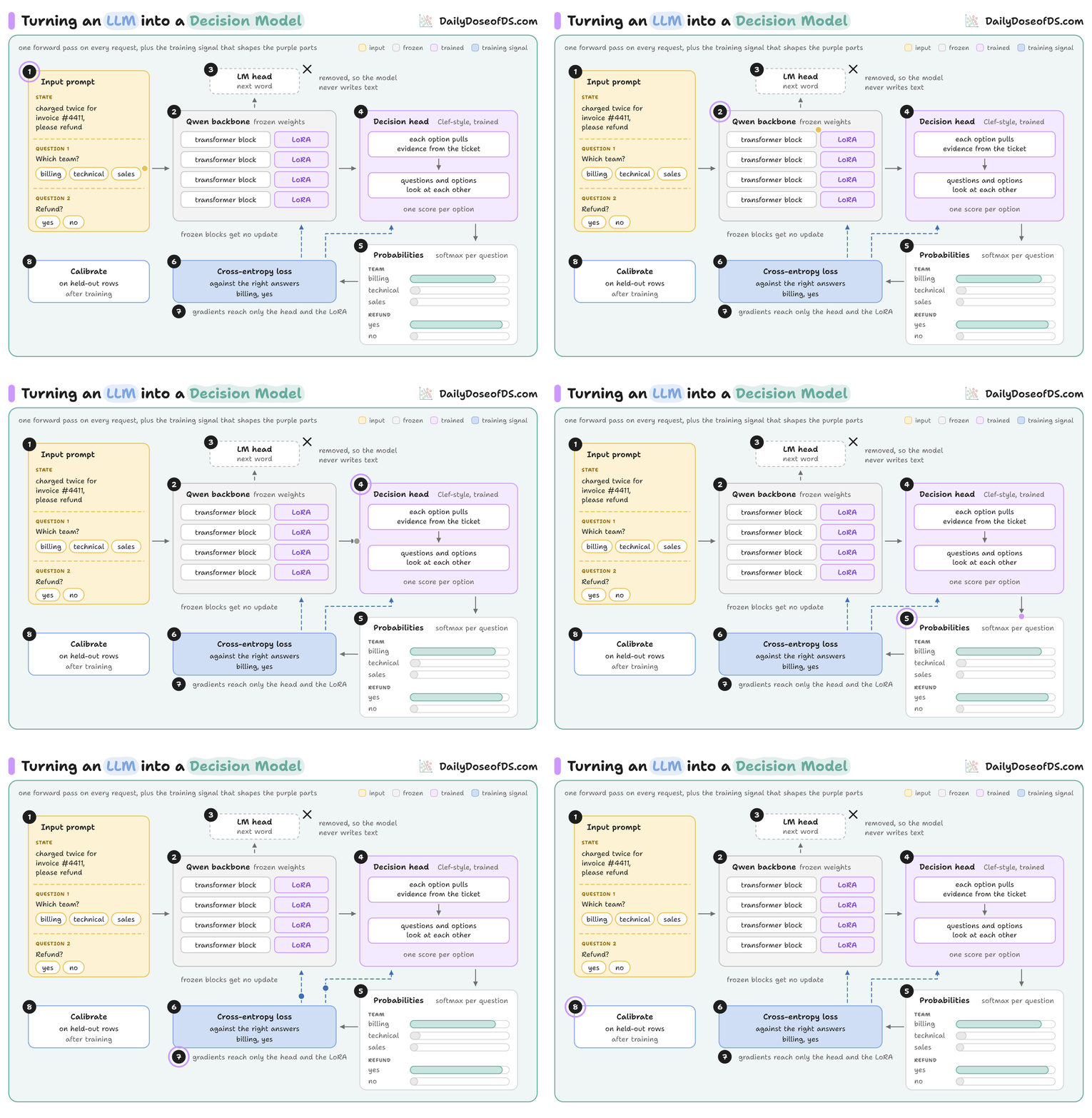
A follow-up agent using TrueForge and Jev matched Opus accuracy on 40 requests at 150x lower decision cost
An FA engineer described running spec drafts, test procedures, and reports through Claude Desktop, feeding rou…

Aparna Nair, IBM's chief talent, leadership, and culture officer, said generalists alone "will cut it" in the…

Vinci4D provides chip-design simulation software that trains on physics equations instead of customer data, an…

Reflection AI introduced Beam, an open-weight model for agentic coding and long-horizon tasks, with 501 billio…
A developer released agent-guardrails, a one-script Python standard-library plugin that guards Bash, Write, Ed…

