
What happened
On August 5, 2026, Schrödinger announced it will deploy its Bunsen agentic AI co-scientist and computational tools across Bristol Myers Squibb's research organization, expanding their existing collaboration in early-stage drug discovery.
Why it matters
Bristol Myers Squibb is betting on AI-driven, physics-based modeling to refine molecule selection and accelerate discovery decisions as it faces patent cliffs on blockbuster drugs like Eliquis and Opdivo. The company's Q2 2026 revenue reached US$12,973 million and net income US$3,317 million, giving it financial room to invest in platforms like Bunsen while managing debt and its dividend.
What to watch
Bristol Myers Squibb's investment narrative projects $40.1 billion revenue and $8.6 billion earnings by 2029, assuming 6.2% annual revenue decline. Consensus fair value is $62.96, though the stock's ability to replace expiring blockbuster revenue remains the core risk investors face.
Summaries like this, in your inbox every morning.
Bristol Myers Squibb's expanded Schrödinger partnership arrives at a critical juncture for the pharmaceutical company. The company faces substantial patent cliffs on blockbuster drugs Eliquis and Opdivo, creating urgency to accelerate its pipeline and refine molecule selection through computational efficiency. By deploying Bunsen's AI-driven physics-based modeling across its research organization, Bristol Myers Squibb is signaling confidence in AI's role in offsetting this revenue headwind—a move supported by its recent Q2 2026 financial performance, which showed revenue of US$12,973 million and net income of US$3,317 million, demonstrating the financial capacity to invest in next-generation platforms.
However, the partnership's incremental impact on R&D productivity does not materially alter Bristol Myers Squibb's near-term strategic imperative: replacing expiring blockbuster cash flows. Analysts remain divided on the company's ability to execute this transition. Consensus forecasts project $40.1 billion revenue and $8.6 billion earnings by 2029, with 6.2% annual revenue decline—implying an earnings boost of roughly $1.3 billion from current levels of $7.3 billion. Bearish analysts, by contrast, assume steeper 8% annual revenue declines and earnings near US$8.1 billion by 2029. This variance underscores that the real test of Bristol Myers Squibb's investment case lies not in incremental AI productivity gains, but in how successfully the company's pipeline fills the revenue gap left by patent expirations and pricing pressure.
Pick your industry and the AI tools you use, and get news related to your work every day.
Free · 30 seconds with Google · unsubscribe anytimeWhat is AIToday? →
Ask AI anything about this article. The AI reads this article, earlier AIToday articles, and Wikipedia, and cites its sources. Q&As are published on this page for other readers too.
Chunghwa Telecom president Rong-shy Lin said the shift from conversational AI to autonomous AI agents is resha…
CoreWeave fell 5% in premarket trading Friday and was on track to finish the week down 15%, after rebounding f…
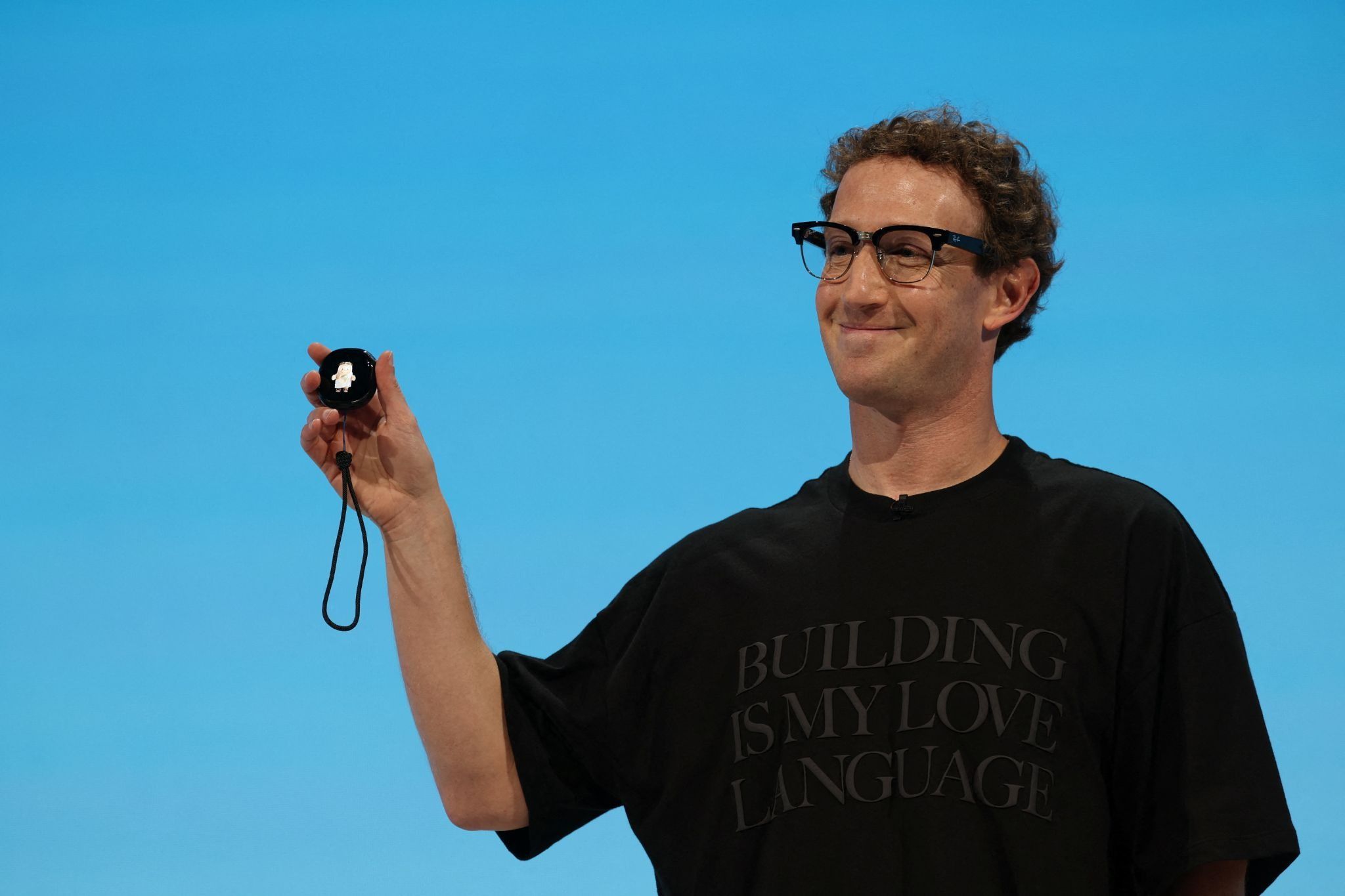
Apple and Meta said they would jointly release a new open-weight AI model designed to run on high-end Macs, ai…
Investors put $38.5 billion into Asian startups in Q3, per Crunchbase data

A writer and entrepreneur opened his daily to-do list and found 156 items, and concluded that an AI assistant…

A longtime Anthropic investor told Fortune he expects shares priced around $1.8 trillion, below the company's…