
What happened
OpenAI rolled out Ultrafast, a new mode for GPT-5.6 Sol that processes at 14x the speed of standard mode, delivering up to 750 output tokens per second. The feature is currently in preview and available to a small group of customers; expansion depends on capacity growth.
Why it matters
Real-time responsiveness has typically required choosing a smaller or more specialized model, forcing businesses to trade capability for speed. Ultrafast suggests it is now possible to maintain GPT-5.6 Sol's full power while achieving rapid response, potentially unlocking new use cases in incident response, customer service, financial analysis, and e-commerce where latency matters.
What to watch
Ultrafast is powered by OpenAI's partnership with chipmaker Cerebras and is currently in preview for a limited group; OpenAI says access will expand as capacity grows. Competitors like Anthropic offer Claude's fast mode, though it does not match Ultrafast's speed.
Summaries like this, in your inbox every morning.
OpenAI's Ultrafast mode addresses a fundamental engineering constraint that has long shaped AI product design: the speed-versus-capability tradeoff. Historically, achieving real-time latency required deploying smaller models or ones optimized for narrow tasks, sacrificing the richness and general-purpose capability of flagship models. By achieving 14x speedup on GPT-5.6 Sol—outputting 750 tokens per second—Ultrafast suggests that infrastructure and algorithmic advances (backed by Cerebras chipmaking hardware) may be loosening this constraint.
The announcement also reflects competitive pressure from Anthropic, which has offered fast-mode variants of Claude, though at lower speeds. Notably, OpenAI frames Ultrafast not as a product for individual users seeking quicker chat responses, but as an enabling technology for high-stakes business workflows: incident response (where latency can affect mean time to resolution), customer service (where response time drives satisfaction), financial market analysis (where microseconds matter), and e-commerce (where real-time personalization drives conversion). These are domains where speed directly translates to revenue or risk mitigation, likely justifying premium pricing and early-stage limited availability.
Pick your industry and the AI tools you use, and get news related to your work every day.
Free · 30 seconds with Google · unsubscribe anytimeWhat is AIToday? →
Ask AI anything about this article. The AI reads this article, earlier AIToday articles, and Wikipedia, and cites its sources. Q&As are published on this page for other readers too.
In Q2, billionaires or their funds sold six 'Magnificent Seven' AI stocks

Nvidia was rising early Friday, even as the wider chip sector kept falling, Barron's reported

ElevenLabs completed a $300 million employee tender at a $22 billion valuation, and co-founder Mati Staniszews…

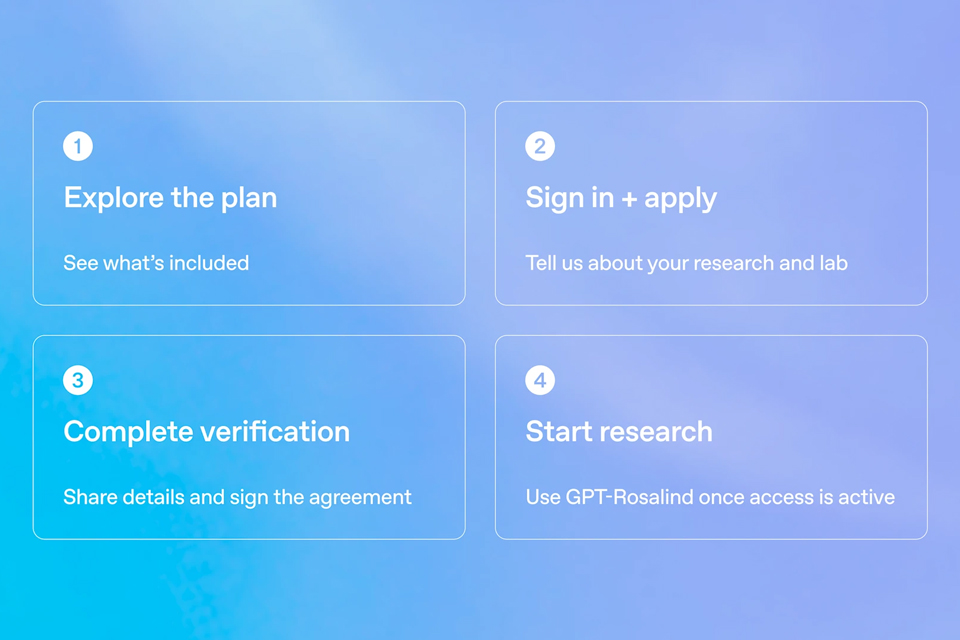
On October 15, OpenAI announced the Rosalind Academic Plan, giving approved US university labs free access to…
Neostellar Capital principal Evan Schlossman said CoreWeave's $103.7 billion in remaining performance obligati…

A Qiita article compared automated red-teaming methods for LLM apps — GCG, PAIR, and TAP — using mock implemen…