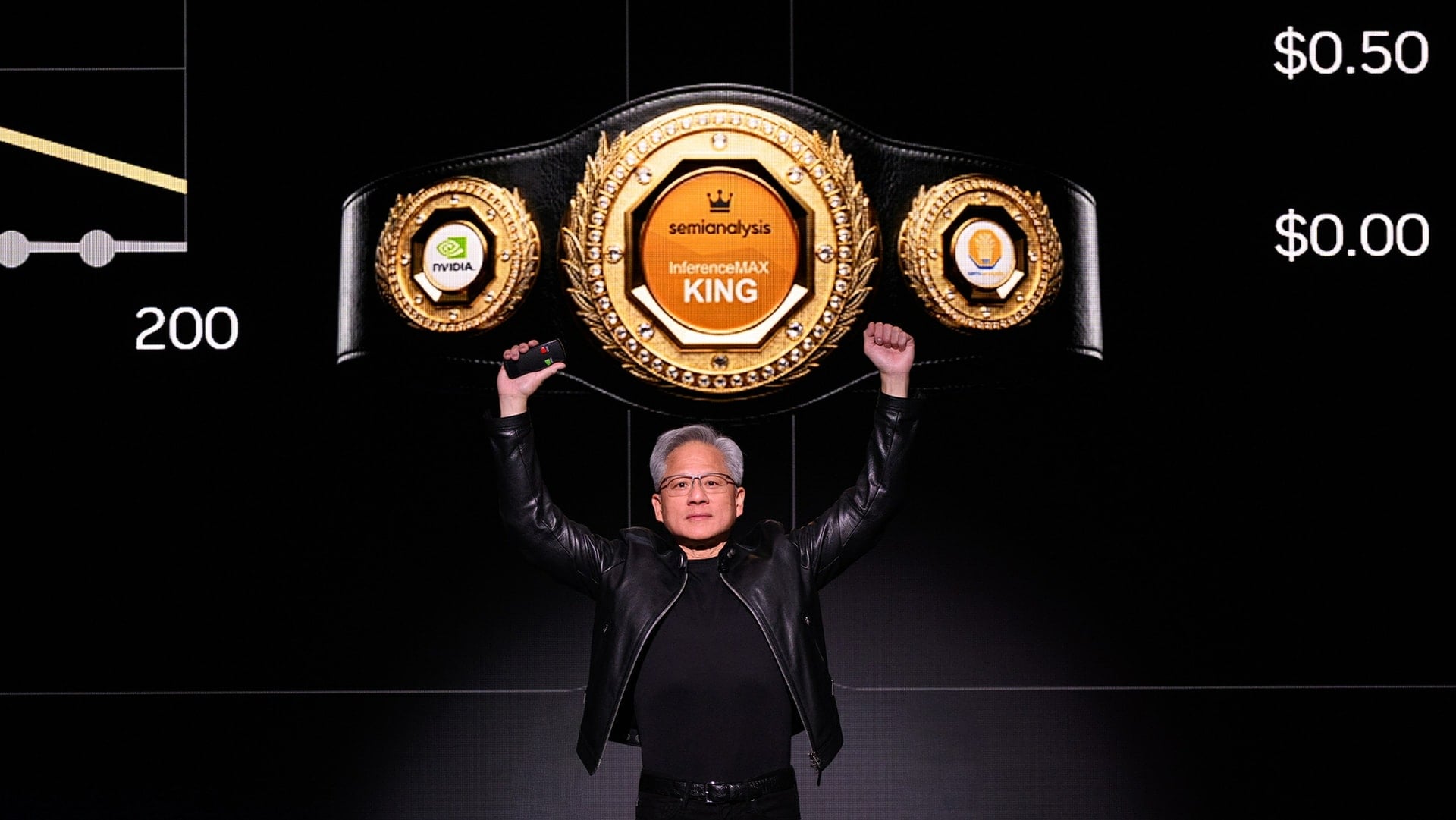
NVIDIA has secured a $500 billion financing deal with Wall Street firms to deploy about ten gigawatts of AI compute capacity, but some investors believe this is insufficient for next year's needs alone.
The deal reflects a broader trend of securitizing GPU capacity into a tradable asset class, spreading risk across pensions and hedge funds.
However, experts warn that if AI model improvements plateau or hyperscalers reduce spending—as Google has already done—the value of the chips backing these securities could compress sharply before the underlying debt matures.
What happened
Axios Senior AI Reporter Madison Mills discussed NVIDIA's newly announced $500 billion financing agreement with Wall Street firms on CNBC on Thursday, August 13. The deal will deploy about ten gigawatts of compute capacity. Some investors Mills spoke with believe the $500 billion package is insufficient for next year's needs alone.
Why it matters
Wall Street is turning compute itself into a tradable asset class, with CME Group and Intercontinental Exchange moving into GPU futures spot trading, and OpenAI hiring finance team leaders to work on GPU securities. If successful, this could spread financing risk across pension funds, retirement accounts, and hedge funds. However, the economics rest on the assumption that AI labs will need ever-increasing compute; if model improvements plateau and frontier AI labs pull back spending—as Google has already done by rolling back AI ambitions after going free cash flow negative—the collateral value of the chips backing these securities could collapse before the debt matures.
What to watch
Whether compute demand assumptions hold as the underlying driver of the asset class. Mills noted that one investor worried about "diminishing model returns"—the risk that leading AI labs already have effective models and may not need proportional compute increases going forward. A sustained pullback in capex spending by hyperscalers would signal erosion of long-term compute demand.
Ask the AI about this article →
NVIDIA's $500 billion compute financing deal represents a pivotal moment in how Wall Street is treating AI infrastructure. The agreement, announced with major financial firms, has prompted a fundamental shift: compute capacity itself is being securitized and packaged as a tradable asset. This mirrors the evolution of commodities like crude oil or power spreads, allowing institutional investors—pension funds, retirement accounts, and hedge funds—to hold exposure to GPU-driven infrastructure without owning the hardware directly.
However, the structure depends critically on a single assumption: that AI labs will continue to demand ever-increasing compute resources to train progressively better models. Mills highlighted a contrarian view circulating among sophisticated investors: the risk of "diminishing model returns," where existing frontier models may already be powerful enough that marginal improvements require less compute than the market is currently pricing in. Google's recent pullback on AI capex spending and shift to free cash flow positive operations suggests that even the largest hyperscalers are reconsidering their compute investment assumptions. If this trend spreads, the collateral underpinning the securitized compute market—and the securities issued against it—could face significant pressure.
The tension between the bull and bear cases will likely determine whether compute becomes a durable asset class or a sophisticated financing structure built on unproven long-term demand. Mills noted that some investors already believe the $500 billion package is "not even enough" to meet next year's projected ten-gigawatt need, suggesting the market is pricing in sustained growth. Whether that growth materializes depends on whether the AI industry's capex cycles are driven by genuine demand for better models or by financial engineering sustaining an expansion whose underlying returns remain uncertain.
For example, today's edition would include:
AI-summarized, only the topics you pick — one digest a day via Email, Slack, or Discord.
Free · takes 30 seconds · unsubscribe anytimeWhat is AIToday? →
Ask AI anything about this article. Q&As are published on this page for other readers too.
Aranya Inc., a startup founded last year, launched today with $11 million in funding

CBTS Technology Solutions LLC launched Forge Agents, a platform that turns a plain-language job description in…

Phonely Ltd. launched Alma, a large language AI model built for voice agents and trained on over 10 million re…

Imec CEO Patrick Vandenameele said at SEMICON Taiwan 2026 that the Belgian research center is broadening its c…
Alphabet's AI Overviews now reach over 2.5 billion monthly users through Google Search, and its ad business ge…
Sarah O’Connor's book 'We Are Not Machines' explores how mechanization and AI have transformed the workforce…