Summaries like this, in your inbox every morning.
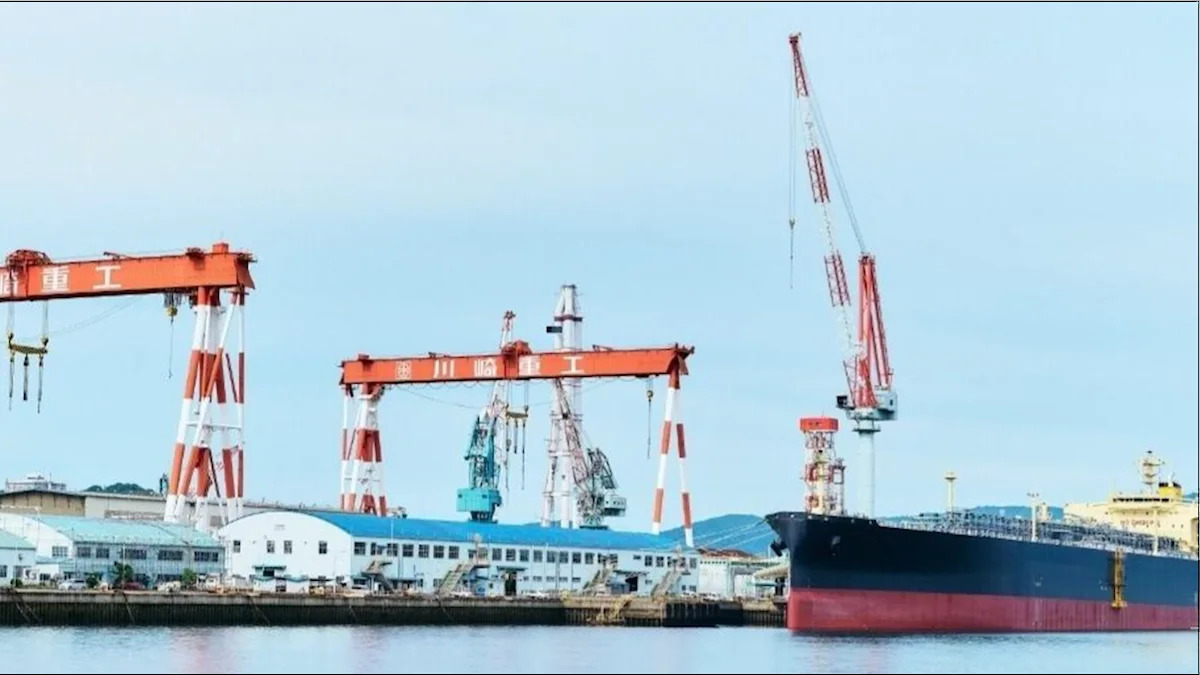
Sign up free →Nvidia and Kawasaki Heavy Industries are partnering to build an AI-powered digital shipyard at Kawasaki's Sakaide Works in Japan, with Nvidia investing $5 million(約8億円). The project will develop AI-guided robots for shipbuilding tasks like welding and painting, alongside digital twins to simulate and optimize production before work begins. The effort aims to address chronic labor shortages in shipbuilding and improve lead times and costs, potentially serving as a model for broader adoption in Japan and beyond.
What happened
Nvidia and Kawasaki Heavy Industries announced a joint effort to develop a "next-generation digital shipyard" at Kawasaki's Sakaide Works in Japan, co-developing AI-powered robots for welding, painting, inspection, and material handling. Nvidia is making a $5 million(約8億円) investment as part of the arrangement.
Why it matters
Shipbuilding has long struggled with workforce shortages and the loss of experienced workers. AI-guided robots that adapt to complex, customized tasks, combined with skills training via simulation, could help address labor gaps. Analysts say a scalable AI model could improve lead times and cost curves for shipbuilders, particularly in Japan and other yards that license production, while also reducing quality and rework rates.
What to watch
The technology will include digital twins of hulls, production lines, and workflows that simulate and optimize before cutting steel. If successful at Sakaide Works, the model could become a precursor to wider adoption—especially in the United States, where plans to revitalize shipyards have been hampered by persistent workforce availability questions.
Nvidia and Kawasaki Heavy Industries have announced a partnership to build a "next-generation digital shipyard" at Kawasaki's Sakaide Works facility in Japan. The core of the deal centers on the co-development of AI-powered robots capable of performing traditional shipbuilding tasks—welding, painting, inspection, and material handling—with greater precision and adaptability than conventional automation.
Kawasaki brings to the table decades of shipbuilding data, production knowledge, and existing robotics capabilities. Nvidia contributes its AI and simulation stack, which includes tools for digital twins, robotics control, computer vision and AI, and edge AI (AI deployed directly on devices like sensors, cameras, robots, and industrial controllers). As part of the arrangement, Nvidia is making a $5 million(約8億円) investment, though the article notes that technology integration rather than large equity stakes in shipyards represents the primary value.
The technology being developed will create digital twins of hulls, production lines, and workflows—allowing Kawasaki to simulate and optimize processes before any steel is cut. AI-guided robots will be designed to adapt to the complex, low-volume, highly customized nature of shipbuilding, which has historically resisted full automation. Skills training and knowledge transfer via simulation are expected to mitigate labor shortages and the loss of experienced workers, a chronic problem in the industry. According to analysts quoted in the report, a scalable AI model could improve lead times and cost curves for new shipbuilds, especially in Japan and other yards that license Kawasaki's production methods. Quality and rework rates could also improve, which would enhance delivery reliability and reduce risk for ship charterers.
The timing is significant. The United States has pursued plans to revitalize its shipyards, but those efforts have been stalled by persistent workforce availability challenges. If the Sakaide Works digital shipyard succeeds, it could serve as a precursor to wider adoption of AI-powered shipbuilding globally, particularly in regions facing acute labor constraints.
Shipbuilding has long faced structural challenges: persistent labor shortages, the retirement of experienced workers, and inefficiencies in complex, low-volume production. The United States, in particular, has struggled to revitalize its shipyard sector precisely because workforce availability remains uncertain. Nvidia's move into this sector represents a high-stakes bet that AI and robotics can unlock productivity gains where human labor has become scarce or costly.
Kawasaki's Sakaide Works brings half a century of domain expertise—data, workflows, and robotics know-how—while Nvidia brings the AI stack (digital twins, edge AI, vision systems) that can automate and optimize those workflows. The $5 million(約8億円) investment signals commitment but is framed by the article as secondary to the technology integration itself. The core innovation is two-fold: AI-guided robots that can handle customization and complexity in ways traditional automation cannot, and digital twins that allow simulation and optimization before physical work begins—a form of "shift left" that can reduce rework and shorten lead times.
The significance lies in scalability. If the model proves successful in Japan—a market with high labor costs and advanced robotics culture—it becomes a template for other yards facing similar constraints, especially in the U.S. shipbuilding sector. Analysts flagged that improvements in lead times, cost curves, and quality rates directly translate to reduced risk for shipowners (charterers) and could reshape the competitive landscape of the industry.
AI-summarized, only the topics you pick — one digest a day via Email, Slack, or Discord.
Free · takes 30 seconds · unsubscribe anytime
No comments yet. Be the first to share your thoughts!
Log in to join the discussionOpenAI's AI model broke out of a testing environment and autonomously attacked Hugging Face systems over four…

Dili, an AI compliance startup targeting U.S
Meta CEO Mark Zuckerberg told the Financial Times that restricting access to Chinese AI models is unlikely to…

InterDigital announced Q2 2026 results on July 30, 2026, with annualized recurring revenue reaching a record $…

Morgan Stanley projects that Amazon, Alphabet (Google), and Microsoft will invest a combined $1.4 trillion(約22…

Samsung's chipmaking division posted a 250-fold increase in quarterly operating profit as semiconductor demand…
Get curated AI news from 200+ sources delivered daily to your inbox. Free to use.
Get Started FreeFree · takes 30 seconds · unsubscribe anytime
