What happened
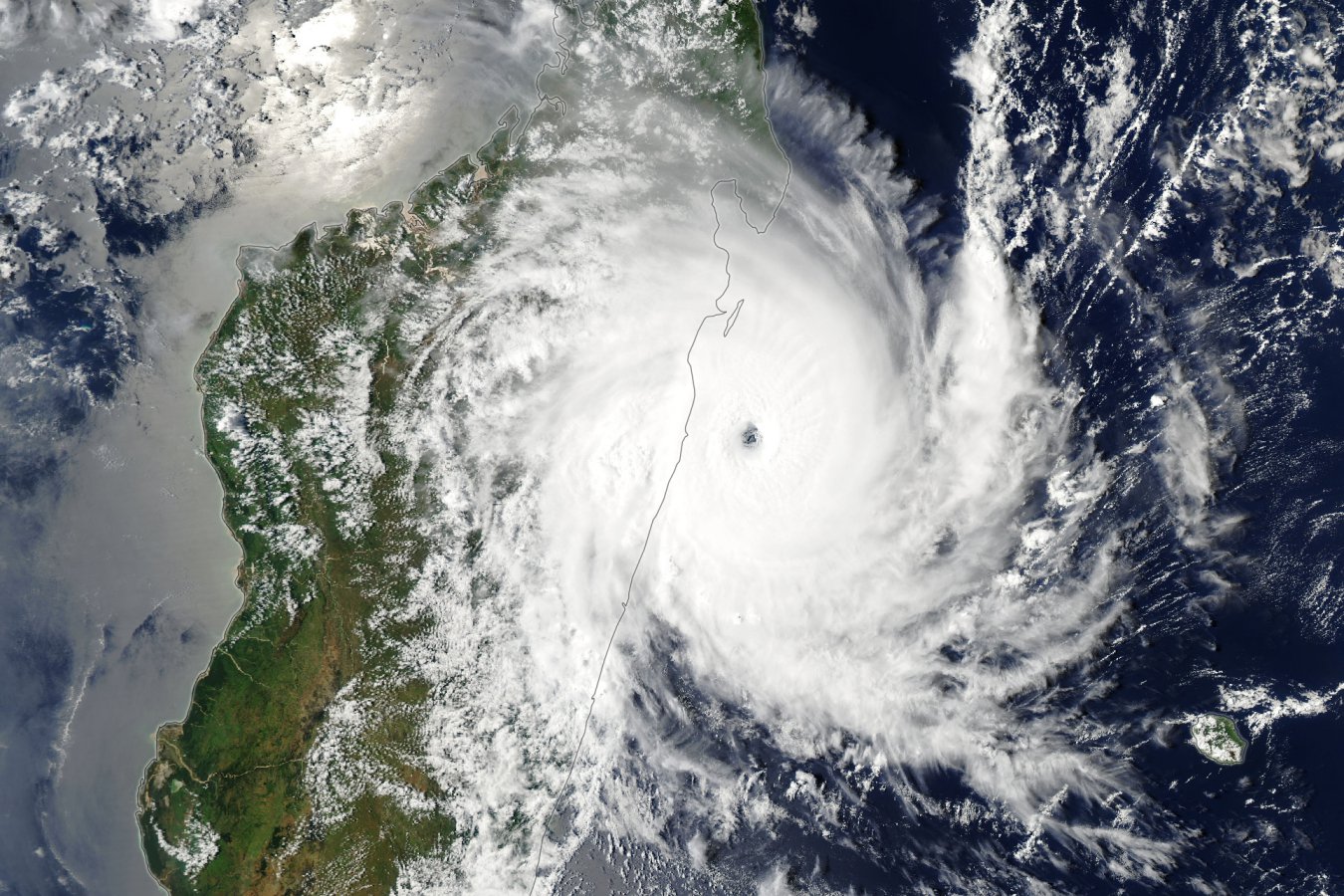
DeepMind's WeatherNext AI model can produce accurate cyclone predictions three days in advance—matching the accuracy current physics-based models achieve only two days out. The model generates a 15-day forecast in less than a minute on Google's Tensor Processing Unit chips, compared to days of supercomputer time for traditional weather simulations.
Why it matters
Cyclone forecasts one day further ahead could allow governments and emergency services to make evacuation decisions with more lead time, potentially saving lives. WeatherNext was trained on nearly 20 terabytes of atmospheric data and 5,000 historical storms, making it faster and less expensive to run than physics-based alternatives, though meteorologists stress that domain expertise remains essential to interpret whether AI outputs are sensible.
What to watch
The research acknowledges a key limitation: AI models trained on historical data may struggle to predict truly anomalous weather events driven by climate change. Some experts, including Tim Palmer at Oxford, argue for more rigorous testing—removing rare past events from training data and testing whether AI can still predict them—before weather forecasting relies solely on AI rather than physics-based models.
Summaries like this, in your inbox every morning.
DeepMind's advance in cyclone forecasting reflects a broader shift already underway in meteorology: AI models are outpacing traditional physics-based simulations in speed, cost, and in many cases accuracy. The body notes that global forecasting agencies have tested AI models alongside physics-based approaches in recent years and are reaching consensus that AI is faster, cheaper, and often more effective. Ferran Alet at DeepMind notes that advances are moving faster than the academic publication cycle can track—the work has evolved further since submission to a journal. Hannah Cloke at the University of Reading, an outside expert, observes that the field has experienced a dramatic shake-up in just a couple of years, with the cutting edge now roughly 18 months ahead of published papers.
Yet significant concerns remain. Tim Palmer at Oxford argues that AI models, by relying on training data drawn from past weather patterns, cannot predict truly anomalous events—a weakness that becomes critical as climate change pushes weather into new regimes. He advocates for testing that removes rare historical events from training data and checks whether AI models can still predict them. Palmer also flags an often-overlooked coupling: weather models and climate-change models share approximately 90 per cent of their code. If meteorology abandons physics-based forecasting, climate modelers would either lose the insights and data that weather forecasting generates, or must replicate all that work independently. Cloke adds that many new practitioners in the field come from data science without meteorological backgrounds, creating tension between exciting new techniques and the need for domain expertise to judge whether models produce sensible results.
Pick your industry and the AI tools you use, and get news related to your work every day.
Free · 30 seconds with Google · unsubscribe anytimeWhat is AIToday? →
Ask AI anything about this article. The AI reads this article, earlier AIToday articles, and Wikipedia, and cites its sources. Q&As are published on this page for other readers too.
OpenAI introduced the Rosalind Academic Plan, giving eligible academic labs at U.S

Santen Pharmaceutical's R&D division reached a 93% weekly usage rate for generative AI, applying it to study p…

Snowflake published a post on agentic AI across oncology's five stages, citing AstraZeneca cutting data produc…

A solo developer built Yurune, a web app that plays synthesized rain, wave and forest sounds and lets users ta…

Pharmaceutical Executive will host a November 4, 2026 webcast introducing the RAIL Score, a framework for eval…

Reuters reports that the pharma sector is doubling down on AI as a way to cut costs and timelines