What happened
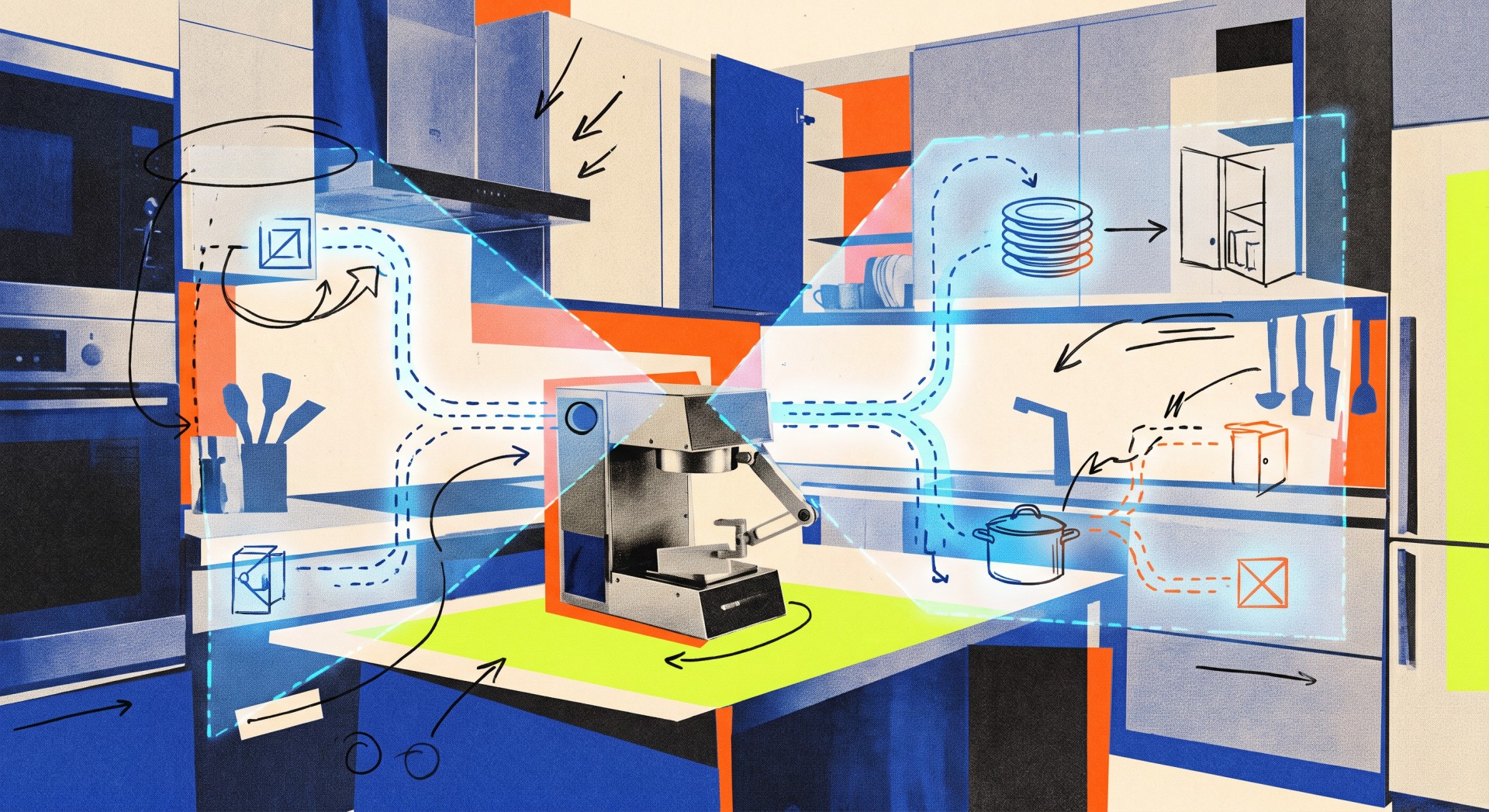
Researchers at BAAI (Beijing Academy of Artificial Intelligence) developed Orca, a world model that learns how scenes change from unlabeled video and text descriptions, then uses frozen core weights with swappable output modules to generate text, images, and robot commands. On robot manipulation tasks—shelving books, stacking bowls, scooping sugar—Orca-4B matched π0.5, a system built specifically on robot data, despite never seeing action labels during pre-training.
Why it matters
World models that build a shared internal understanding of cause-and-effect could reduce the need for large labeled action datasets, a chronic bottleneck in robotics. Orca also outperformed larger specialized models (Emu3.5 at 34B parameters, FLUX.2, OmniGen2) on text and image prediction benchmarks, suggesting that a well-trained state representation can serve multiple downstream tasks without retraining the core.
What to watch
Orca was trained on only one-tenth of available video data—125,000 hours of footage, 160 million event descriptions, and 11.5 million question-answer pairs—and the researchers note that a native world model trained from scratch on sound, force, and touch signals remains their end goal.
Summaries like this, in your inbox every morning.
The research addresses a longstanding tension in AI: specialized models excel at single tasks (language, image generation, robot control), but practical systems need to coordinate across all three. Orca's key insight is that a general-purpose internal representation of how the world changes—learned from videos and text—can be repurposed across different outputs without retraining the foundation. This is not a new concept; the body notes that world models have been studied in AI research and that Tsinghua and Peking University teams have proposed definitions and benchmarks for them. What makes Orca notable is the empirical result: a 4-billion-parameter model, without ever seeing which motor command produces which visual change during pre-training, later matched a specialized robotics system when a separate control module was trained on just 200 real-world recordings per task.
The training data strategy—combining unlabeled video (the bulk of the 125,000 hours), action descriptions, and question-answer pairs—reflects a practical constraint: labeled action data is scarce and expensive in robotics, whereas video is abundant. By learning "what happens next" from unlabeled footage, Orca may sidestep the need to manually annotate every robot movement. The authors tested this by freezing the pre-trained core and swapping in different output heads; performance held up across text, image, and control tasks, suggesting the internal world state genuinely captures transferable knowledge rather than task-specific shortcuts.
Limitations noted in the body temper the findings: Orca operates only on images and text (no sound, force, or touch), visual prediction happens in the space of a pre-trained image encoder rather than learning its own world space, and at 0.8 and 4 billion parameters the models remain small for full world modeling. The researchers used only one-tenth of their available video dataset for the current version, implying there is room for scaling. The broader debate around what qualifies as a "world model"—touched on in the body's mention of Sora and other systems—remains unresolved, but Orca's pragmatic approach (unified representation with modular outputs) may offer a testable path forward.
Pick your industry and the AI tools you use, and get news related to your work every day.
Free · 30 seconds with Google · unsubscribe anytimeWhat is AIToday? →
Ask AI anything about this article. The AI reads this article, earlier AIToday articles, and Wikipedia, and cites its sources. Q&As are published on this page for other readers too.
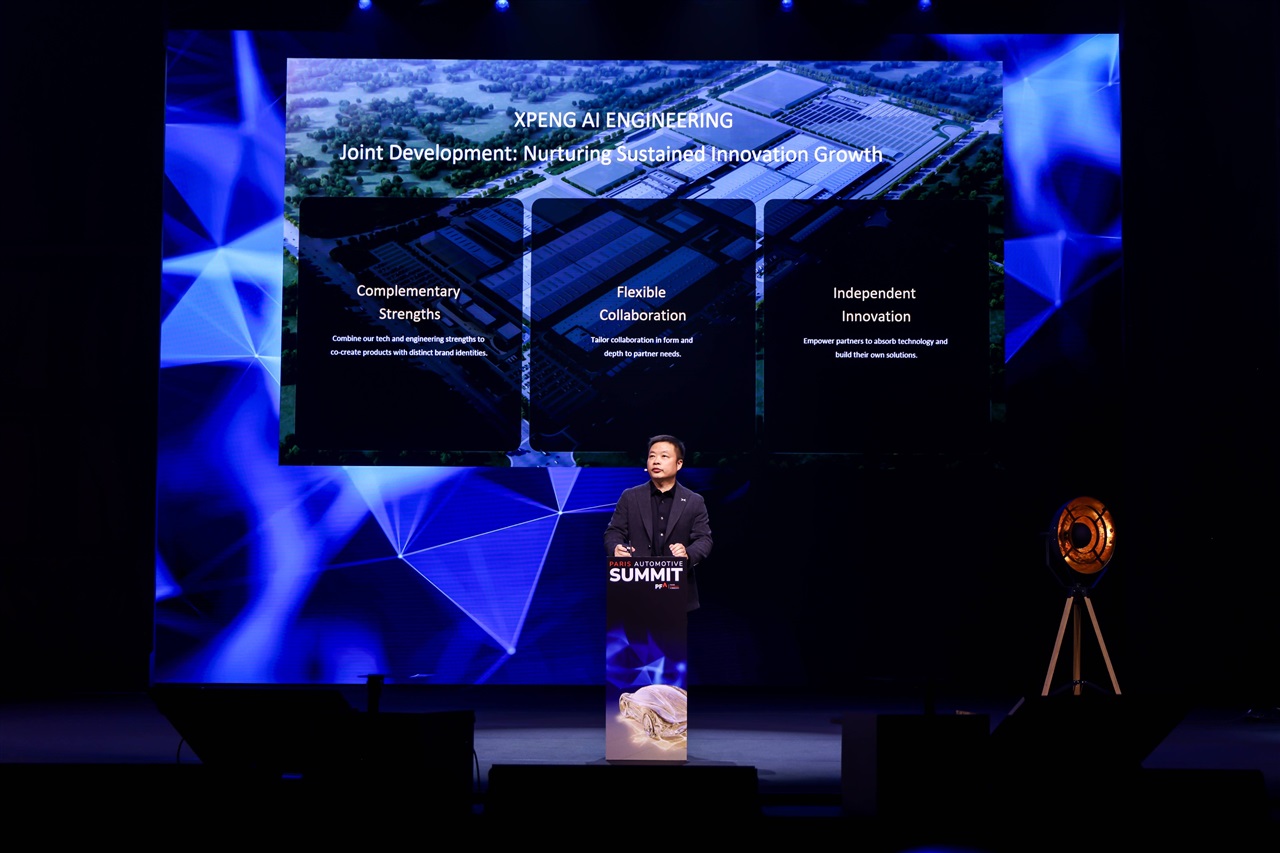
XPeng appeared at the Paris Automotive Summit, presenting not only automotive expertise but a broader technolo…
AIBotics completed its acquisition of NovaCore Labs' operating assets from PlayJamaica Limited, gaining 10 ser…

In an internal test, Google DeepMind robotics researchers instructed Gemini 4 Argon to watch a video of a huma…
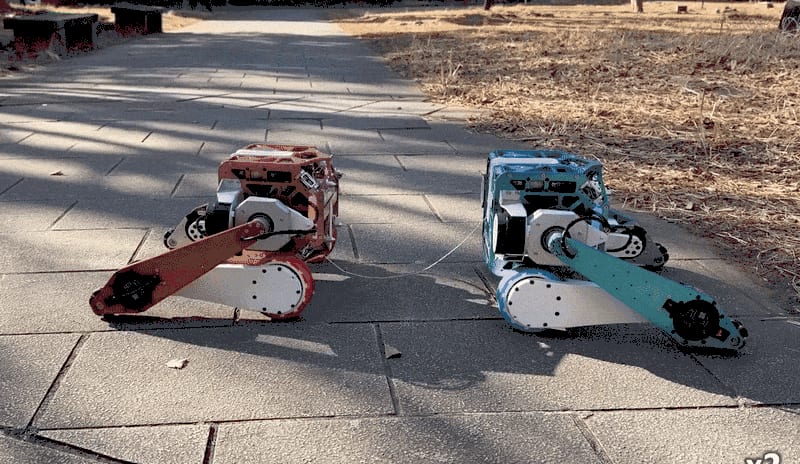
Amulya Vishwanath, who spent seven years leading product marketing for Nvidia's robotics platforms, says robot…
Claire interviewed Rika Antonova of the University of Cambridge on the Robot Talk podcast about using AI to de…
An essay argues that after language models spread through cognitive work like writing and accounting, AI is no…


