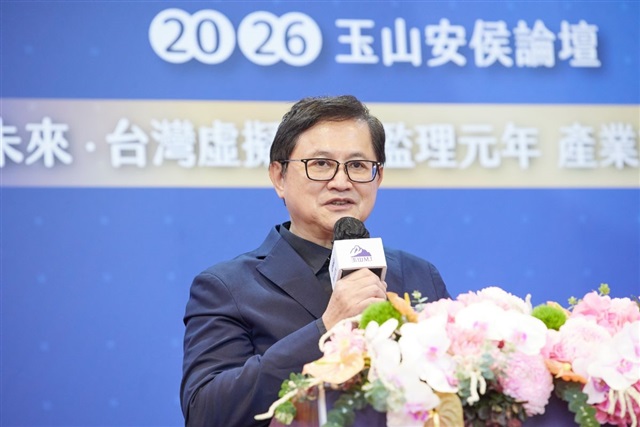
Taiwan's President Ching-te Lai has called on local companies to adopt US-style talent retention practices as the country's competitiveness reaches record levels. The statement underscores concerns that Taiwan's tech and science sectors risk losing skilled workers in a tightening global talent market, and signals that government support for industry-led retention initiatives is now a policy priority.
Summaries like this, in your inbox every morning.
Sign up free →What happened
On July 21, President Ching-te Lai called on local companies to learn from the US and work together to retain talent, citing Taiwan's competitiveness reaching a new high.
Why it matters
Talent retention has become critical as Taiwan faces intensifying global competition. The president's intervention signals that leadership sees workforce stability as essential to sustaining the island's competitive edge.
What to watch
The remarks were made at the Monte Jade Science and Technology Association's annual general meeting, suggesting industry and government coordination on retention strategies going forward.
On July 21, Taiwan's President Ching-te Lai addressed the Monte Jade Science and Technology Association's annual general meeting and emphasized the need for local companies to prioritize talent retention. Framing his remarks in the context of Taiwan's competitiveness reaching a new high, Lai urged the business community to adopt strategies similar to those used in the United States to keep skilled workers within their organizations. The message signals government recognition that Taiwan's continued strength in technology and science depends not only on technical innovation and global market share, but also on the ability to maintain a stable, skilled workforce in an increasingly competitive global talent market. Lai called for local companies to work together on this challenge, suggesting that industry-wide coordination and potentially government support may be necessary to address talent flight and retention concerns.
Taiwan's position as a global leader in semiconductor manufacturing and technology has long rested on its technical workforce. The president's July 21 call for talent retention reflects a shift in framing: competitiveness alone is no longer sufficient if the companies that drive it cannot keep their skilled employees. By invoking the US model, Lai is pointing to a country where corporate investment in compensation, benefits, and workplace culture has been central to retaining talent in high-tech sectors. The intervention at the Monte Jade Science and Technology Association, a venue that convenes industry leaders and government officials, suggests that talent retention is now viewed as a collective challenge requiring coordinated action rather than individual company responsibility.
AI-summarized, only the topics you pick — one digest a day via Email, Slack, or Discord.
Free · takes 30 seconds · unsubscribe anytime
No comments yet. Be the first to share your thoughts!
Log in to join the discussion


Get curated AI news from 200+ sources delivered daily to your inbox. Free to use.
Get Started FreeFree · takes 30 seconds · unsubscribe anytime
1 minute a day. The AI essentials.
200+ sources · Email / LINE / Slack
