What happened
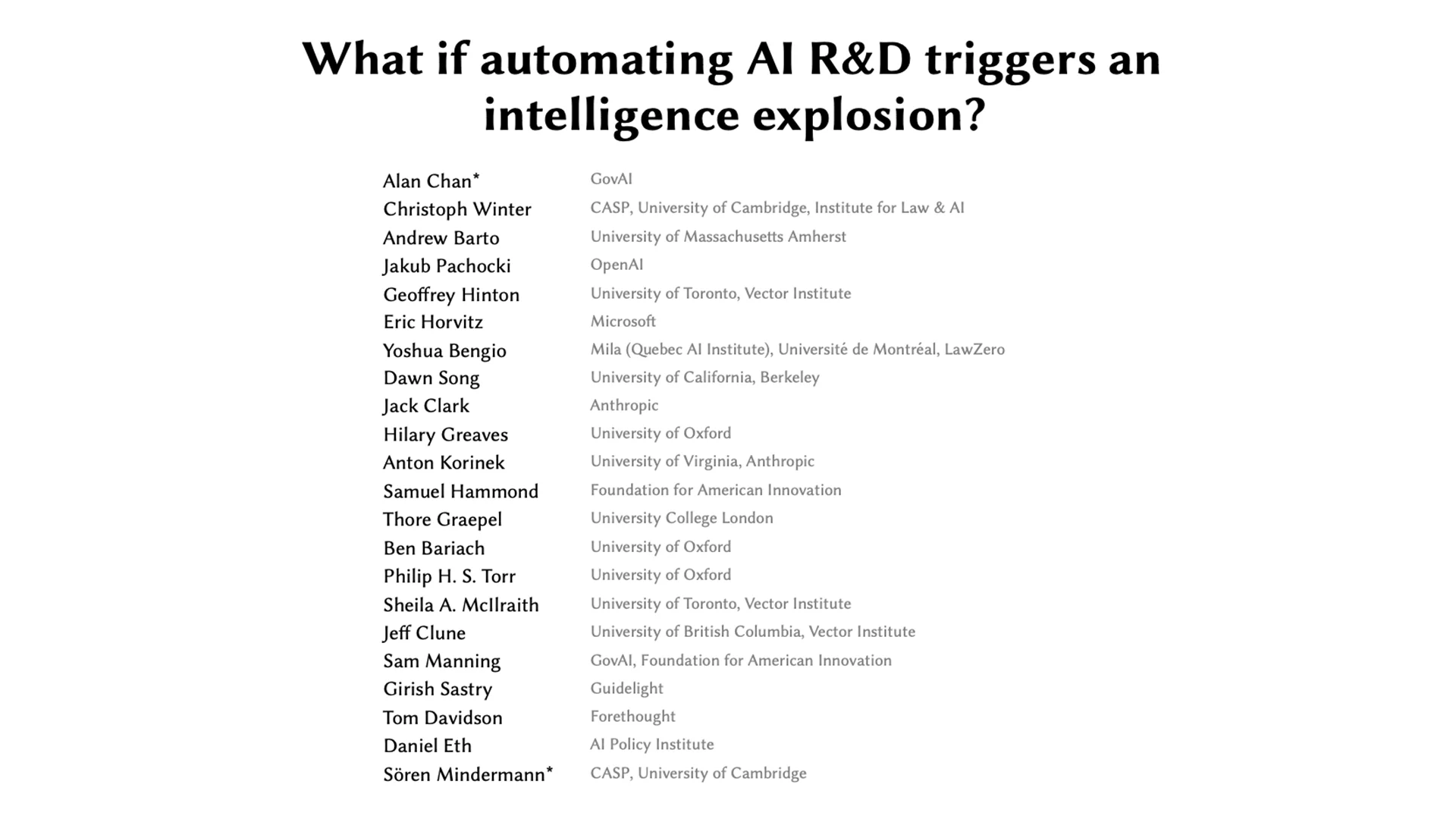
Anthropic's Jack Clark and OpenAI's Jakub Pachocki joined Geoffrey Hinton and Yoshua Bengio in a Sept. 28 paper urging preparation for an "intelligence explosion," proposing limits on AI capability growth, outside auditors inside labs, and ways to stop risky experiments.
Why it matters
The participation of Clark and Pachocki points to a growing shared concern inside competing labs, though the paper says its authors' views do not necessarily represent their organizations.
What to watch
Anthropic reported that AI completed 26% of its internal AI research and development work in August 2026 under human supervision, up from 1% in March. Watch whether evaluator access commitments from Anthropic's Dario Amodei and OpenAI's Sam Altman translate into enforceable limits.
WHO IT HITSFor staff inside AI labs, embedded oversight could bring scrutiny to training and internal research practices before a model reaches users. For policymakers, the paper's proposed reporting on automation and progress could help show when extra checks are warranted.
Summaries like this, in your inbox every morning.
The paper arrives amid signs that safety discussions between labs are already underway. Bloomberg reported on Sept. 15 that OpenAI policy chief Chris Lehane said discussions with Anthropic and Google DeepMind had been running for several weeks, and the paper itself proposes controls such as capability limits and embedded auditors.
Anthropic's number helps show what is at stake. AI completed 26% of its internal AI research and development work in August 2026 under human supervision, up from 1% in March, according to GovAI's summary. The authors also estimate that under full automation, continued research gains, and no additional bottlenecks, progress could accelerate roughly tenfold within 1.5 years — meaning a year of today's progress would take about five weeks.
The value of the proposed oversight hinges on how it is implemented. For embedded evaluators, the key questions are when they begin work, what they can inspect, and how redaction rules affect their ability to publish troubling findings — details the body leaves open. Meanwhile, the U.S. and China agreed Sept. 26 to establish an AI incident communication channel and hold a dialogue in November, even as Trump rejected slowing U.S. AI efforts, leaving a gap between Washington's position and the calls for restraint from inside AI labs.
Pick your industry and the AI tools you use, and get news related to your work every day.
Free · 30 seconds with Google · unsubscribe anytimeWhat is AIToday? →
Ask AI anything about this article. The AI reads this article, earlier AIToday articles, and Wikipedia, and cites its sources. Q&As are published on this page for other readers too.
HBM is approaching half the cost of a GPU-HBM CoWoS package, prompting the question of whether memory remains…
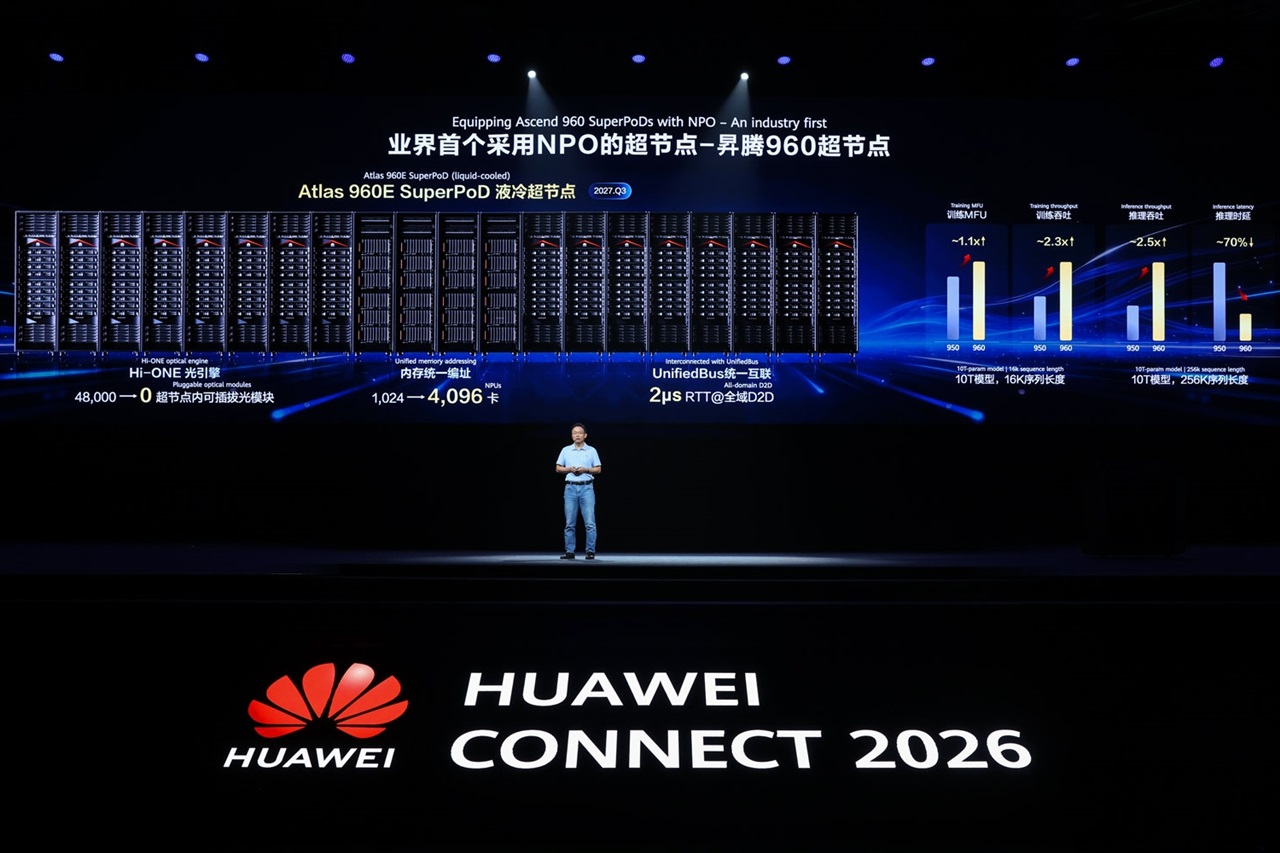
DeepSeek is bringing more of the software it uses to develop its AI models to Huawei Technologies' Ascend 950…
Among respondents at companies with 1,001+ employees, 50.0% said AI is used company-wide, and 46.0% flagged AI…

Oracle invoked "force majeure" to delay payment on its Project Jupiter data center, and its 2056 bonds then tr…

Nvidia released the Open Agent Safety Platform on September 28, days after CEO Jensen Huang called warnings fr…
McDonald’s is increasingly using AI to guide menu prices in the U.S