What happened
Computer scientists at University of Tübingen, Max Planck Institute, MATS Research, and Snyk discovered a method to extract the encrypted "reasoning traces" (step-by-step problem-solving steps) from frontier AI models made by OpenAI, Anthropic, and Google via their APIs. The attack works by feeding encrypted reasoning to smaller, weaker versions of the same model, which have less alignment training and are more likely to reveal hidden information. The researchers also showed the method could recover passwords and API keys from reasoning traces, though OpenAI, Anthropic, and Google have since patched the vulnerability for private data extraction.
Why it matters
The finding raises concerns about model distillation—a technique where companies copy capabilities from one AI model to build new ones. Researchers found that the Chinese model Kimi K3 from Moonshot AI produces reasoning output strikingly similar to Claude Opus and GPT-5.6 Sol for certain prompts, providing some evidence (though not conclusive proof) that Chinese models may have distilled reasoning information from US models. Alexander Panfilov, one of the researchers, notes "all major frontier model providers we tested share this vulnerability" and it "enables large-scale reasoning distillation attacks." The vulnerability highlights a geopolitical tension: US policymakers worry China gains strategic advantage by distilling US technology into cheaper open-weight models, though experts debate how much the practice actually helps.
What to watch
While OpenAI, Anthropic, and Google have mitigated the private data leakage, Panfilov says some reasoning traces can still be uncovered using the same method. A complete fix would require a fundamental overhaul to how these companies' APIs work. The debate over whether to restrict distillation remains unresolved—Meta CEO Mark Zuckerberg argued this week that distillation "is an important principle of how the open source ecosystem works," warning that restricting it would disadvantage the US.
Summaries like this, in your inbox every morning.
The discovery exposes a fundamental tension in how frontier AI companies balance openness with security. By design, these models send encrypted reasoning traces to users' machines to offload computation—a practical necessity for cost and speed. Yet encryption alone, it turns out, is insufficient protection when companies also maintain a family of related models of different sizes. The attack exploits this ecosystem asymmetry: smaller models, trained with less stringent safety alignment, act as decryption keys for the larger models' proprietary reasoning.
The timing of this disclosure maps onto a wider geopolitical anxiety about model distillation. In February and June, OpenAI and Anthropic respectively alleged that Chinese companies (DeepSeek and Alibaba) had distilled their models to build competing AI systems. This research does not prove that Moonshot AI distilled from US models—the authors explicitly state the work "cannot causally establish distillation"—but the striking similarity in reasoning outputs to Claude and GPT systems on certain prompts, combined with speculation on Chinese social media that hidden reasoning traces could be used for distillation, suggests the technique may be both feasible and potentially already in use.
The policy implication cuts both ways. US policymakers view distillation as intellectual property theft that gives China a shortcut to parity. Conversely, figures like Meta CEO Mark Zuckerberg argue that distillation is a standard, beneficial practice that accelerates progress for the entire ecosystem—and that blocking it would handicap US open-source development. Researcher Kyle Miller at CSET noted uncertainty about distillation's actual strategic value, suggesting that even without the technique, Chinese labs likely possess the expertise to build models from scratch. The broader lesson: as reasoning models mature, the boundary between transparency (useful for debugging and improvement) and secrecy (necessary for competitive advantage) becomes harder to defend with encryption alone.
Pick your industry and the AI tools you use, and get news related to your work every day.
Free · 30 seconds with Google · unsubscribe anytimeWhat is AIToday? →
Ask AI anything about this article. The AI reads this article, earlier AIToday articles, and Wikipedia, and cites its sources. Q&As are published on this page for other readers too.
Setagaya Ward tested Genspark, an AI agent tool, and cut roughly 2,900 hours of work, according to Sho Miyama…

LegalOn Technologies began offering a beta of its "Agent Builder" feature on October 19, which automates a ser…

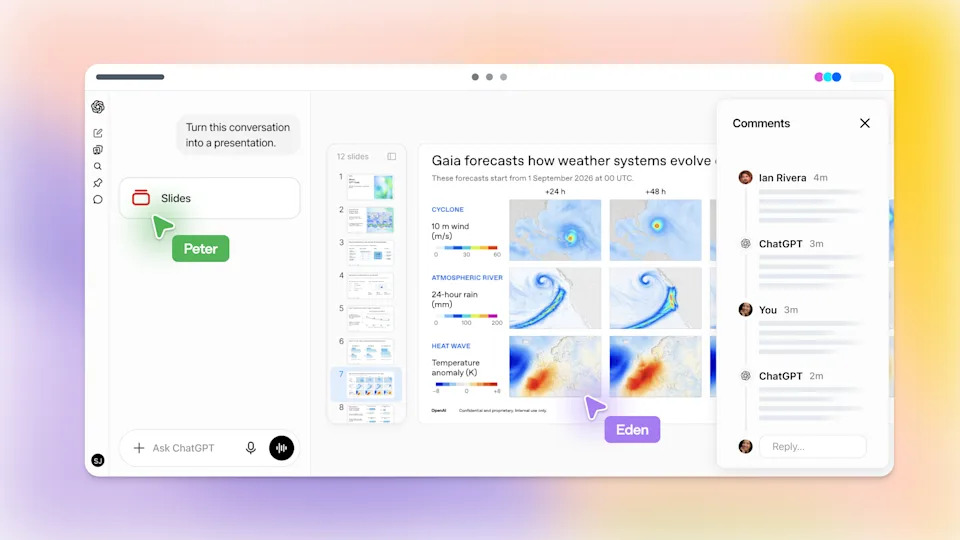
OpenAI launched ChatGPT Slides, which builds decks from chats, files or outlines and can mimic the design of a…
DeepSeek released Search and Fetch APIs on October 17, 2026, with each endpoint priced at $0.75 per 1,000 call…

DeepSeek published DeepSeek-V4.1-Flash-1017 on October 17, 2026 as a free, MIT-licensed open model that scored…
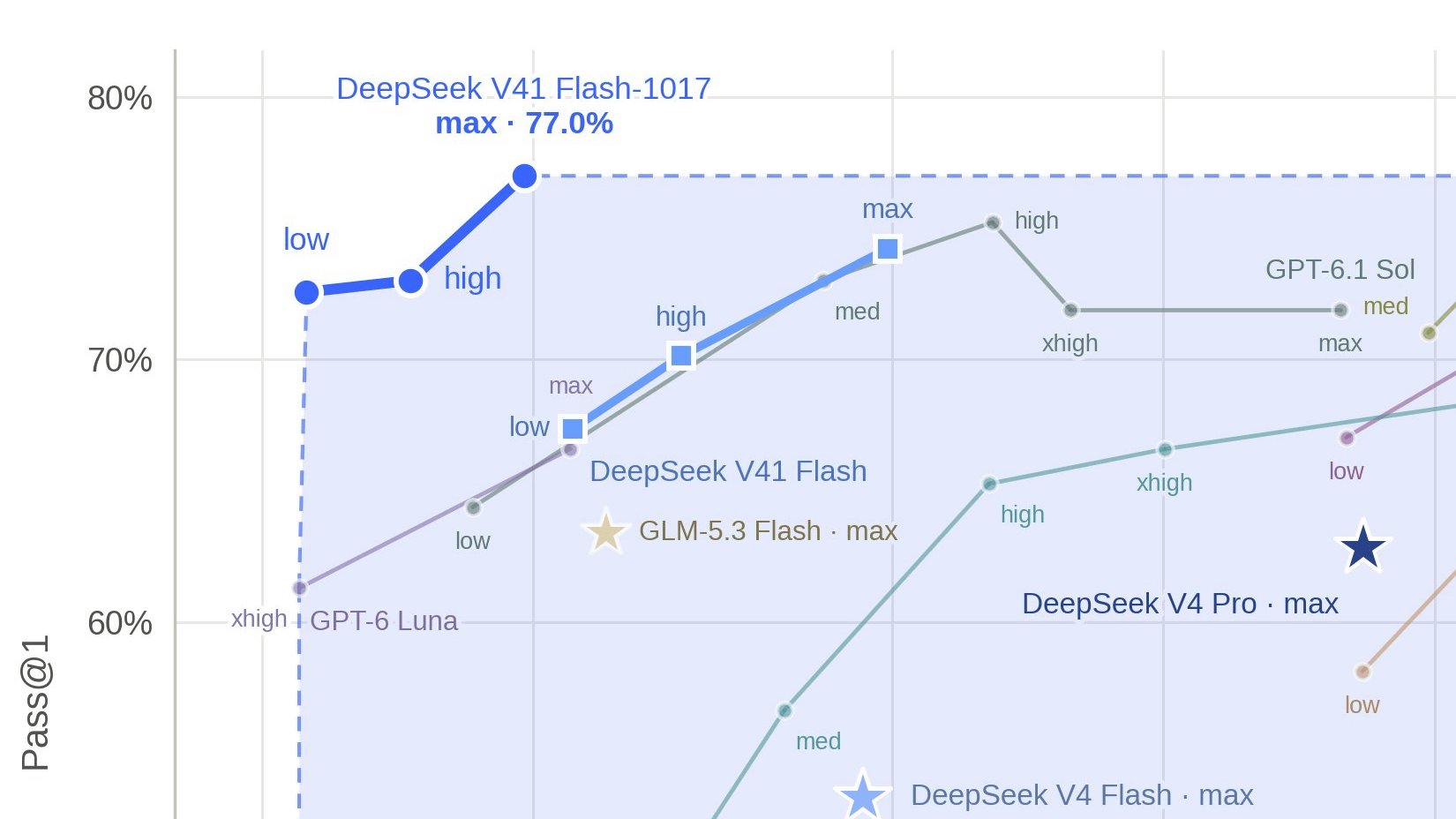
DeepSeek released DeepSeek-V4.1-Flash-1017, a “minor update” that reduces task execution time and output lengt…