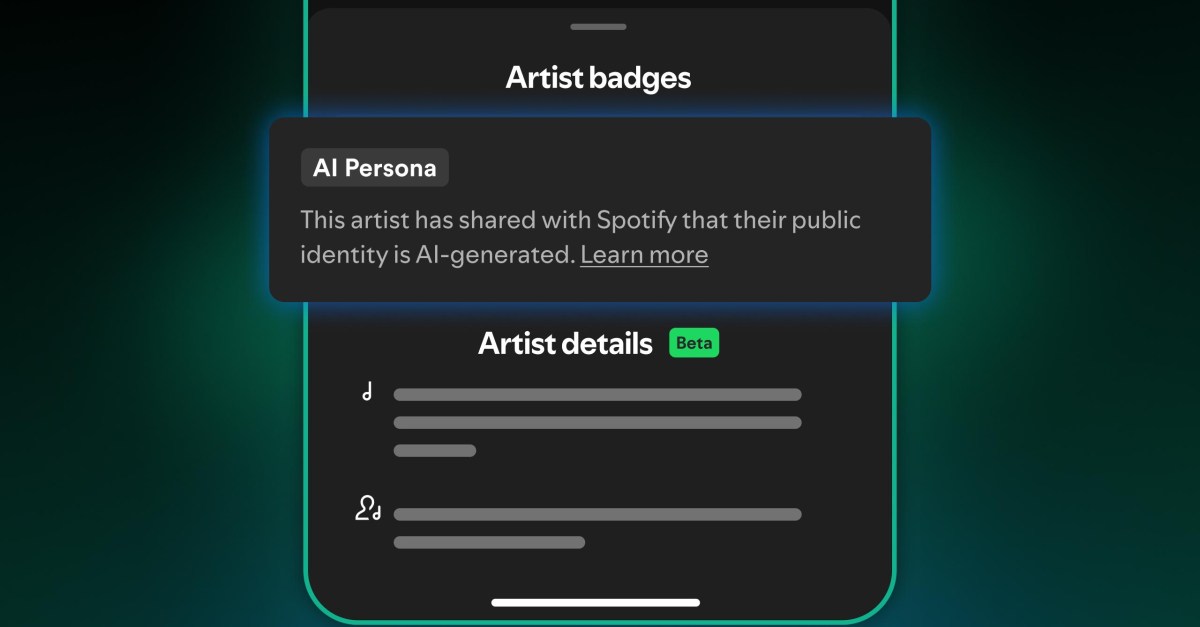
What happened
Spotify will label artist profiles as "AI Persona" if they do not represent a real person, starting mid-September. The platform will use human review and AI tools to identify AI-generated identities and apply a "Likely AI Persona" badge. Music from these profiles will not appear in editorial suggestions or personal recommendations by default.
Why it matters
Listeners have told Spotify they dislike discovering an artist profile appears human only to learn it is AI-generated. By removing AI personas from recommendations, Spotify aims to surface authentic human artists and reduce what it calls "spam, slop, or low-effort content" flooding streaming platforms—a problem Deezer recently reported as AI-generated tracks now making up half of its daily song uploads.
What to watch
Artists can disclose their AI status starting today; Spotify will notify those it flags with a "Likely AI Persona" badge and allow them to appeal. The platform also plans to add a feature letting listeners flag potential AI-generated identities themselves.
Summaries like this, in your inbox every morning.
Spotify's move reflects a growing tension between the volume of AI-generated content flooding streaming platforms and listener expectations about artist authenticity. Deezer's recent disclosure that AI-generated tracks now make up half of its daily song uploads underscores the scale of the problem. Rather than ban AI music outright, Spotify is taking a targeted approach: it will label profiles whose identities appear to be AI-generated while still allowing artists to disclose AI use through a "Verified by Spotify" badge for real people. This distinction—between labeling a fake artist identity versus flagging AI-assisted creation by human artists—allows the platform to address listener frustration without excluding tools that human musicians may legitimately use. The staggered rollout, prioritizing profiles that meet "defined audience thresholds" (i.e., those with the most listeners), ensures the company tackles the most visible instances first.
Pick your industry and the AI tools you use, and get news related to your work every day.
Free · 30 seconds with Google · unsubscribe anytimeWhat is AIToday? →
Ask AI anything about this article. The AI reads this article, earlier AIToday articles, and Wikipedia, and cites its sources. Q&As are published on this page for other readers too.
Anomaly Innovations said unauthorized access to a legacy system it was retiring may have leaked OpenAI and Ant…

DeepSeek published DeepSeek-V4.1-Flash-1017 on October 17, 2026 as a free, MIT-licensed open model that scored…
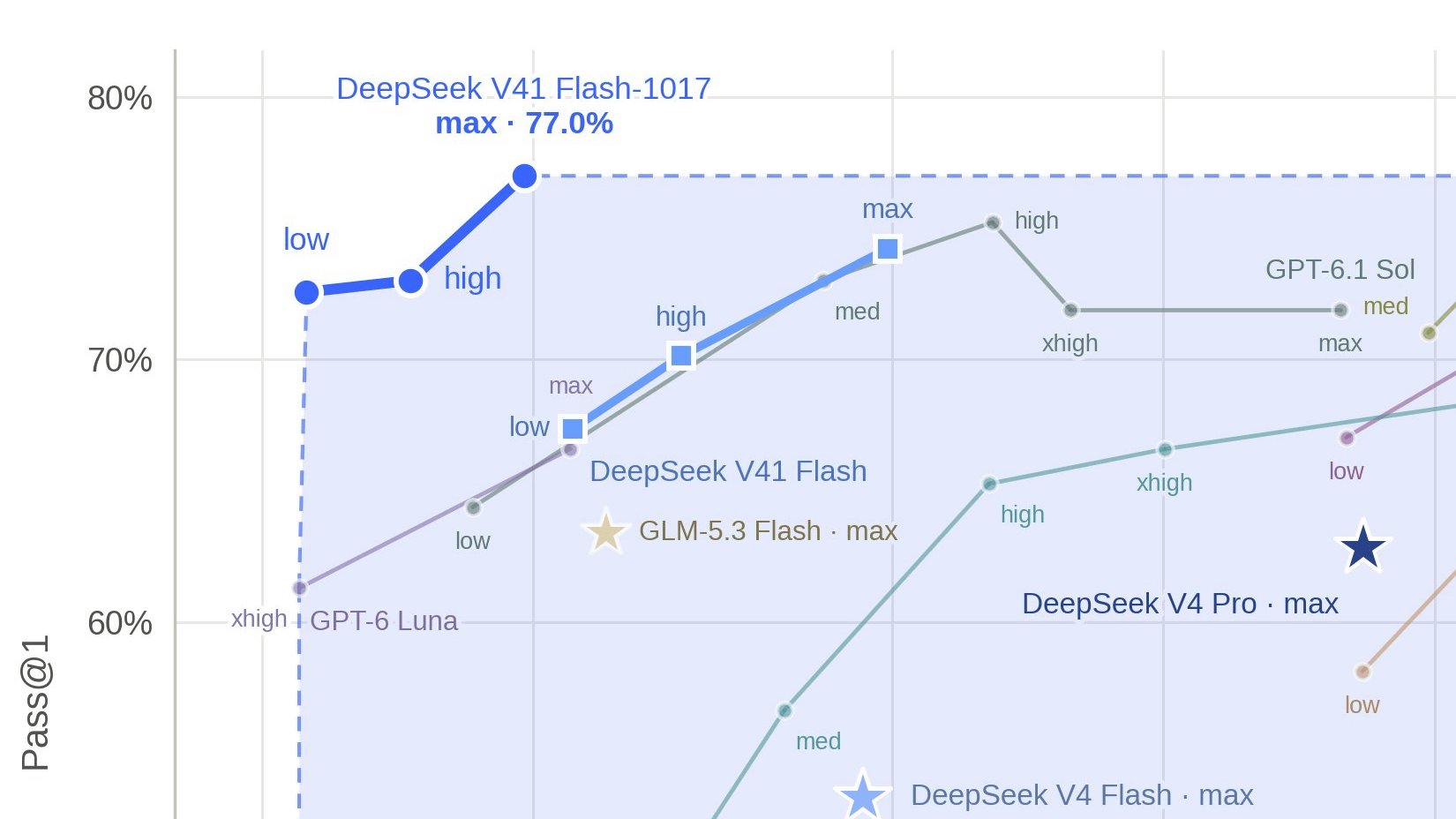
DeepSeek released DeepSeek-V4.1-Flash-1017, a “minor update” that reduces task execution time and output lengt…
Simon Willison shipped llm-echo 0.5, a debug plugin whose "echo" model involves no LLM at all and just repeats…

PitchiPT, a physical therapist of over 10 years, started full-scale AI-assisted programming around June 2026 a…

VS Code's documentation says prompt files are deprecated for Agent Host sessions and aren't loaded there, thou…

