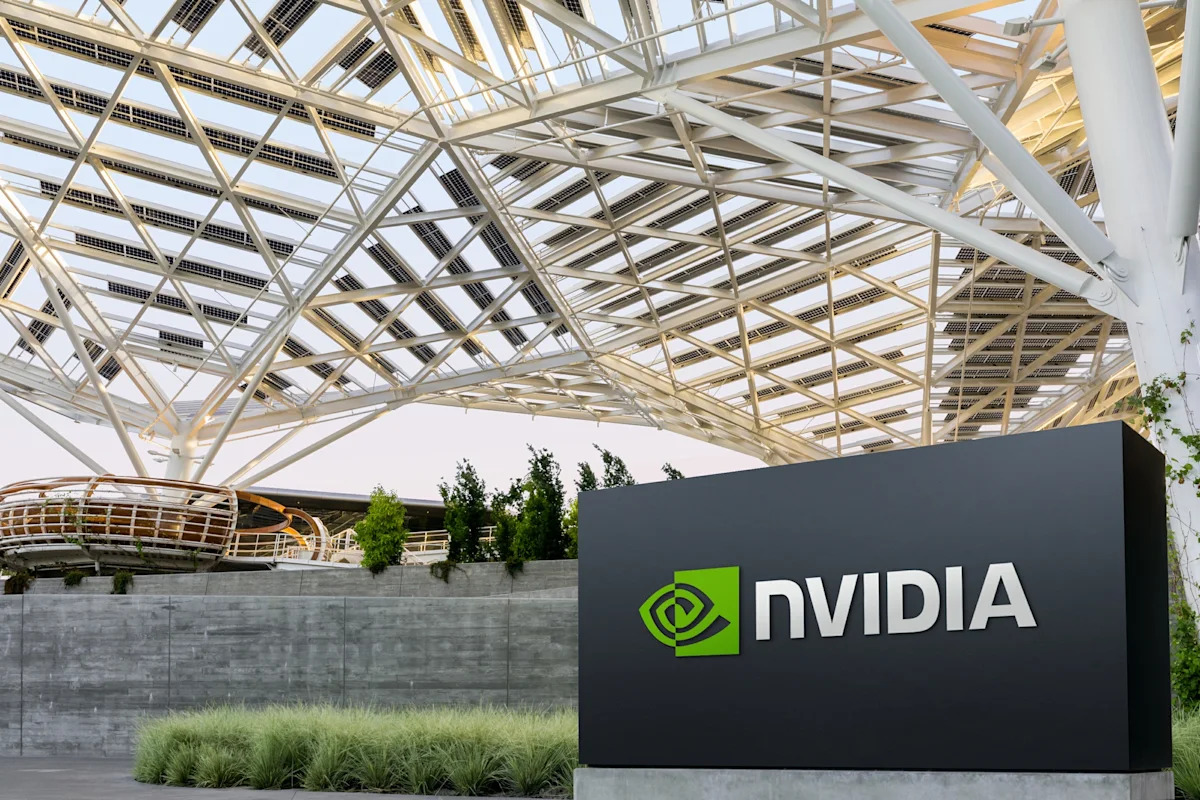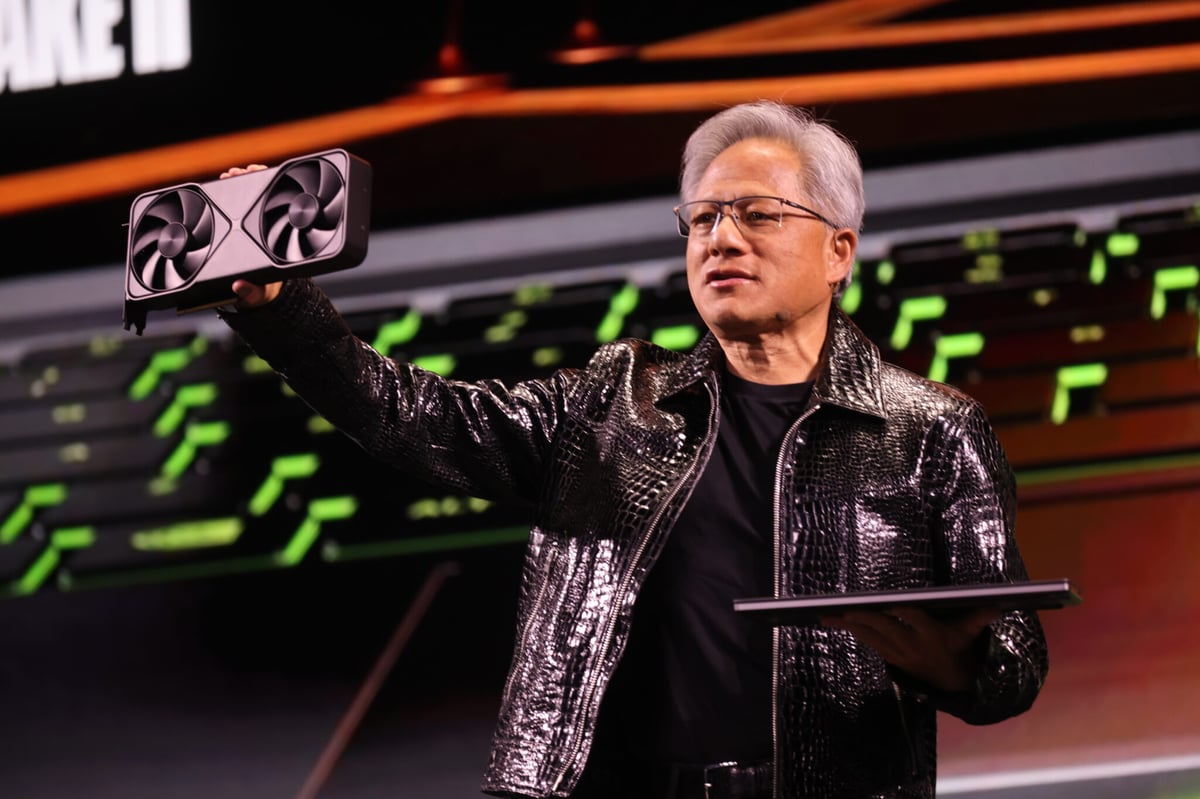
What happened
Nvidia has told investors it expects global annual data center capital expenditures to grow to up to $4 trillion(約640兆円) by 2030. The company currently has a $5 trillion(約800兆円) market cap. If the projection holds and Nvidia maintains its current market share, the math suggests the stock could reach a $20 trillion(約3200兆円) valuation over the next few years.
Why it matters
Nvidia dominates GPU (graphics processor) supply to data centers and has captured the vast majority of the AI hardware market early on, making it difficult for competitors to gain ground. The company's revenue grew 85% year over year in its latest quarter, with Wall Street expecting nearly 100% growth next quarter—all without significant chip sales to China, which remains a potential additional growth source if export restrictions ease.
What to watch
The big four AI hyperscalers are estimated to spend around $650 billion(約100兆円) on data center capital expenditures in 2026, with total actual spend likely closer to $800 billion(約130兆円) when including other players. A $4 trillion(約640兆円) figure by 2030 would represent a fivefold rise from that baseline; even if Nvidia loses market share, it would only need to quadruple from today's level to reach the $20 trillion(約3200兆円) target.
Ask the AI about this article →
Summaries like this, in your inbox every morning.
Nvidia's $4 trillion(約640兆円) projection for global data center spending by 2030 rests on the company's entrenched position in the AI hardware market. The article notes that Nvidia makes GPUs and supporting products for data centers, and its processors have become the standard for high-performance computing. The company captured the vast majority of the market in the early days of the AI arms race, creating a lock-in effect: once data center operators choose Nvidia, switching becomes costly and difficult, an advantage that compounds as more data centers are built.
The math supporting the $20 trillion(約3200兆円) valuation target is straightforward: if global data center capex grows fivefold (from an estimated $800 billion(約130兆円) in 2026 to $4 trillion(約640兆円) by 2030) and Nvidia maintains its current market share, its revenue and profits would rise proportionally. The article notes that Nvidia would only need to quadruple from its current $5 trillion(約800兆円) market cap to hit $20 trillion(約3200兆円), meaning the company could actually lose market share and still reach that target—a buffer that suggests the projection is not dependent on Nvidia's dominance remaining unchallenged.
A secondary catalyst lies in China. U.S. export restrictions have largely blocked Nvidia's access to the Chinese market, but recent signals suggest those barriers may be weakening. If restrictions ease and Nvidia regains meaningful sales in China, that growth is currently absent from the company's official guidance, potentially enabling even faster expansion than projected.
For example, today's edition would include:
AI-summarized, only the topics you pick — one digest a day via Email, Slack, or Discord.
Free · 30 seconds with Google · unsubscribe anytimeWhat is AIToday? →
Ask AI anything about this article. Q&As are published on this page for other readers too.
Tesla Japan will show the Cybercab, its dedicated Robotaxi vehicle, in Japan for the first time

Palantir Technologies Inc
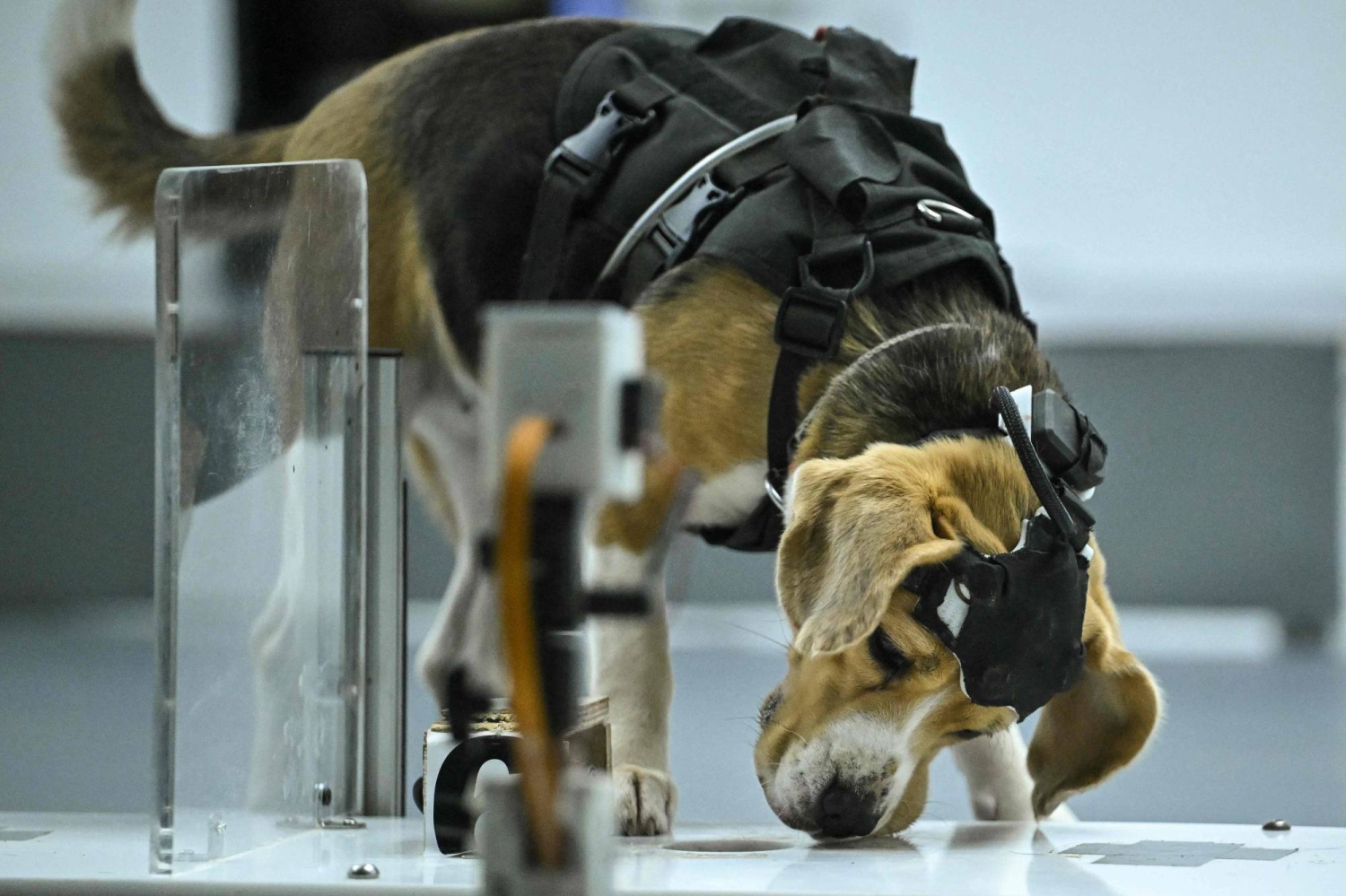
Researchers in Bengaluru, India, are using AI to train rescue dogs like Chloe to sniff human breath for cancer…
JM-Applied, a Taiwanese semiconductor gas equipment maker and supply chain member for Micron and TSMC, said on…

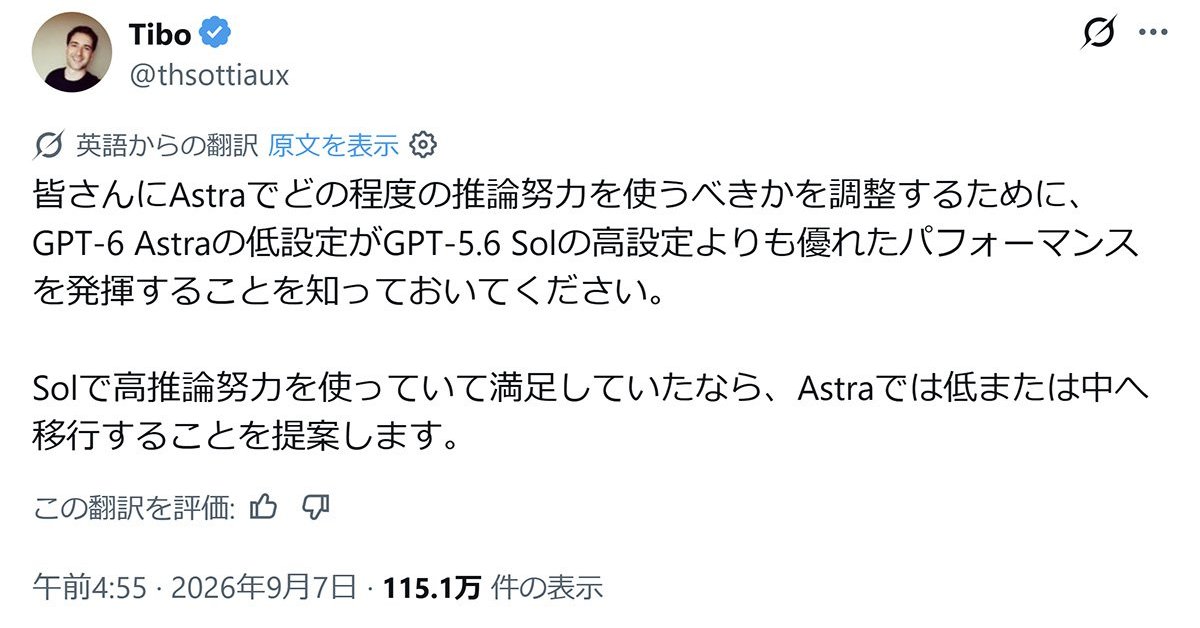
OpenAI's product lead Tibo Sotiou posted on X on September 6 that GPT-6 Astra's 'low' setting outperforms GPT-…
Nvidia disclosed roughly $99 billion of public and private equity investments as of July 26, plus about $25 bi…