Sonata uses self-consistency (agreement among multiple reasoning paths) as a proxy to predict when queries require extended thinking. A lightweight adapter trained offline predicts self-consistency from last layer hidden representations during the query prefilling stage, then guides budget allocation before thinking begins.
Experiments on multiple models (Qwen3-8B, GPT-OSS-120B, Qwen3-235B-A22B, Intern-S1-mini) and benchmarks (AIME24, AIME25, GSM8K, MATH500, GPQA) demonstrate that Sonata achieves 20% to 80% reduction in thinking tokens while maintaining the same accuracy, or up to 5% improvement in accuracy with same token cost.
The adapter is general and transferrable across diverse tasks once trained, introduces almost zero computational overhead during inference, and is orthogonal to existing chain-of-thought compression methods, enabling further efficiency gains when managing thinking budgets across queries.
Summaries like this, in your inbox every morning.
Pick your industry and the AI tools you use, and get news related to your work every day.
Free · 30 seconds with Google · unsubscribe anytimeWhat is AIToday? →
Ask AI anything about this article. The AI reads this article, earlier AIToday articles, and Wikipedia, and cites its sources. Q&As are published on this page for other readers too.
Amazon introduced Bee Frontier, a wearable personal AI, for $74.99 in Onyx, Lavender and Sage, and Bee Eclipse…

Citi has become the latest US bank to restrict AI agents from accessing accounts, per the Financial Times

Aparna Nair, IBM's chief talent, leadership, and culture officer, said generalists alone "will cut it" in the…
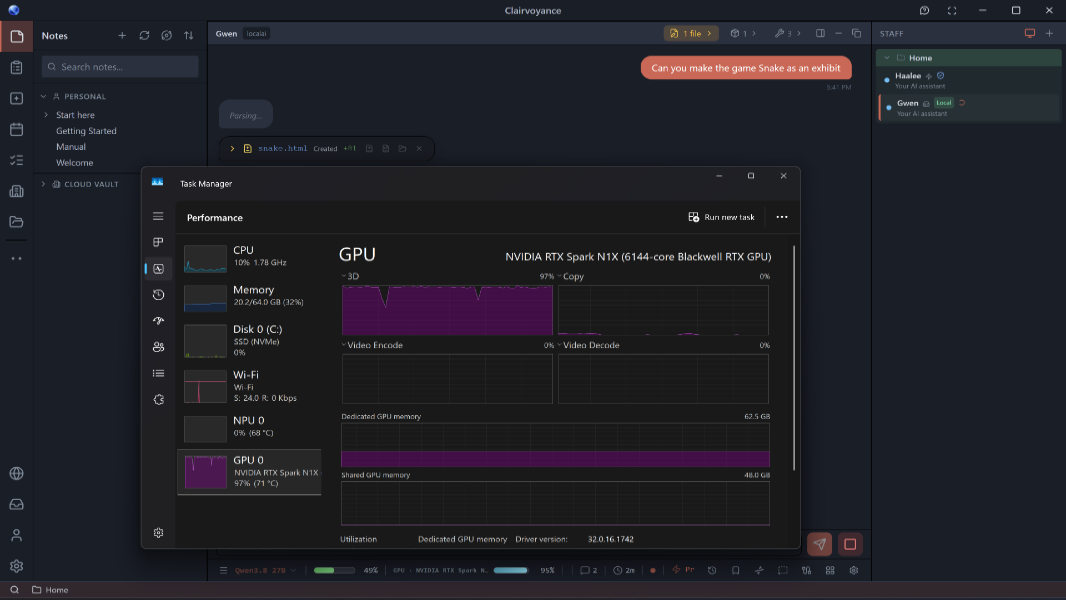
Microsoft and Nvidia are promoting RTX Spark, a new class of Windows PCs for local AI, with a top configuratio…
Dell says its AI Data Platform uses a four-engine architecture and a Unified Semantic Layer to connect siloed…

Microsoft AI CEO Mustafa Suleyman told employees that MAI-Base-2, announced Thursday, is a stronger pre-traine…