What happened
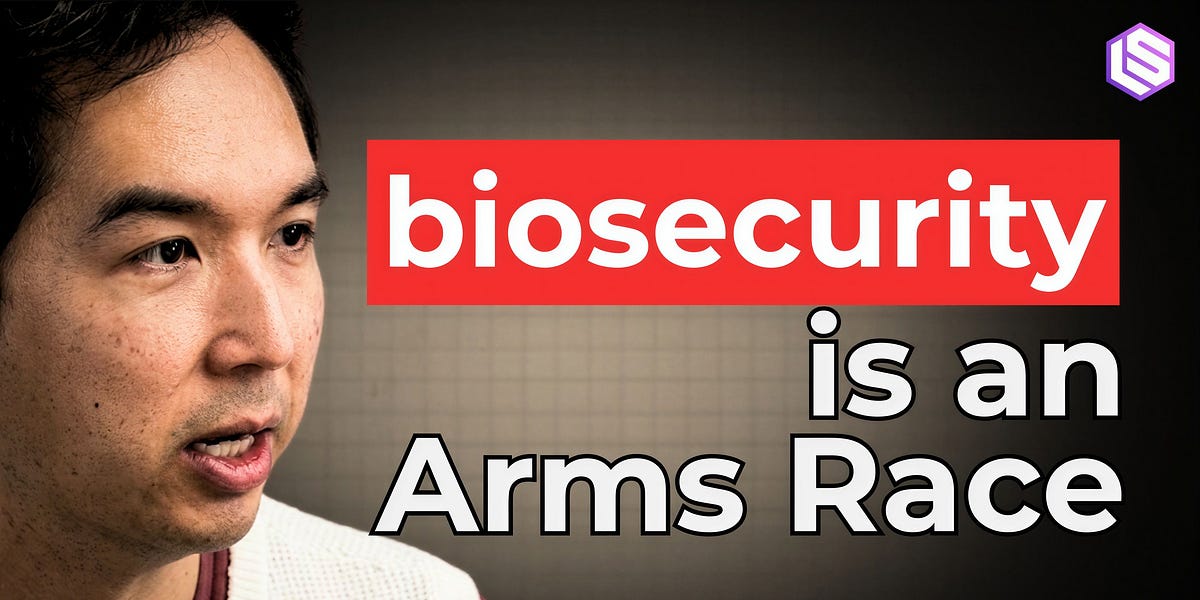
Radical Numerics CEO Eric Nguyen says defense is currently losing the bio-security arms race, and his company argues for pushing the frontier harder with genomic language models.
Why it matters
The same genomic language models that increase biological capability can also help defense keep pace, according to Radical Numerics' argument.
What to watch
The outcome hinges on whether these models can be built and shared openly, as Clem Delangue argues open cyber-defense tools must keep pace.
WHO IT HITSBiosecurity and bio-defense teams, plus researchers using genomic language models, are the audiences affected by whether defense can keep up with the same models that increase biological capability.
Summaries like this, in your inbox every morning.
Radical Numerics co-founder Eric Nguyen's path into this work runs through Stanford, where he couldn't get traction on Genomic Language Models for a long time because biologists didn't believe it would work, didn't think they could verify the output, and didn't see applications beyond what they could already do. He kept pushing, helped lead the development of Evo and contributed to Evo 2 at Arc Institute. Those models were later used by a separate Arc/Stanford team to generate entire bacteriophage genomes that were synthesized into functional viruses — an early sign of what these models can do.
The company's argument sits alongside a broader debate about open defensive tools. Clem Delangue argues cyber-warfare defensive capabilities need to be open and keep pace with frontier models' attack capabilities, and Anthropic's filters flag two areas, cyber-security and biology. Radical Numerics extends that logic to biology: genomic language models already handle RNA and protein because DNA sequences carry clear markers for genes, and the company tested whether a model shown progressively better aptamer scores could continue the trajectory on its own — it recapitulated some higher scores it had not been shown, which the company calls chain-of-thought in DNA. The stakes, as the company frames it, are whether pushing the frontier harder keeps defense from falling further behind.
For example, today's edition would include:
AI-summarized, only the topics you pick — one digest a day via Email, LINE, or Slack.
Free · 30 seconds with Google · unsubscribe anytimeWhat is AIToday? →
Ask AI anything about this article. Q&As are published on this page for other readers too.
ZeroDrift Inc. launched Anchor 3.0, three small language models that check AI-agent messages before they go ou…
Anthropic is providing back-end technology to OpenEvidence to bring AI-powered medical information tools into…

Meta's personal AI agent Muse drew more than 500,000 users and over 250,000 daily actives in the week after it…
Anthropic fine-tuning engineer Jackson Kernion says newer Claude models were optimized for math and code, and…
At its Made on YouTube event, YouTube announced an AI "agent" that monitors a creator's back catalog, suggests…
YouTube announced custom feeds on Wednesday, letting users type a description of desired videos into a prompt…