What happened
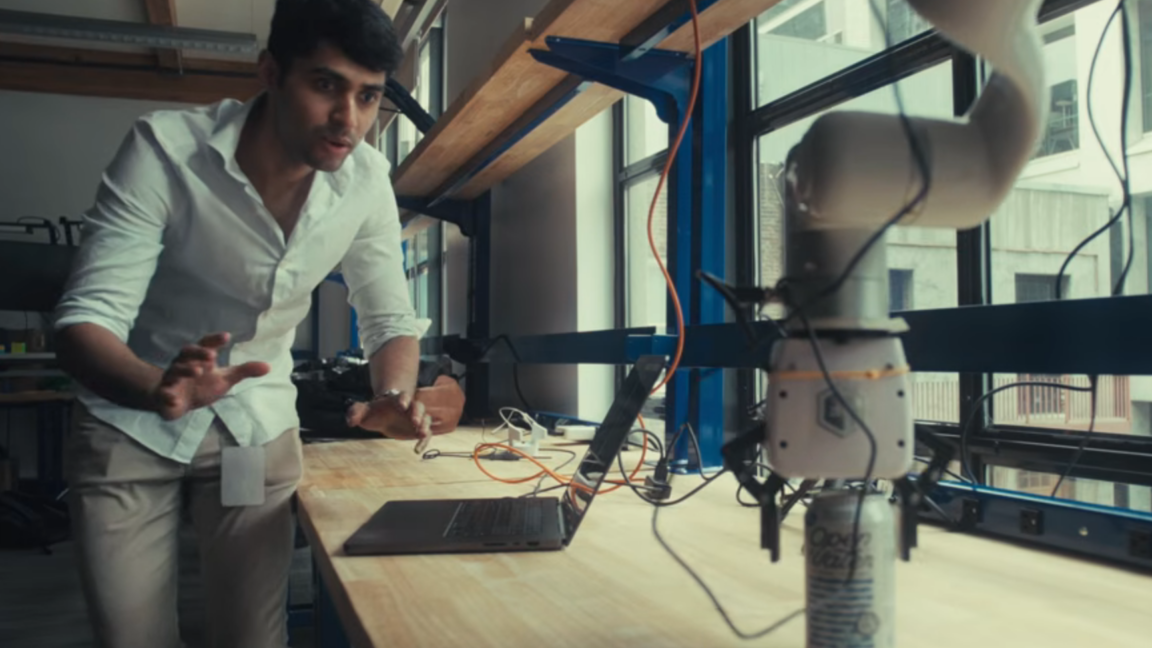
Anthropic introduced MHS, a new hardware standard that lets AI models like Claude control physical lab equipment. In testing, it reduced device integration time, and it is now in preview with partners including AWS, Hugging Face, and Raspberry Pi.
Why it matters
MHS could speed up scientific experimentation by letting AI adjust instruments, check results, and repeat tasks automatically, potentially condensing a century of progress into a decade, as Anthropic's Kemeny said.
What to watch
Anthropic plans for MHS to eventually become an open-source, agent-agnostic standard. Early testing with scientific partners showed faster device integration, though the standard is not yet publicly available.
Summaries like this, in your inbox every morning.
Anthropic's announcement positions MHS as a bridge between AI and physical hardware, addressing a key limitation where models trained on digital data struggle with real-world variability. By standardizing hardware descriptions, MHS could make it easier for AI agents to operate a wide range of lab equipment without specialized training. The involvement of major partners like AWS and Hugging Face suggests a broad industry push toward physical AI applications. However, early success in lab settings does not guarantee seamless adoption across all fields, and the standard's open-source future remains a plan, not a certainty. The promise of faster hypothesis testing could significantly speed up scientific research, but the full impact will depend on widespread implementation and safety evaluations that are still being developed.
Pick your industry and the AI tools you use, and get news related to your work every day.
Free · 30 seconds with Google · unsubscribe anytimeWhat is AIToday? →
Ask AI anything about this article. The AI reads this article, earlier AIToday articles, and Wikipedia, and cites its sources. Q&As are published on this page for other readers too.
Chunghwa Telecom president Rong-shy Lin said the shift from conversational AI to autonomous AI agents is resha…

Apple and Meta said they would jointly release a new open-weight AI model designed to run on high-end Macs, ai…

A writer and entrepreneur opened his daily to-do list and found 156 items, and concluded that an AI assistant…

A Zenn contributor sorted AI use into three modes — AI as an assistant, AI running alongside people, and AI th…

The walkthrough points the CLI at a local mock via the ANTHROPIC_BASE_URL environment variable
A non-engineer operator says one person ships four smartphone apps on Google Play, three on the App Store, wit…

