
What happened
Wells Fargo's Ohsung Kwon says combined revenue growth at OpenAI and Anthropic is slowing even as token usage rises, with token costs plateaued. He warns that if hyperscaler capex estimates aren't revised up by more than 10%, AI buildout stocks could sell off.
Why it matters
Slowing growth at the two labs, alongside plateauing token costs, is a concern for frontier labs given their reported plans to launch IPOs, and could weigh on AI buildout stocks if spending revisions shrink.
WHO IT HITSInvestors holding AI buildout stocks and analysts tracking frontier AI labs' revenue trajectories are most affected, as the reported slowdown in combined growth and the capex sensitivity could pressure those positions.
Summaries like this, in your inbox every morning.
Wells Fargo's Ohsung Kwon and colleagues point to a specific pattern: combined reported or rumored annual run-rates for OpenAI and Anthropic show that while growth continues at a fast pace, the rate of growth is slowing. The bank attributes this partly to the law of large numbers, and notes that both companies reportedly plan to launch IPOs — a context in which a growth slowdown is a problem.
The note offers a second thread: token usage is rising, but the cost of tokens has plateaued. Kwon's team suggests one LLM behaves much like another for 90% of tasks, and that heavy-user customers are budgeting toward cheaper models accordingly, calling plateauing spend concerning for frontier labs. That dynamic sits alongside the capex side, where the market has grown used to large upward revisions to future hyperscaler spending estimates; Kwon warns that if those revisions get smaller — specifically if capex estimates don't get revised up by more than 10% — AI buildout stocks could sell off.
The broader contributing views are consistent. Adrian Cox at Deutsche Bank and Lisa Shalett at Morgan Stanley show estimated capex growth slowing significantly, with Shalett noting that consensus contemplates significant deceleration in growth rates in 2027, which could prove a headwind to equities next year. Spending would still be a substantial $1 trillion per year, though the direction of revisions is what Kwon flags as the risk.
Pick your industry and the AI tools you use, and get news related to your work every day.
Free · 30 seconds with Google · unsubscribe anytimeWhat is AIToday? →
Ask AI anything about this article. The AI reads this article, earlier AIToday articles, and Wikipedia, and cites its sources. Q&As are published on this page for other readers too.
Uvi, or Naboo Research Ltd., raised $7.5 million in seed funding led by CT Innovations for a context layer it…

ScaleFlux's Pichai Balaji said AI factories stall because data movement is slow, with DRAM 37 to 40 times slow…
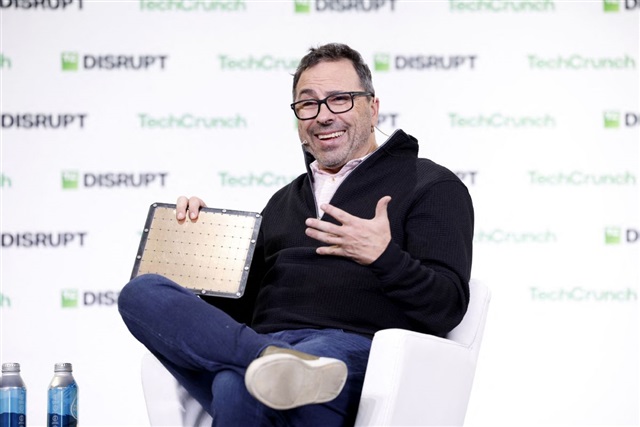
Cerebras Systems co-founder and CEO Andrew Feldman said at TechCrunch Disrupt 2026 that Cerebras' shortage of…
Asia Vital Components (AVC) unveiled new liquid-cooling solutions, including direct liquid cooling (DLC) and a…
Digital Hollywood University announced on October 14 that it will introduce Anthropic's Claude across the whol…

Jessica Herrin, who built Stella & Dot into a business that sold more than $2 billion in products, raised $5 m…