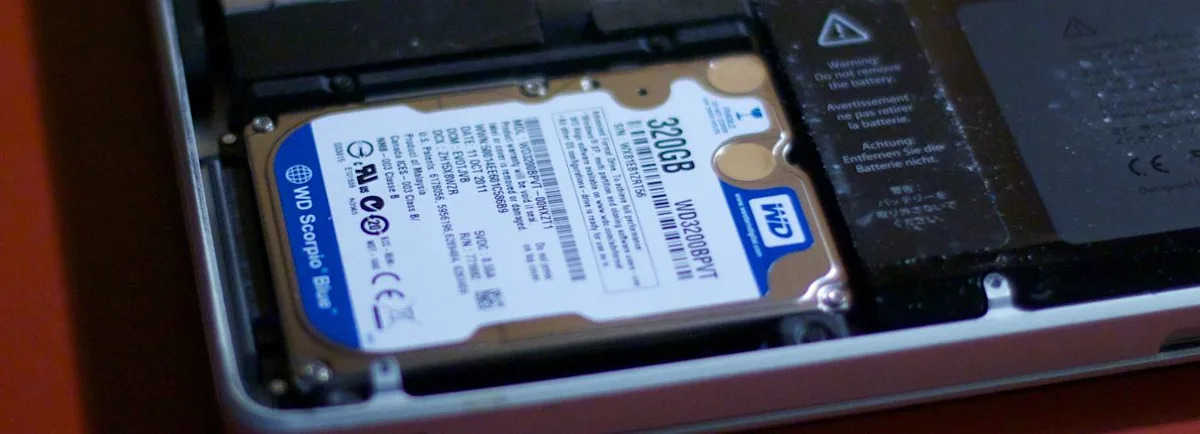
Western Digital's stock jumped 6.6% after reporting strong fiscal Q3 results driven by cloud demand tied to AI products, with cloud revenue accounting for about 89% of total revenue. The upside hinges on sustained AI storage demand from hyperscale customers and improved cash flow, but the company faces concentration risk if a few large buyers change their technology choices or procurement terms.
Summaries like this, in your inbox every morning.
Sign up free →What happened
Western Digital reported strong fiscal third-quarter results powered by cloud demand tied to AI-related products, with cloud business contributing about 89% of revenue. The stock rose 6.6% following the results.
Why it matters
The company's improved operating margins, stronger free cash flow, and growing AI-focused cloud revenue signal that storage demand from hyperscale data centers (large cloud providers) building AI infrastructure remains robust. However, the narrative hinges entirely on a handful of powerful customers—if they shift procurement strategies or terms, Western Digital faces significant downside risk.
What to watch
Western Digital's projections show $27.9 billion(約4.5兆円) revenue and $10.7 billion(約1.7兆円) earnings by 2029, requiring 33.3% yearly revenue growth. Some bullish analysts forecast even higher figures ($31.1 billion(約5兆円) revenue and $11.5 billion(約1.8兆円) earnings by 2029), but these depend on sustained hyperscale AI storage contracts and no major customer concentration disruption.
Western Digital reported strong fiscal third-quarter results that caught investor attention as a sign of robust demand from hyperscale customers building AI infrastructure. Cloud business accounted for about 89% of the company's quarterly revenue, highlighting the central role of AI storage demand in the business. The results also showed improved operating margins and stronger free cash flow, metrics that analysts view as key indicators of whether AI-driven storage contracts can sustain earnings growth.
Based on these results, Western Digital's narrative projects $27.9 billion(約4.5兆円) in revenue and $10.7 billion(約1.7兆円) in earnings by 2029. The company is currently at $6.3 billion(約1兆円) in earnings, so reaching the 2029 target requires an increase of about $4.4 billion(約7000億円)—a growth path that demands 33.3% yearly revenue growth. Some of the most optimistic analysts on the Street project even more aggressive figures, forecasting about $31.1 billion(約5兆円) of revenue and $11.5 billion(約1.8兆円) of earnings by 2029, substantially outpacing consensus estimates.
Investor interest in Western Digital centers on the thesis that AI-centric storage contracts can drive a re-rating of the company's earnings multiple. The strong Q3 cloud results and improving cash flow metrics support this bull case. Yet the same dynamic that excites shareholders—heavy dependence on hyperscale cloud providers for AI infrastructure—also poses the biggest risk. If a few powerful hyperscale customers abruptly change their technology choices, renegotiate terms, or slow procurement, Western Digital's growth trajectory could face significant disruption. This concentration risk undercuts the longer-term earnings narrative and means investors must carefully weigh whether the near-term momentum justifies the exposure to a handful of buyers' strategic decisions.
Western Digital's recent rally reflects a broader investor rotation back into higher-risk technology names, but the company's story is anchored to a specific catalyst: sustained AI-driven cloud storage demand from hyperscale customers. The fiscal third-quarter results demonstrate this thesis in action—cloud revenue dominated at about 89% of total sales, and improving operating and free cash flow margins suggest the business model can deliver earnings growth even amid the cyclical pressures and customer concentration the storage industry typically faces.
However, the same AI momentum that attracts bullish investors also magnifies an acute vulnerability. Western Digital depends on a handful of hyperscale buyers for the majority of its revenue, and those customers have outsized power to renegotiate terms or pivot to alternative storage technologies. Investors assessing Western Digital must grapple with this asymmetry: near-term results look strong, but the long-term upside (which assumes 33.3% yearly revenue growth through 2029) is hostage to the continued cooperation and spending of a few dominant cloud providers. Any abrupt shift in their procurement strategy could force a sharp repricing of the stock.
AI-summarized, only the topics you pick — one digest a day via Email, Slack, or Discord.
Free · takes 30 seconds · unsubscribe anytime
No comments yet. Be the first to share your thoughts!
Log in to join the discussion





Get curated AI news from 200+ sources delivered daily to your inbox. Free to use.
Get Started FreeFree · takes 30 seconds · unsubscribe anytime
