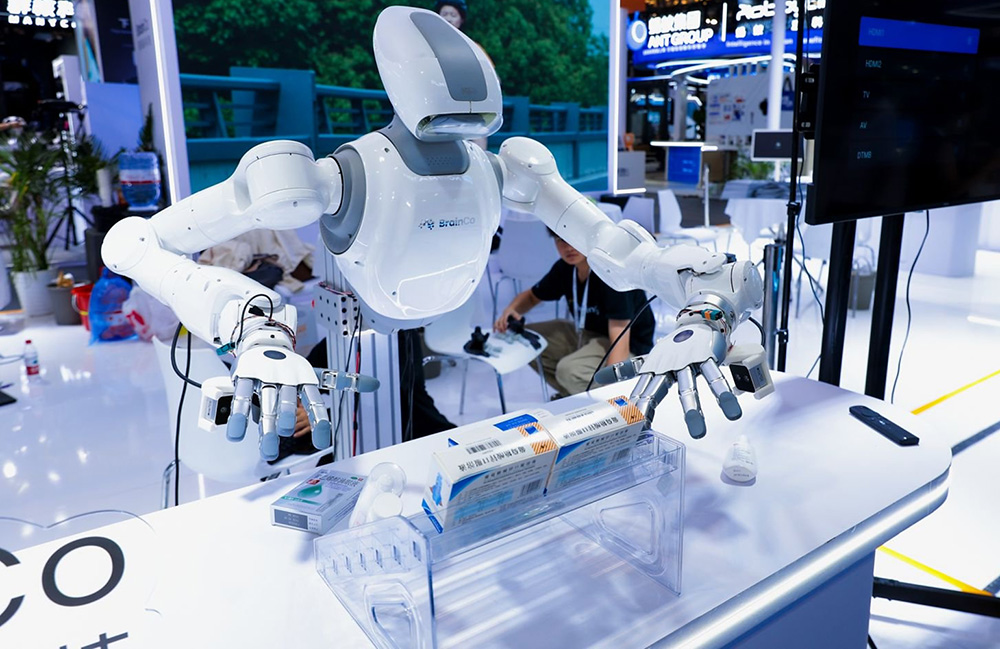
What happened
At the 2026 World Artificial Intelligence Conference in Shanghai, BrainCo demonstrated a brain-computer interface (BCI) platform that lets users direct a robot through neural signals. A person wearing an EEG headset thought about grasping a cap, and a robotic arm performed the action in under 200 milliseconds. The company also debuted its Embodied AI Data Collection Solution, which combines EEG data from human operators with robot execution and simulation data to address the shortage of high-quality training data for robots learning complex physical tasks.
Why it matters
Teaching robots to perform dexterous tasks like folding laundry or assembling components requires enormous amounts of high-quality training data—a persistent technical challenge in robotics. BrainCo's system captures not just what hands do, but what the brain intends, combining real-world execution quality with the scalability of human demonstration. The BCI platform works with commercially available robots (humanoids, arms, legged robots) without requiring proprietary hardware, potentially making it easier for robotics R&D teams to integrate into existing pipelines.
What to watch
BrainCo, founded in 2015 and based in Somerville, Massachusetts, already sells three robotic products: the Revo 3 Dexterous Hand (21-degree-of-freedom end effector), the Intelligent Bionic Hand (prosthetic), and the Intelligent Bionic Leg (smart prosthetic knee joint). The company has spent over a decade developing its BCI and medical rehabilitation technology.
Summaries like this, in your inbox every morning.
BrainCo's demonstration marks a practical convergence of three technologies: brain-computer interfaces, artificial intelligence, and embodied robotics. The company's decade-long focus on BCI research has enabled it to decode motor intent reliably and quickly enough for real-time robot control—a capability Nyx He, the company's partner and senior vice president, frames as defining "the next chapter of human-machine collaboration." The framework BrainCo calls "neuro-embodied-AI" layers intent decoding (via BCI), intent refinement (via AI), and physical execution (via the robot itself) into a pipeline that processes brain signals in under 200 milliseconds.
The introduction of the Embodied AI Data Collection Solution addresses one of robotics' most acute technical bottlenecks: obtaining sufficient high-quality training data for complex, dexterous manipulation tasks. By capturing EEG signals alongside hand and arm movement data—and combining real-world execution with human demonstration and simulation—the system aims to decouple data collection from reliance on large amounts of real-robot interaction. This approach may help reduce the cost and time required to train robots for tasks like assembly, laundry folding, and fragile-object handling. BrainCo's existing product portfolio (Revo 3 Dexterous Hand, Intelligent Bionic Hand, Intelligent Bionic Leg) shows the company has been building both robotics hardware and neural interface expertise in parallel, positioning it to integrate these capabilities into a cohesive platform.
Pick your industry and the AI tools you use, and get news related to your work every day.
Free · 30 seconds with Google · unsubscribe anytimeWhat is AIToday? →
Ask AI anything about this article. The AI reads this article, earlier AIToday articles, and Wikipedia, and cites its sources. Q&As are published on this page for other readers too.
ElevenLabs completed a $300 million employee tender at a $22 billion valuation, and co-founder Mati Staniszews…

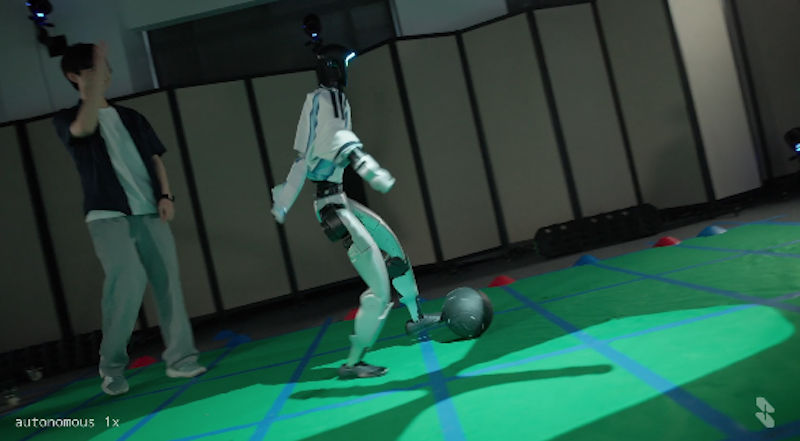
Skild AI used Nvidia Isaac Sim to give its S1 model one objective — score a goal — and let it compete against…
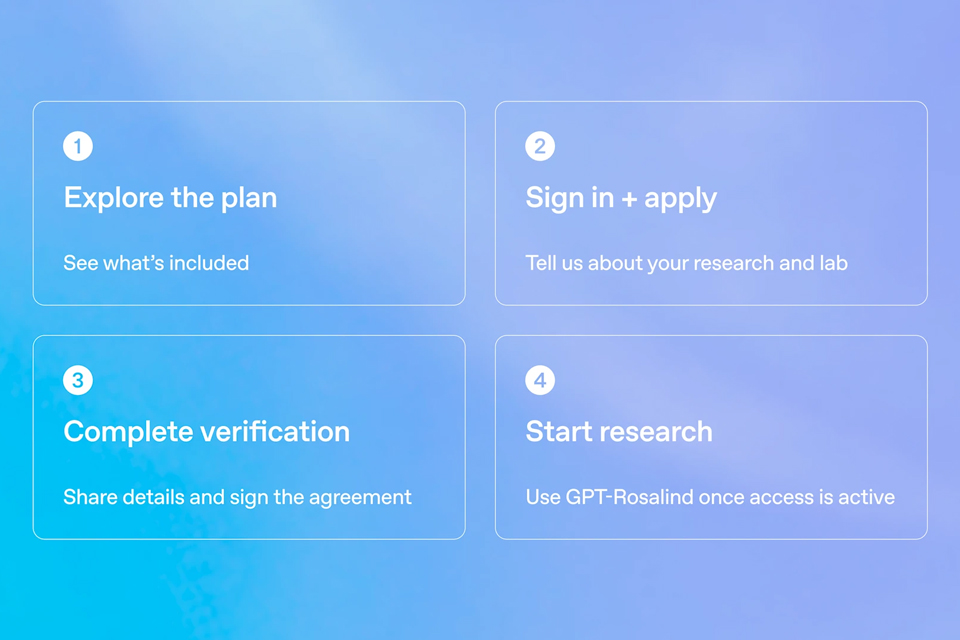
On October 15, OpenAI announced the Rosalind Academic Plan, giving approved US university labs free access to…
A Qiita article compared automated red-teaming methods for LLM apps — GCG, PAIR, and TAP — using mock implemen…

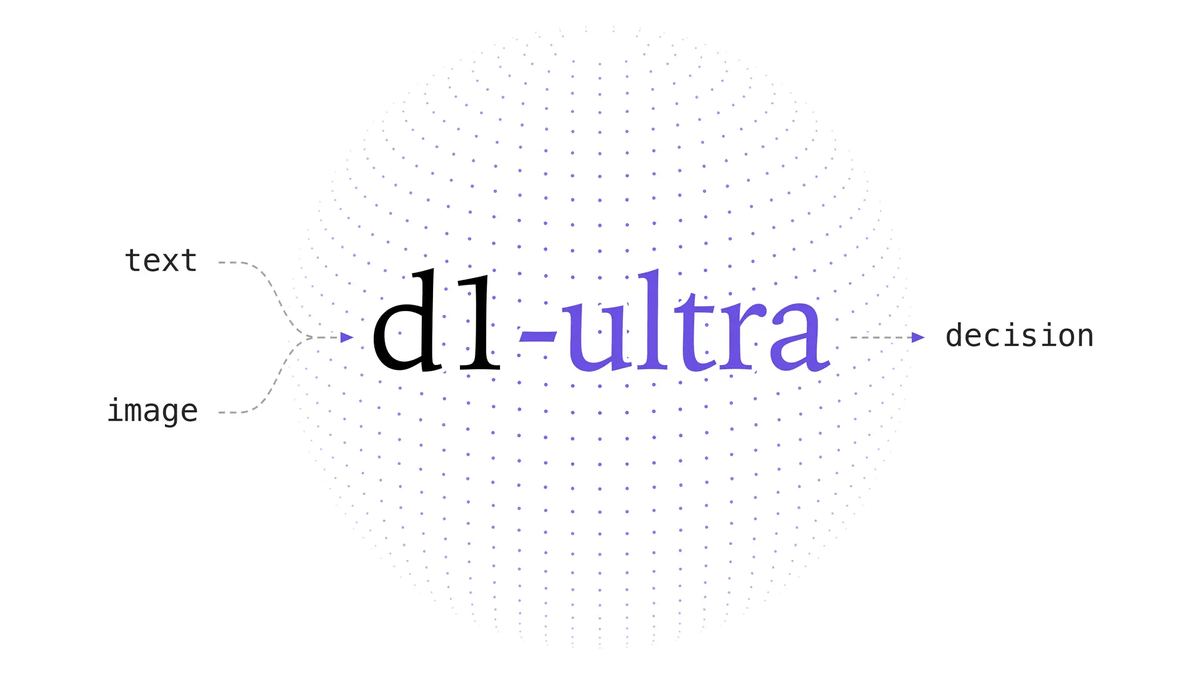
Liquid AI released d1-ultra on October 15, 2026, an upgraded open-weights decision model that averaged 76.7 ac…
Circlia started a proof-of-concept for TASTE SIGNAL: visitors to Holland Village Cafe FUKUOKA taste cookies an…