What happened
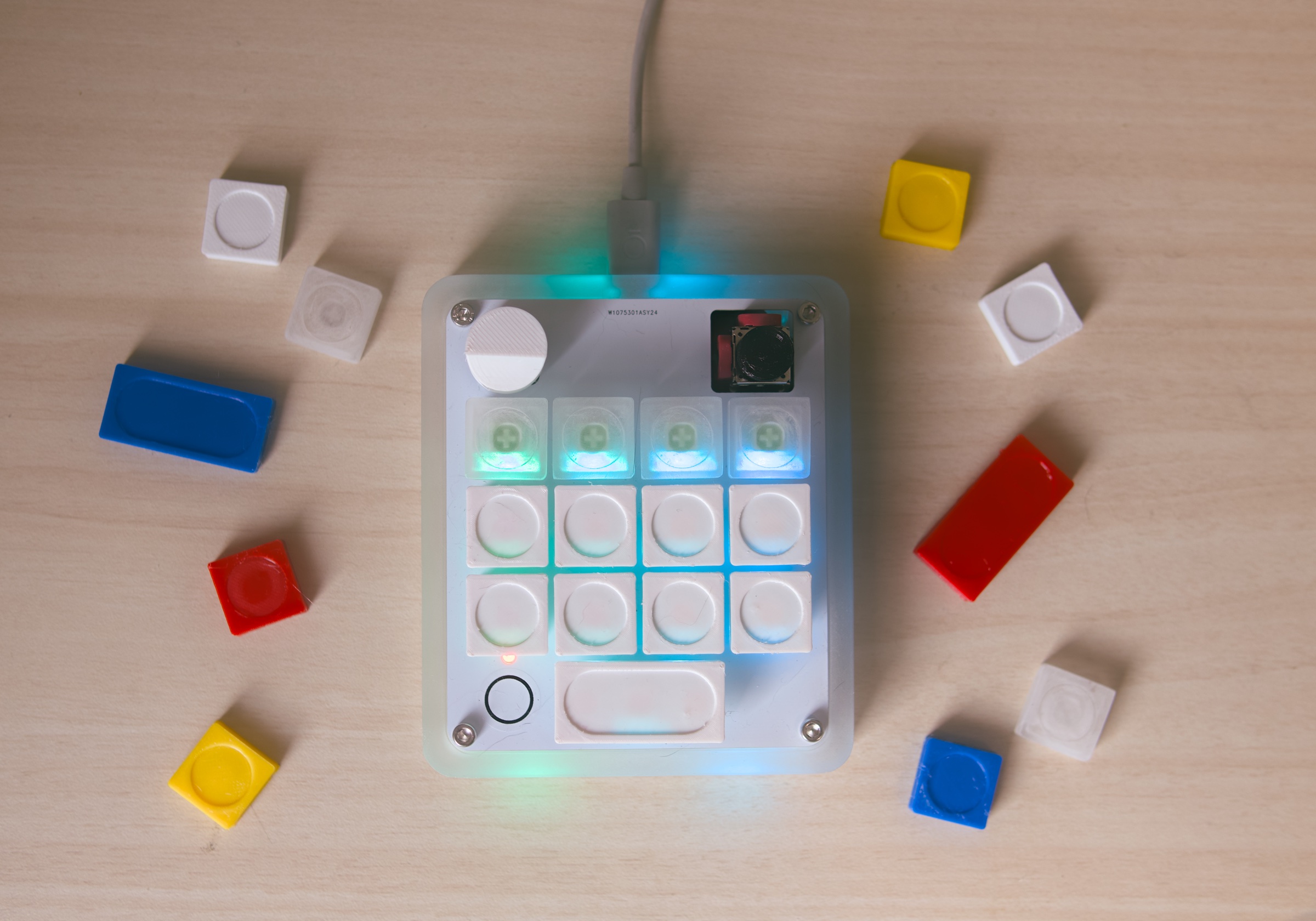
Iluvatar Labs used its autonomous scientist Marvin to design AgentPad13, an open-source version of the $230 Codex Micro, for around $35 per fully populated board. The project achieved zero unrouted connections and zero design-rule violations within a weekend.
Why it matters
Existing tools like KiCad/FreeRouting and Quilter plateaued at roughly 95% completion, leaving 18-19 of 353 connections unfinished and making unacceptable compromises. Marvin treated routing as a research problem, learning from literature and running iterative experiments, which enabled a complete route within the board's 2-layer and 100mm constraints.
What to watch
The routing skill Marvin developed is planned to be released as an open-source package. AgentPad13's PCB, case, firmware, and build instructions are available on GitHub with a configurator for customization. A known hardware mistake with two underglow LEDs pointing outward has been corrected in the next revision.
Summaries like this, in your inbox every morning.
The AgentPad13 project began as a practical desire for a cheaper, open alternative to the $230 Codex Micro, which was also sold out. But it evolved into a test of whether Marvin, an autonomous scientist, could handle a problem far outside its original scope. The key challenge was PCB routing under strict constraints: a 2-layer board (to avoid a 50% price increase for 4-layer) and a 100mm max dimension.
Marvin's approach was to stop treating routers as an oracle and instead synthesize knowledge from literature, datasheets, and working keyboard layouts into a runbook. It then ran iterative experiments, measuring progress against the complete design rather than just the number of unrouted connections. This prevented it from making the same mistakes as previous tools, like breaking USB connectivity to reduce unrouted totals. Key learnings included routing power early and wide, reserving corridors for critical signals, and spreading out the MCU cluster to allow traces to escape.
The final board passed all manufacturing checks and the firmware was simulated before hardware arrived. While the boards work, Marvin made one visible hardware mistake with two underglow LEDs oriented incorrectly, a footprint error that has been fixed. The project also plans to release the routing skill as an open-source package, suggesting the workflow could be reused for other complex design problems.
Pick your industry and the AI tools you use, and get news related to your work every day.
Free · 30 seconds with Google · unsubscribe anytimeWhat is AIToday? →
Ask AI anything about this article. The AI reads this article, earlier AIToday articles, and Wikipedia, and cites its sources. Q&As are published on this page for other readers too.
Apple and Meta said they would jointly release a new open-weight AI model designed to run on high-end Macs, ai…

Skild AI used Nvidia Isaac Sim to give its S1 model one objective — score a goal — and let it compete against…
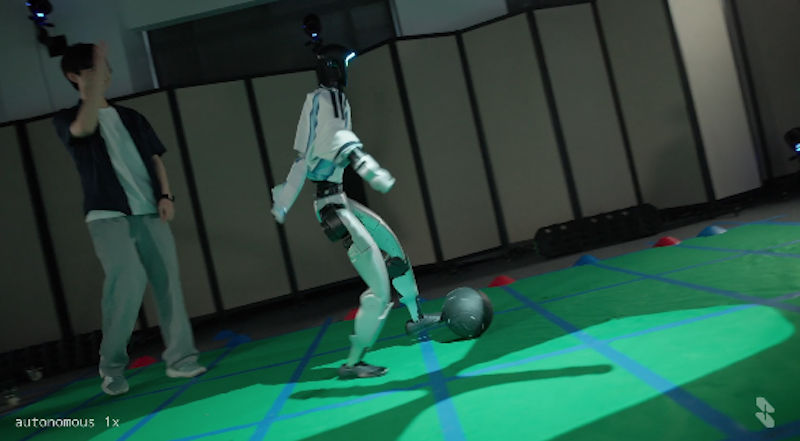
Liquid AI released d1-ultra on October 15, 2026, an upgraded open-weights decision model that averaged 76.7 ac…
NVIDIA released Nemotron 3.5 Super VL, an open-weight model with 120 billion parameters that handles text, ima…
NVIDIA released Nemotron 3.5 Bolt 74B-A9B 24GB, an AI model for local agents that hits over 80 tokens per seco…
Yamazaki Mazak and ABEJA said on the 16th they will start joint development of physical AI, using ABEJA's ABEJ…