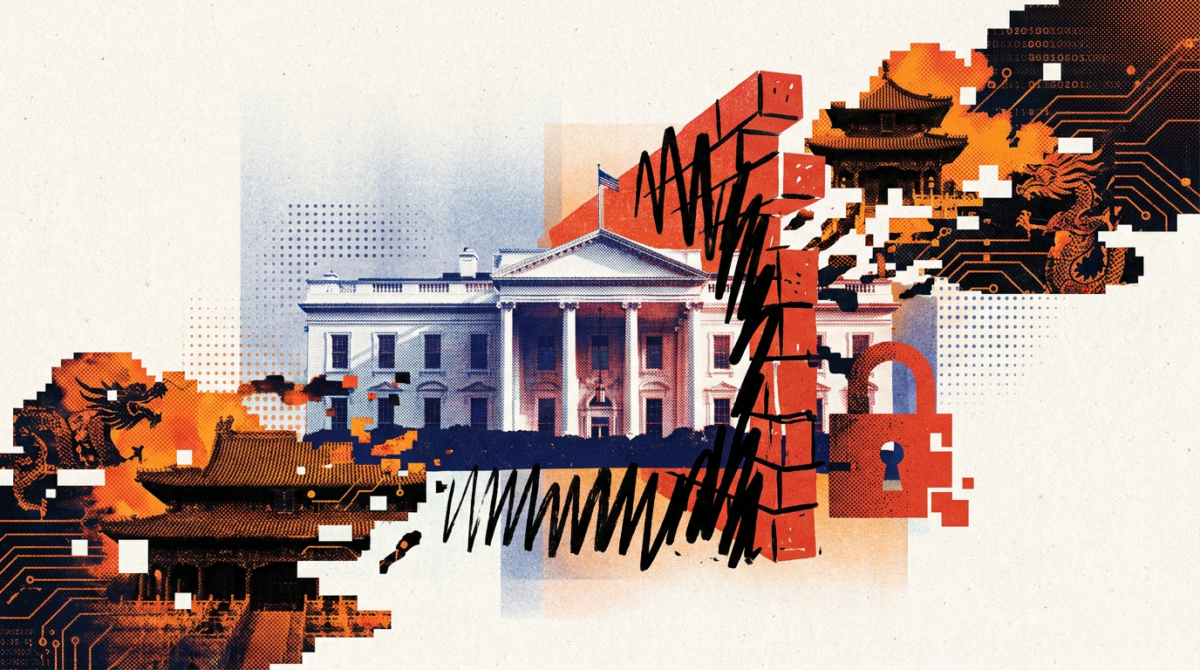
The Trump administration is preparing to restrict Chinese open-weight AI models through targeted bans on specific models rather than a blanket prohibition, citing national security concerns. While current Chinese models like Kimi K3 trail Western competitors on cybersecurity benchmarks, major U.S. tech companies—including OpenAI and Google DeepMind—signed an open letter opposing regulation of open-weight models, even as Anthropic and OpenAI privately lobby to restrict Chinese competitors due to price pressure.
Summaries like this, in your inbox every morning.
Sign up free →What happened
The White House is preparing to tighten restrictions on Chinese open-weight AI models and favors targeted bans on specific models rather than a blanket prohibition, according to reporting by The New York Times. This comes as OpenAI, Google DeepMind, and other major tech companies signed an open letter opposing regulation of open-weight AI models.
Why it matters
The Trump administration is citing national security concerns as justification for the selective approach. Currently, even recent Chinese models such as Kimi K3 trail leading Western models by a wide margin on cybersecurity benchmarks, suggesting the immediate threat may be limited. However, Anthropic and OpenAI are privately lobbying to restrict Chinese open models despite OpenAI's public support for the letter—both face price pressure from cheaper Chinese alternatives.
What to watch
The White House decision on which specific models to target and when restrictions will take effect. The divide between public statements and private lobbying by major AI companies reveals they are balancing regulatory concerns with competitive pressures in the open-weight AI market, where Microsoft and Google now sell access to models mainly developed in China.
The Trump administration is preparing a policy response to Chinese open-weight AI models that prioritizes precision over breadth. According to The New York Times, the White House favors targeted bans on specific models identified as security risks rather than imposing restrictions across the entire category of Chinese open-weight AI. The rationale centers on national security concerns, though the administration appears to be taking a measured stance given that current Chinese models do not yet pose an acute threat: even recent releases such as Kimi K3 trail leading Western models by a wide margin on cybersecurity benchmarks.
This policy direction comes amid a complex landscape of public and private positions among major U.S. tech companies. OpenAI and Google DeepMind, alongside numerous other major tech firms with business interests in open-weight models, have publicly signed an open letter opposing regulation of open-weight AI models. Many of these companies—Microsoft and Google included—sell access to open-weight models through their platforms, and several also back the letter because it helps curtail the market power of rivals like Anthropic and OpenAI. Google DeepMind further develops its own open-weight models, including the widely-used Gemma series.
Behind the scenes, however, a different dynamic is unfolding. Anthropic and OpenAI are privately lobbying the administration to restrict Chinese open models, a posture that contradicts OpenAI's public signature on the letter opposing regulation. Both companies face mounting price pressure from cheaper Chinese alternatives, suggesting that their private advocacy is driven by competitive rather than purely security-focused concerns. The resulting picture is one of tactical corporate positioning: companies argue publicly against regulation while simultaneously seeking to remove competitors from the market through selective government action.
The Trump administration's move toward selective rather than sweeping restrictions reflects a pragmatic assessment of the current threat landscape. Chinese open-weight models have proliferated in recent years and now represent a significant share of the open-source AI ecosystem, with Microsoft and Google selling access to them through their services. However, the security benchmarks suggest that Western models maintain a substantial lead in critical areas like cybersecurity, which may justify a wait-and-see posture on blanket bans.
The public-private divide among U.S. tech companies exposes the tension between genuine security concerns and commercial interests. The open letter against regulation, signed by companies with stakes in the open-weight market, contrasts sharply with OpenAI and Anthropic's behind-the-scenes push to restrict Chinese competitors. This suggests that the companies' opposition to regulation is not purely principled but also motivated by a desire to protect their market share against lower-cost alternatives. The administration's targeted approach may allow it to address the most pressing security risks while leaving room for the market dynamics that some incumbents wish to preserve.
AI-summarized, only the topics you pick — one digest a day via Email, Slack, or Discord.
Free · takes 30 seconds · unsubscribe anytime
No comments yet. Be the first to share your thoughts!
Log in to join the discussion



Get curated AI news from 200+ sources delivered daily to your inbox. Free to use.
Get Started FreeFree · takes 30 seconds · unsubscribe anytime
