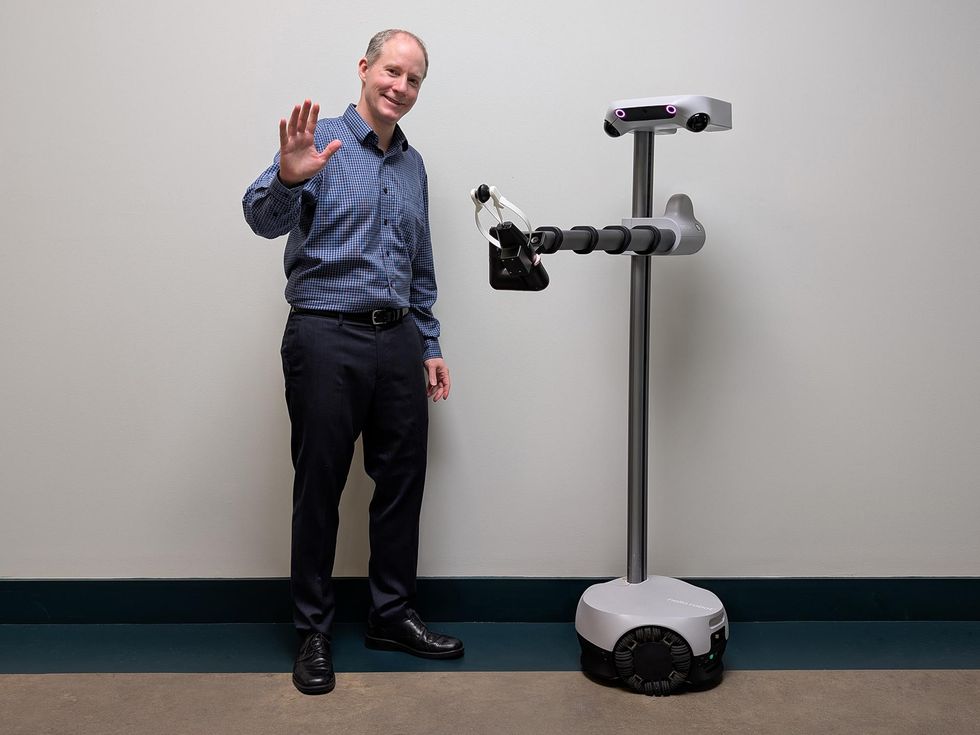
What happened
Charlie Kemp, cofounder and CTO of Hello Robot, says a community is using Stretch robots as research and development platforms. He also cites collaborative efforts on assistive robots for older adults and people with severe mobility impairments.
Why it matters
Kemp says finding human assistance is becoming more difficult due in part to aging societies. Robots have the potential to improve quality of life and empower people to have greater independence, he adds.
What to watch
The impact hinges on real-world interactions that reveal what works, what doesn't, and what wasn't anticipated. As Kemp notes, there is a vast difference between a demo video and a robot being productive in the real world.
WHO IT HITSThis work lands on researchers and developers using Stretch as a platform, and on older adults and people with disabilities who might benefit from mobile manipulators in homes and workplaces. It also matters for occupational therapists and other application experts who collaborate with roboticists.
Summaries like this, in your inbox every morning.
Charlie Kemp's path to Hello Robot began with an interest in the grand challenges of artificial intelligence. As an undergraduate at MIT, he was drawn to Prof. Rod Brooks's Cog project, which used humanoid robots to investigate embodied intelligence. He later joined Brooks's lab and worked on the humanoid robot Domo with his future cofounder, Dr. Aaron Edsinger. Their 2006 paper on a system that enabled Domo to help a person put objects on a shelf won the best paper award at the IEEE-RAS International Conference on Humanoid Robotics and led to Kemp's interest in assistive robotics and a faculty position at Georgia Tech.
At Georgia Tech, Kemp's lab conducted research as part of Robots for Humanity, a collaboration that began in 2010 after Henry Evans saw a demonstration on CNN. Henry has severe quadriplegia, and he and Jane Evans became pioneers in assistive robotics. Creating a home robot for Henry and Jane was the main inspiration for the prototype that led Aaron and Kemp to found Hello Robot. Henry and Jane have used each generation of Stretch, influencing subsequent designs, especially Stretch 4. Kemp notes that the field is still young, and that real-world interactions reveal opportunities for improvement. He also points to the role of application experts, such as Dr. Vy Nguyễn, Hello Robot's clinical research lead, who started in robotics while earning a doctorate in occupational therapy.
The stakes for Hello Robot's approach hinge on whether assistive robots can prove productive in real-world settings, not just in demos. As Kemp puts it, the world is extraordinarily good at breaking robotic systems in ways that surprise roboticists, so there remains an enormous amount to build and learn. For older adults and people with severe mobility impairments, the payoff could be greater independence and improved quality of life, but only if the technology bridges the gap between promising demonstrations and everyday usefulness. That gap is likely to shape how quickly assistive robots move into homes and workplaces.
Pick your industry and the AI tools you use, and get news related to your work every day.
Free · 30 seconds with Google · unsubscribe anytimeWhat is AIToday? →
Ask AI anything about this article. The AI reads this article, earlier AIToday articles, and Wikipedia, and cites its sources. Q&As are published on this page for other readers too.
SAIL generates a trajectory with a VLM, runs it in a simulator, scores progress from video, and sends the corr…

The Medical Device and Diagnostic industry is navigating regulatory changes as AI moves from screen to surgica…

Daifuku CEO Tomoaki Terai said at the International Logistics Exhibition 2026 that the company is developing a…

NXHD has begun accepting applications for the second round of its startup co-creation program, targeting AI an…

Matternet unveiled M3 on September 28, 2026 — a three-part system of aircraft, dock and drop-box portal, with…
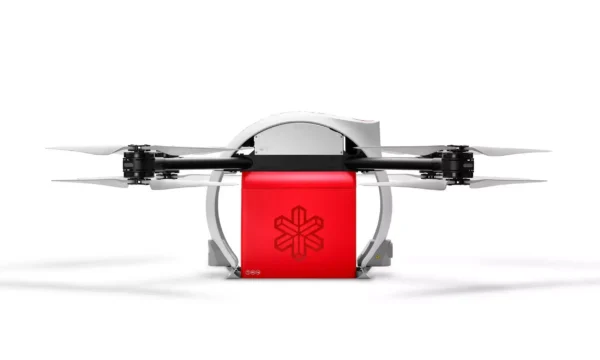
Skydio announced the F10 Lightrunner on September 24, 2026 at its Ascend conference