What happened
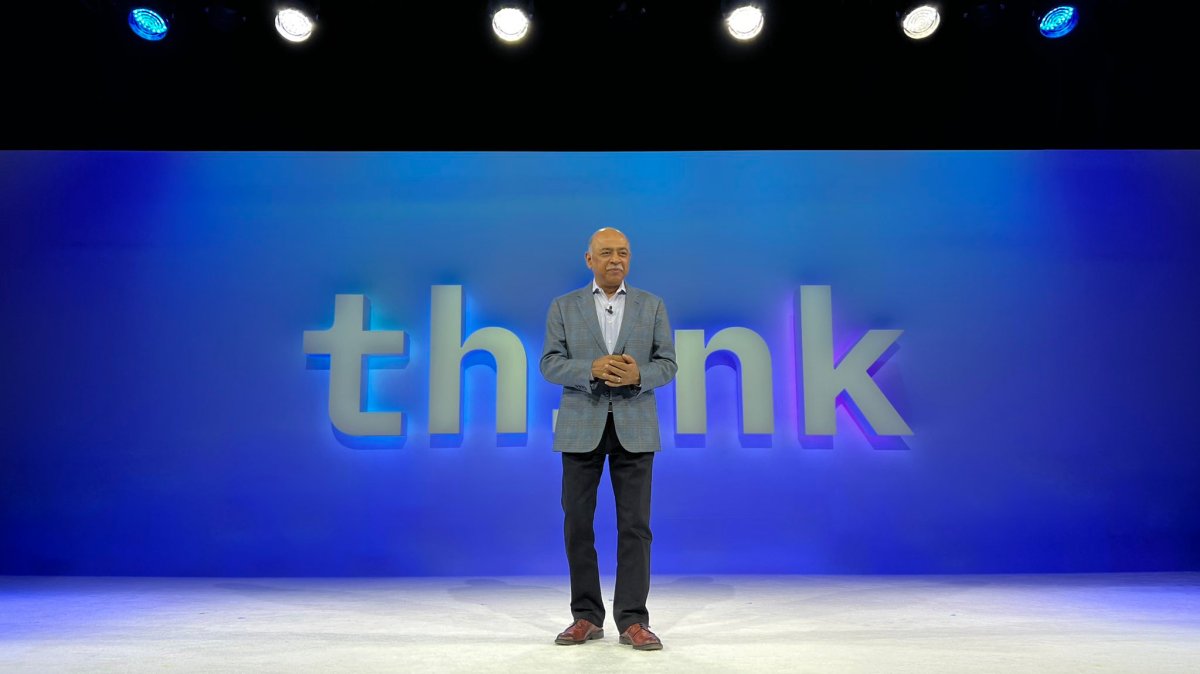
IBM reported quarterly revenue of $17.2 billion(約2.8兆円) and net earnings of $2.2 billion(約3500億円), but results fell sharply short of Wall Street expectations. The company's mainframe business—a key profit driver—dropped 42%, prompting IBM to lower its full-year growth forecasts. CEO Arvind Krishna attributed the decline to "tens" of customers postponing mainframe purchases due to high cost increases of 15% to 30% for data center equipment and PCs caused by the AI build-out.
Why it matters
Mainframes generate outsized profit for IBM because the company earns $3 in software revenue for every $1 of mainframe hardware sold, according to CFO Jim Kavanaugh. A sustained decline in mainframe sales would directly threaten IBM's software revenue stream and overall profitability. The company's stock dropped 25% after Krishna pre-warned investors of poor results last week.
What to watch
Krishna said some customers have already resumed mainframe purchases this quarter and promised that delayed buyers will eventually return to buy new systems along with their software contracts. He stated "we see no evidence of clients moving off the mainframe," but the company's ability to recover lost sales in coming quarters will determine whether this is a temporary blip or a more structural shift.
Summaries like this, in your inbox every morning.
IBM's 42% mainframe decline is the immediate symptom of a deeper tension created by the AI data center boom itself. The same component shortages and price pressures that have lifted cloud and data center vendors—driving Dell, HP, and Apple to raise prices—have forced enterprise customers to pause or postpone discretionary spending on legacy systems like mainframes. This represents a temporary budget collision rather than a fundamental shift in demand: mainframe hardware costs hundreds of thousands to millions of dollars per unit, and when customers face a choice between absorbing 15% to 30% cost increases on immediate data center and PC needs versus deferring a major mainframe refresh cycle, the math favors delay. Krishna's confidence that these customers will return rests on the assumption that the AI-driven cost spike is transient and that the unique economics of mainframes—where a single hardware purchase unlocks years of $3 software revenue per $1 hardware—will eventually outweigh short-term budget constraints. However, the company's decision to pre-warn investors and lower full-year guidance suggests IBM does not expect a quick recovery, acknowledging that the mainframe revenue loss will ripple through 2024.
For example, today's edition would include:
AI-summarized, only the topics you pick — one digest a day via Email, Slack, or Discord.
Free · 30 seconds with Google · unsubscribe anytimeWhat is AIToday? →
Ask AI anything about this article. Q&As are published on this page for other readers too.
Supply chain players say most AI data center cost models in China and the West count only electricity consumpt…
At IFA 2025 in Berlin, IFA Management CEO Leif Lindtner said Samsung Electronics left the fair after its leade…
Cocopelli introduced SAF, a generative-AI tool that searches internal rules, manuals and product materials and…

On September 17, 2026, KnowledgeSense added a function to ChatSense's Notebook that automatically gives AI-gen…

Broadcom CEO Hock Tan told Jim Cramer on Mad Money that demand for AI compute infrastructure for development a…

Netskope shares rose nearly 19% this week, helped by an overweight rating and $21 per share target from Stephe…