What happened
OpenAI published a repository of 722 mathematical manuscripts in 372 families, produced by an internal unreleased model that averaged three hours of ChatGPT Pro thinking compute per result across about 4,000 problems.
Why it matters
The catalogue signals OpenAI's internal model can contribute to open research problems, a claim the company is now backing with a public record of results.
What to watch
Not all manuscripts have accompanying formal proofs, and OpenAI acknowledges some unformalized results could have issues; it says it will fix problems quickly and continue updating.
WHO IT HITSThis lands on mathematicians and research groups who track open problems, and on AI R&D teams using proof-verification workflows, as both now have a public corpus of model-generated results to check.
Summaries like this, in your inbox every morning.
OpenAI says it began evaluating its models on open research problems and expanded those evaluations after performance on existing mathematical tests saturated. The catalogue it just published is the output of that expanded effort, organized into 372 families where each family groups related papers such as a principal result, companion arguments, or alternative proofs.
The collection is not a uniform set of finished papers. It includes results at different stages of verification, not all have Lean formalizations, and OpenAI warns that some unformalized results could have issues, which it says it will try to fix quickly. Most results followed one procedure with an internal model, but a few exceptions exist, including work on the Riemann zeta function's zero-free region and the Hodge Conjecture for CM abelian varieties. The writeup for the Re(s) > 11/12 zero-free region was human edited for readability.
Whether this repository becomes a lasting reference may hinge on how the formalization catch-up proceeds and how many of the unformalized results hold up under outside scrutiny. For mathematicians, the immediate value is a large, citable body of model-generated work to check; for OpenAI, the public record puts its internal model's research contributions on the line, with corrections to be logged as new versions.
Pick your industry and the AI tools you use, and get news related to your work every day.
Free · 30 seconds with Google · unsubscribe anytimeWhat is AIToday? →
Ask AI anything about this article. The AI reads this article, earlier AIToday articles, and Wikipedia, and cites its sources. Q&As are published on this page for other readers too.
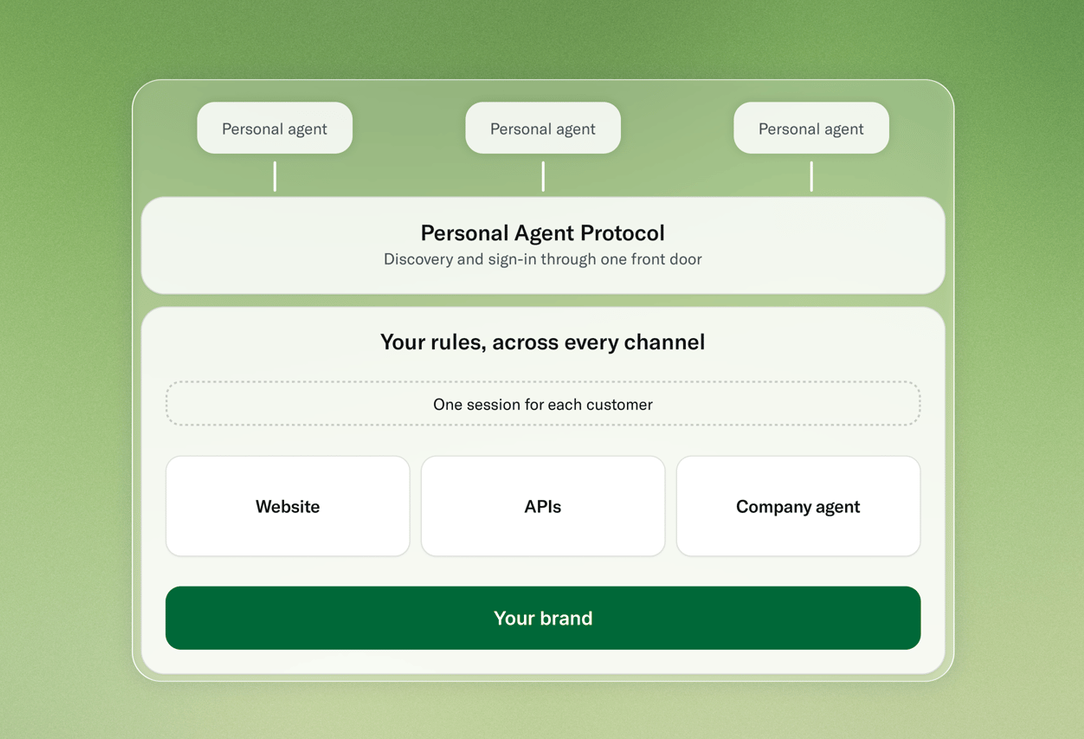
Meta, Walmart, Stripe and Sierra Technologies are creating the Personal Agent Protocol, introduced by Sierra c…
Mistral AI opened a public preview of Mistral Large 4, its 1.05 trillion-parameter MoE model nicknamed "Le Cho…
Reflection AI started early access to Beam, its first open-weights model, with 501 billion total and 23 billio…
Google began rolling out "Simple Guide" in Gemini Live on Android, letting users share camera or screen views…

Anthropic launched Claude for Google Workspace as a public beta for paid Claude plans, adding Claude to Google…
Testing a fake LLM call on CPython 3.14.8, the developer saw the first await succeed and the second raise Runt…


