What happened
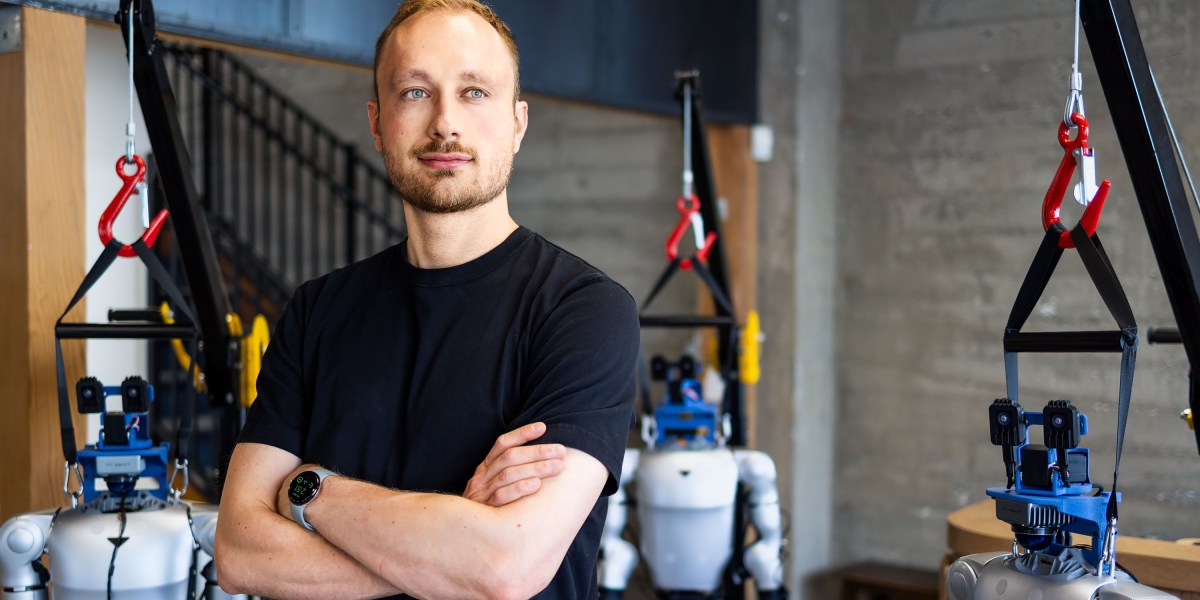
Danijar Hafner, who left Google DeepMind in the fall of 2025, is building a stealth startup that uses humanoid robots to advance his research on helping AI handle unencountered environments.
Why it matters
His technique enables robots to execute complex tasks without real-world trial-and-error training, which is traditionally used in robotics. This could be key to deploying robots into homes with unseen floor plans and furniture.
What to watch
Hafner's approach hinges on agents trained in simulated world models, then embedded in physical robots. He has not revealed product plans, but his stated goal is to 'change the world.'
WHO IT HITSRobotics startups and investors will be watching, as Hafner's method promises to reduce the need for expensive real-world training. If successful, it could affect how robots are deployed in settings like homes and offices.
Summaries like this, every morning.
Danijar Hafner's career has been marked by a progression from virtual to physical worlds. After early work at Google Brain and Google DeepMind, he developed a series of increasingly capable agents, from PlaNet to Dreamer 4, each trained within world models to plan ahead. His recent DayDreamer project proved these agents could control robots in novel environments, setting the stage for his current venture.
His new startup, formed in the fall of 2025, represents a culmination of this research. The focus on humanoid robots, which he imports from China, signals a move toward physical embodiment. The core technical claim is that his agents do not need real-world trial-and-error training, a departure from conventional robotics that relies on such methods. Instead, they use experiences from simulated world models to anticipate and react to unseen situations.
The stakes are high for the field of embodied AI. If Hafner's robots can successfully navigate the messiness of human spaces, it could accelerate the deployment of robots in areas like home assistance. However, the startup is still in stealth mode, and he has not named specific products. His ambition to 'change the world' suggests he is aiming for a significant impact, but the immediate outcome of this venture remains to be seen.
Pick your industry and the AI tools you use, and get news related to your work every day.
Free · 30 seconds with Google · unsubscribe anytimeWhat is AIToday? →
Ask AI anything about this article. The AI reads this article, earlier AIToday articles, and Wikipedia, and cites its sources. Q&As are published on this page for other readers too.
Google Cloud revenue grew 82% year over year to $24.8 billion last quarter, up from $13.6 billion a year earli…

As Anthropic, Meta, Google, Amazon and Microsoft meet faith leaders — Anthropic cites "more than 15 religious…

Anthropic added to its terms of service a ban on "persistent, targeted abusive or cruel" behavior toward Claud…

The developer behind agentcells, a personal project that splits work into 'cell' units (triage, implement, rev…

inori launched a free site that analyzes X posts to match users to an AI model like GPT, Claude or Gemini

Google added an October 16 clause to its privacy policy saying Drive, Gmail and Google Photos data can be used…