What happened
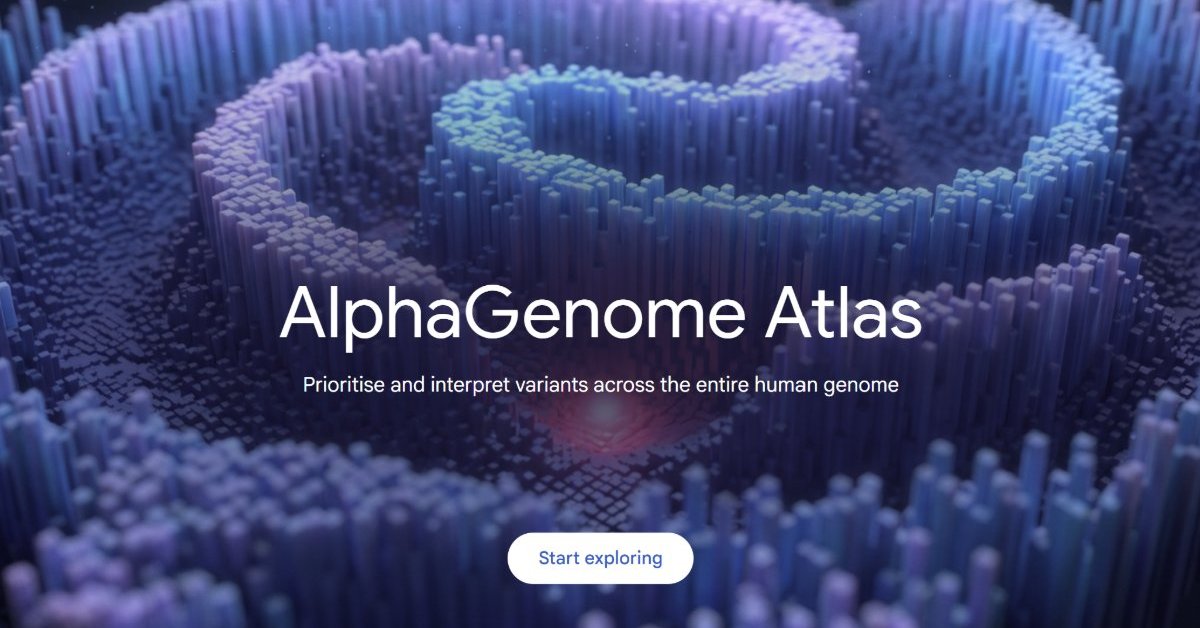
Google DeepMind released AlphaGenome Atlas on September 8, a searchable database predicting molecular effects for all ~9 billion possible single-letter human genome variants. It is free for academic use via its website.
Why it matters
The database covers coding and non-coding regions, including the 98% of the genome not making proteins. It integrates AlphaGenome's predictions with AlphaMissense scores to rank potentially impactful variants quickly.
What to watch
The database's utility hinges on real-world validation. The Broad Institute used AVI scores to find a DNM1 gene variant tied to epileptic encephalopathy; Exeter University detected 22% more non-coding variant associations than standard methods.
WHO IT HITSAcademic researchers studying rare diseases, particularly those analyzing vast whole-genome datasets, can now screen candidate variants without lab experiments. This may accelerate discoveries in underexplored non-coding regions.
Ask the AI about this article →
Summaries like this, in your inbox every morning.
This release builds directly on AlphaGenome, the genome analysis AI Google DeepMind published in June last year. Rather than asking researchers to run the AI themselves on every mutation of interest, the company precomputed results for all roughly 9 billion possible single-letter changes and made them searchable. The scale is enormous: at 1 petabyte, the database is more than 30 times larger than AlphaFold Database, which holds protein structure predictions. The decision to include non-coding regions is notable because, while the human genome has about 3 billion base pairs, only about 2% of it codes for proteins. The remaining 98% regulates gene activity and is largely unexplained. By covering this territory, AlphaGenome Atlas aims to make causal variant hunting in these regions practical. Early validation by the Broad Institute—finding a DNM1 variant tied to epileptic encephalopathy—and Exeter University's 22% improvement in detecting non-coding associations suggest genuine utility, though both results come from the developers' own cited examples. The real test will be whether independent research groups, working on diverse conditions with different data, can consistently translate these predicted impacts into clinically meaningful findings. The database is made freely available to academics from September 8, with commercial access through Google Cloud to follow, indicating a strategy to establish the tool as a standard reference in genomics research while monetizing broader enterprise use.
For example, today's edition would include:
AI-summarized, only the topics you pick — one digest a day via Email, Slack, or Discord.
Free · 30 seconds with Google · unsubscribe anytimeWhat is AIToday? →
Ask AI anything about this article. Q&As are published on this page for other readers too.
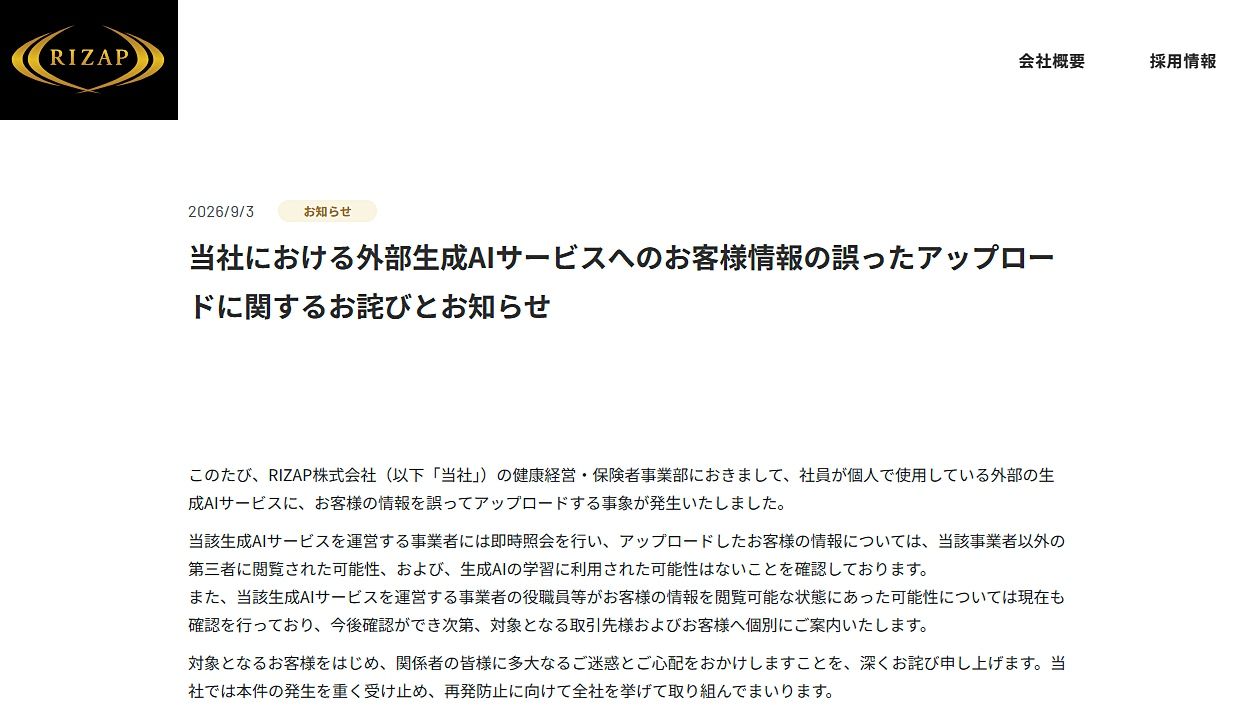
RIZAP Group said an employee mistakenly uploaded personal data, including names and disease details of 210 peo…
A panel convened by CRIO and Clinical Leader advised sites to move to electronic systems, establish AI governa…

Kakehashi CEO Nakagawa said the AI era is when 'oshi no yakuzaishi' (a pharmacist you root for) becomes key, a…

Google DeepMind unveiled AlphaGenome Atlas, a platform with a predictive map of every possible DNA letter chan…
In a midstage study, Insilico Medicine’s drug rentosertib reduced biological age, measured by six aging clocks…

Insilico Medicine published an exploratory analysis in Nature Biotechnology showing rentosertib shifted blood…