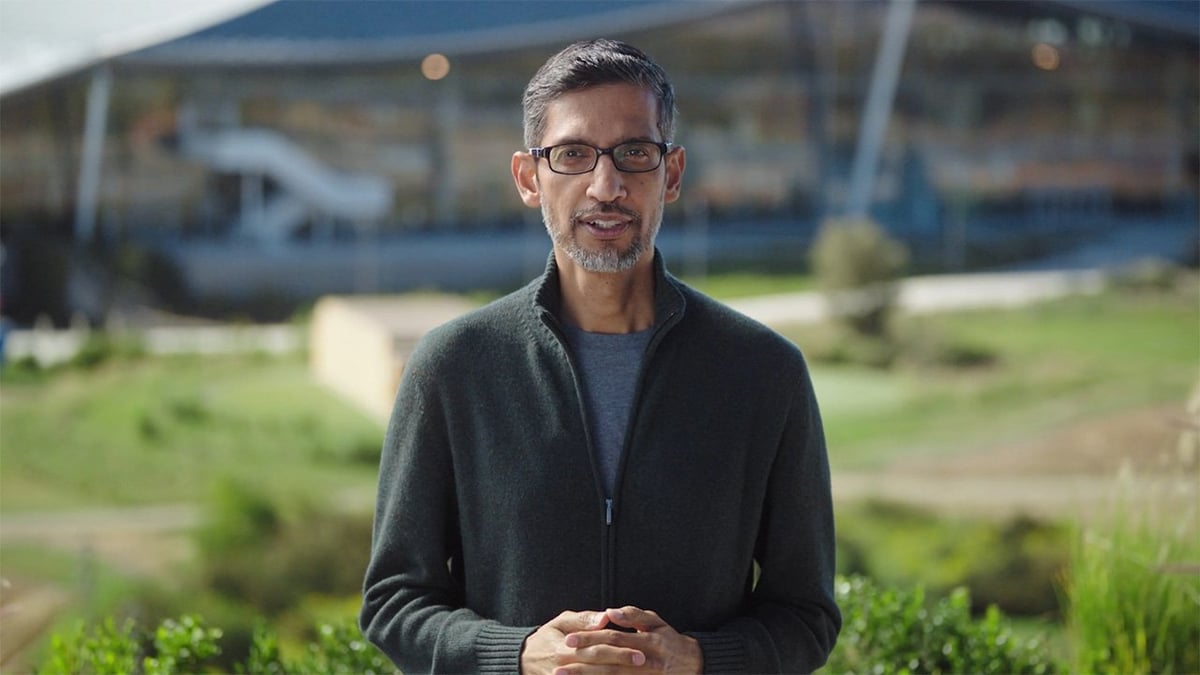
Alphabet raised its 2026 data center capital spending guidance to $195 billion(約31兆円) to $205 billion(約33兆円), signaling increased orders for chipmakers Nvidia and Broadcom. The move means Alphabet's capex growth now exceeds its operating cash flow, requiring the company to raise external capital, but the company points to Google Cloud's 82% growth rate as evidence it can monetize the expanded computing capacity.
Summaries like this, in your inbox every morning.
Sign up free →What happened
Alphabet CEO Sundar Pichai announced in the Q2 results (released after Wednesday's close) that the company is raising its 2026 data center capital expenditure guidance to $195 billion(約31兆円) to $205 billion(約33兆円), up from the previous range of $175 billion(約28兆円) to $185 billion(約30兆円) — an increase of $10 billion(約1.6兆円) announced after Q1 and another $10 billion(約1.6兆円) boost following Q2.
Why it matters
The bulk of Alphabet's spending flows to Nvidia, which supplies GPUs for Google Cloud, and Broadcom, the design partner behind Alphabet's custom Tensor Processing Unit (TPU) chip that is growing in popularity in its data centers and is now being sold to outside customers. Any capex guidance increase for Alphabet signals potential revenue growth for both chipmakers, though Alphabet stock declined on the news because the company can no longer cover all this spending with its operating cash flow ($186 billion(約30兆円) over the past 12 months) and will need to raise capital to fill the gap.
What to watch
Alphabet has demonstrated it can turn computing resources into profit centers, as shown by Google Cloud's 82% growth rate, suggesting the expanded capex spending may support long-term value creation despite near-term investor skepticism.
On Wednesday after the closing bell, Alphabet released its Q2 earnings report and announced a significant upward revision to its 2026 data center capital expenditure guidance. The company's initial guidance for the year had been a range of $175 billion(約28兆円) to $185 billion(約30兆円). That range was already boosted by $10 billion(約1.6兆円) in conjunction with the Q1 report, moving it to $185 billion(約30兆円) to $195 billion(約31兆円). In the Q2 announcement, Alphabet raised it once more by $10 billion(約1.6兆円), setting the new guidance at $195 billion(約31兆円) to $205 billion(約33兆円).
CEO Sundar Pichai's move reflects a strategic shift in how Alphabet is approaching AI infrastructure investment. Rather than committing to a fixed capex budget, the company is essentially signaling that management will increase spending as computing capacity becomes available on a faster timeline than previously anticipated. The company describes this as a form of flexible budgeting for AI, though the practical effect is that Alphabet is committing to massive, ongoing infrastructure expansion.
The bulk of this spending flows to two major chipmakers. Nvidia supplies the broad-purpose GPUs that are popular options on Google Cloud and other cloud platforms. Broadcom serves as the design partner behind Alphabet's custom AI chip, the Tensor Processing Unit (TPU), which is growing in popularity within Alphabet's data centers and is now being sold to outside customers. Any increase in Alphabet's capex guidance signals likely revenue growth for both suppliers.
However, the announcement highlighted a financial constraint: over the past 12 months, Alphabet generated $186 billion(約30兆円) in cash from operations. Even if the company directed all of that cash flow exclusively to data center spending, it would fall short of the new $195 billion(約31兆円) to $205 billion(約33兆円) capex range. Alphabet also maintains share buyback plans and dividend obligations, so the company will need to raise external capital to close the gap—a financing move it has already undertaken.
Alphabet's stock declined on the news, reflecting investor concern about the capital intensity of the buildout. However, the company's track record suggests the spending may be justified: Google Cloud grew at 82% in the period covered by the earnings report, indicating that Alphabet is able to convert data center investments into profitable revenue growth more rapidly than many competitors.
Alphabet's repeated upward revisions to its 2026 capex guidance—a $10 billion(約1.6兆円) increase in Q1 followed by another $10 billion(約1.6兆円) in Q2—reflect management's confidence that AI computing capacity will become available faster than originally forecasted. The company is essentially signaling it will spend whatever is necessary to secure chips if supply accelerates, granting itself a flexible budget for data center buildout. This aggressive investment posture benefits Nvidia and Broadcom directly, as they are the primary beneficiaries of Alphabet's infrastructure expansion.
What distinguishes Alphabet's capex strategy is that it has demonstrated the ability to convert data center spending into revenue growth: Google Cloud posted an 82% growth rate, suggesting the company can monetize computing resources faster than traditional datacenter operators. However, the fact that capex now exceeds operating cash flow of $186 billion(約30兆円) means Alphabet must raise external capital to fund the gap, a constraint that forced the company to take on additional financing. Wall Street reacted negatively to the announcement, but the article's analysis suggests this reflects short-term skepticism rather than fundamental strategic weakness.
AI-summarized, only the topics you pick — one digest a day via Email, Slack, or Discord.
Free · takes 30 seconds · unsubscribe anytime
No comments yet. Be the first to share your thoughts!
Log in to join the discussion
Get curated AI news from 200+ sources delivered daily to your inbox. Free to use.
Get Started FreeFree · takes 30 seconds · unsubscribe anytime
