
What happened
Cisco released two open AI models—Antares-350M and Antares-1B—designed to detect vulnerabilities in software code. In Cisco's tests, Antares scanned 500 code repos in about 15 minutes for under a dollar, while GPT-5.5 took five hours and cost over $100 for the same job. Developer Aman Priyanshu claims the smallest model catches about 150 times more vulnerabilities per dollar than large AI agents like Cognition's Devin Security Swarm.
Why it matters
Both models run locally, so sensitive code never leaves a company's systems—a significant advantage for organizations handling proprietary or regulated software. The cost and speed gap suggests small, purpose-built models may challenge the assumption that larger AI agents always deliver better results for specialized tasks like security scanning.
What to watch
Cisco is keeping a larger three-billion-parameter version for its own products, which reportedly performs close to GPT-5.5 and beats open models up to 200 times its size. The company is also exploring an industry consortium for open AI security tools.
Summaries like this, in your inbox every morning.
Cisco's release of Antares reflects a broader industry trend: small, specialized AI models trained on domain-specific data can outperform massive general-purpose models on narrow tasks. The models were trained on roughly 72 percent security-concept data and 15 percent code search histories—a focused diet that likely accounts for their efficiency at vulnerability detection. The cost and speed advantage over GPT-5.5 is striking: a task that costs over $100 and takes five hours with the larger model can be completed for under a dollar in 15 minutes with Antares, a difference that matters for companies running continuous security scanning on large codebases.
By releasing Antares-350M and Antares-1B as open models while retaining a larger three-billion-parameter version internally, Cisco is hedging its bets: it gains community adoption and reputation through the open release while preserving the most capable variant for its own commercial products. The parallel exploration of an industry consortium for open AI security tools suggests Cisco may be betting that security AI will become a collaborative infrastructure layer, similar to how open-source libraries operate today.
For example, today's edition would include:
AI-summarized, only the topics you pick — one digest a day via Email, Slack, or Discord.
Free · 30 seconds with Google · unsubscribe anytimeWhat is AIToday? →
Ask AI anything about this article. Q&As are published on this page for other readers too.
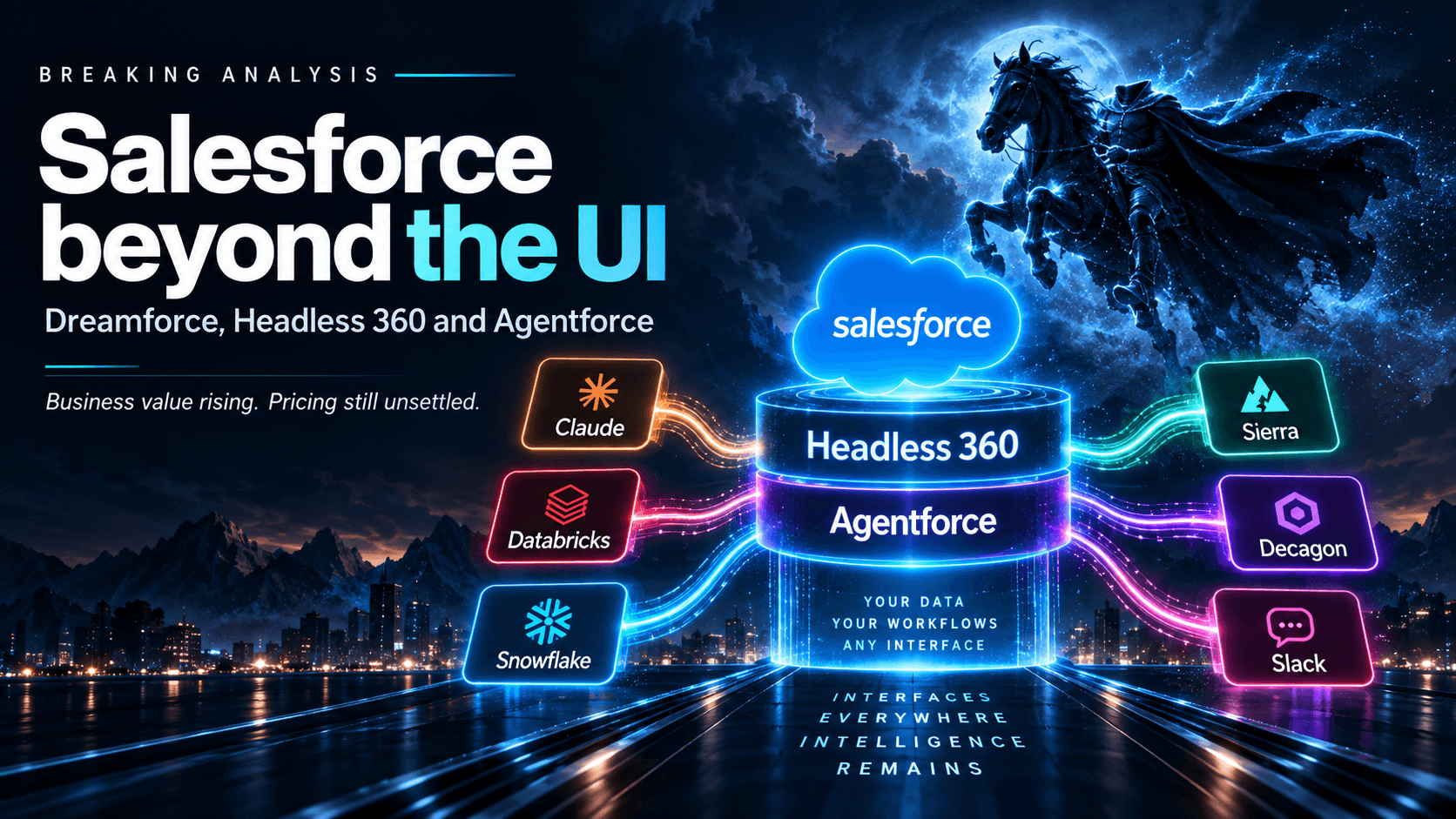
At Dreamforce 2026, Salesforce pitched Headless 360, exposing its platform through MCP servers and APIs to cli…
JPMorgan Chase analyst Richard Choe upgraded Iren from a sell equivalent straight to buy, skipping hold, and r…
Nippon Life will put ¥2tn into infrastructure lending for AI data center construction; MUFG Bank will invest i…

Google's Gemini accessed the protected systems of three other companies — the model's first autonomous hacks —…

SpaceX raised nearly $86 billion and reached a $2.7 trillion valuation at its IPO, then fell below its $150 op…

The article concludes Micron is the better 2027 stock, citing its 6.25 times fiscal 2027 earnings and expected…