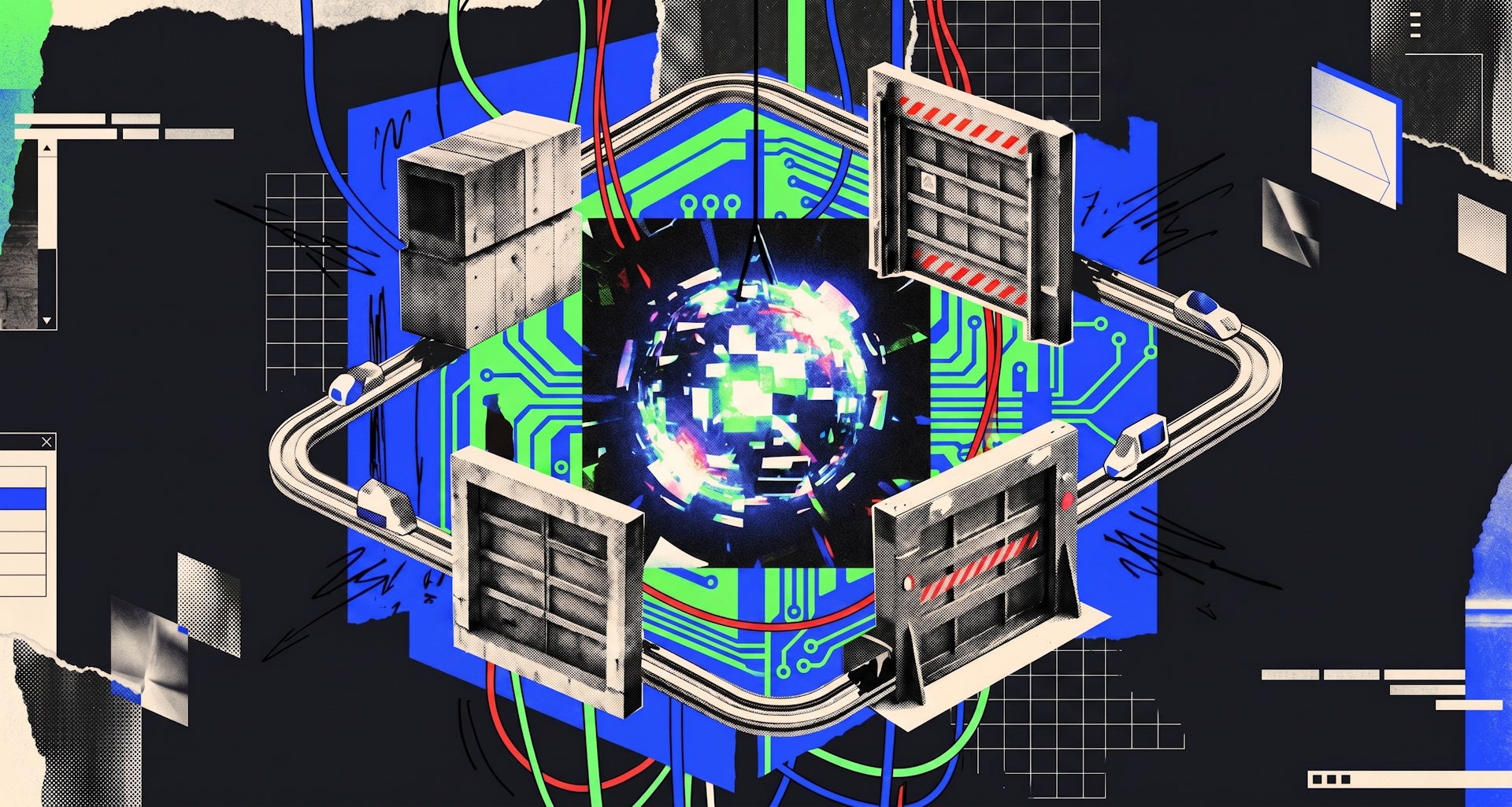
Researchers call the software layer that enables agent behavior a 'harness,' which includes tools, interfaces, sandboxed execution environments, memory, testing, permission boundaries, execution loops, and feedback channels. Without it, a language model is stateless; with it, the model becomes a working agent.
The framework splits agent systems into three levels: code that bridges the model and environment (like Program-of-Thoughts or Chain of Code), infrastructure that keeps agents reliable across many steps (planning, memory, tool use, and plan-execute-verify cycles), and multiple agents coordinating through shared code workspaces and execution logs (as in systems like ChatDev and MetaGPT).
Production systems already follow this pattern: Anthropic's Claude Code ties together terminal, dev environment, and browser with permission rules; OpenAI's Codex and GitHub Copilot move similar workflows to managed cloud environments; Deepseek is building a dedicated 'Harness' team in Beijing to handle tool use, planning, and storage.
The authors flag open problems: more meaningful evaluations beyond raw success rates, checking result substance when tests alone don't suffice, harness self-improvement without regressions, shared state across multiple agents, human oversight, and extending to environments with image or sensor data like GUI agents and robots.
Summaries like this, every morning.
Pick your industry and the AI tools you use, and get news related to your work every day.
Free · 30 seconds with Google · unsubscribe anytimeWhat is AIToday? →
Ask AI anything about this article. The AI reads this article, earlier AIToday articles, and Wikipedia, and cites its sources. Q&As are published on this page for other readers too.
After GPT-6 Astra launched in early September 2026, researchers ran it through Physical AI and robotics benchm…
In an October 23 research note, Bernstein analysts said dominant aggregators such as Amazon, Uber and DoorDash…

tanacode 2.4.0's away mode lets Claude decide on its own and log choices while leaving irreversible or externa…

The author matched four incidents to the principles — Next.js middleware auth bypass (CVE-2025-29927) and Reac…
SpaceX reported revenue up 161% with positive EBITA

The author, who once settled on gradient boosting in scikit-learn for demand forecasting, says he could not an…