What happened
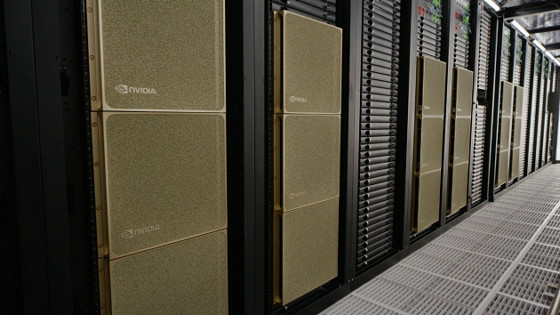
Unemployment Labs analyzed Chinese AI models by counting the streaming multiprocessors (SM) of the chips used to create their initial parameters in PyTorch. It found DeepSeek-V4-Flash, DeepSeek-V4-Pro, Kimi K3, Kimi K3.1-Pro, MiniMax-M3 and Ling-3.1-flash used NVIDIA Blackwell chips during the export-control period.
Why it matters
The group cautions that the method is inferential and does not prove use, nor that the chips were located inside the country.
WHO IT HITSPolicymakers and export-control officials who monitor chip flows may need to weigh this forensic evidence. AI developers and cloud providers relying on PyTorch may also see their chip choices become traceable.
Summaries like this, every morning.
The finding arrives against a backdrop of loosening restrictions: the U.S. government approved sales to Chinese firms in May 2026, and China was reported to be moving toward approving imports. Unemployment Labs' analysis points to the earlier period of tight controls, suggesting American chips were in use then.
The method relies on a quirk of PyTorch: when initial parameters are created, they leave a fingerprint tied to the number of streaming multiprocessors on the chip. By counting those, the group says it can identify the chip with high confidence. It applied this to a list of models spanning DeepSeek, Moonshot AI, MiniMax and Ant Group, reading a shift from Hopper-generation to Blackwell-generation chips.
Separately, reports on November 12, 2026 said a company tied to Alice Huang, whose relationship with Jensen Huang became public, had promised to deliver Blackwell-generation chips to DeepSeek. Unemployment Labs stresses its method cannot analyze models built on other frameworks, such as Baidu's ERNIE-5.5 on PaddlePaddle, and that chip location is not established.
Pick your industry and the AI tools you use, and get news related to your work every day.
Free · 30 seconds with Google · unsubscribe anytimeWhat is AIToday? →
Ask AI anything about this article. The AI reads this article, earlier AIToday articles, and Wikipedia, and cites its sources. Q&As are published on this page for other readers too.
Jamie Dimon said JPMorgan Chase is "not gonna allow just any" outside AI agent inside the company, warning "Yo…
Interconnects argues Jensen Huang's resignation from Nvidia removes open models' biggest backer, warning his f…

Jacob Coxon, a former OpenAI and Anthropic researcher, cited an Anthropic IPO roadshow slide showing pre-train…

OpenAI is dissolving its standalone robotics team and folding researchers into the main research team under Ch…

Internal data first reported by The New York Times show only 42% of Alpha School students met its goal of lear…

A Fortune commentary argues Nvidia became the poster child for corruption in U.S