What happened
Ecolab Chief AI Officer AJ Wijesinghe said putting the best model on high-volume work sent token costs soaring, sometimes making AI more expensive than humans, before optimization cut those costs by about 70% to 80%.
Why it matters
Wijesinghe's cost point suggests the price of running top AI models on high-volume work can outweigh the labor it replaces, so the savings case for such deployments may hinge on cost discipline.
What to watch
Ecolab's optimization shows the gap is not fixed, but Wijesinghe said the value comes from tying AI to a company-wide transformation, with Ecolab expecting $325 million in annual run-rate savings by 2027.
WHO IT HITSEnterprise AI leaders and operations teams running high-volume AI workloads will need to weigh token costs against labor costs, while industrial and facilities operators must plan for a semi-autonomous rollout rather than full automation.
Summaries like this, in your inbox every morning.
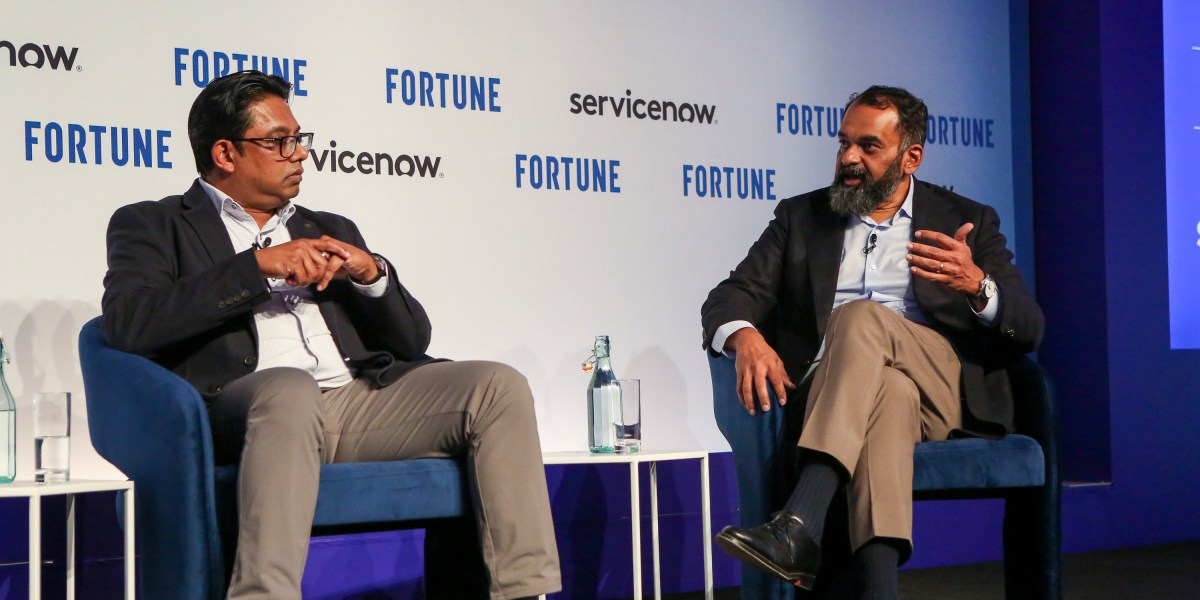
The comments came at Fortune's AIQ Summit at the New York Stock Exchange, where executives from Honeywell and Ecolab offered a measured view of AI in industrial settings. Honeywell's technology chief, Suresh Venkatarayalu, pointed to an accuracy gap: customers demand 99.9999% reliability, while frontier models could be at 85%. Ecolab's AJ Wijesinghe focused on economics, saying high-volume use of the best model made tokenomics "go off the roof," and that optimization later cut token costs by about 70% to 80%. Both described a gradual path rather than full autonomy. Venkatarayalu said the move is toward a semi-autonomous world where operators build trust, with over-the-air upgrades coming to commercial buildings but with an operator in the loop because buildings are mission critical and safety critical. Wijesinghe described a human-in-the-lead model and said agent technology is not matured enough to run at scale on its own.
Ecolab uses both frontier and open-source models, and its sensors in dishwashers, pest traps and water systems cut service visits and predict maintenance. It also manages water for chip production, power and cooling in AI infrastructure. Honeywell fine-tunes open-source models partly because customers want sovereignty over data and models, hand-picks them with Nvidia's Nemotron team, and warns that unsupported open-source models without guardrails would be dangerous. Its see, think, act, and learn framework starts by cataloguing a building's assets, including HVAC, fire control, and security and access control, then connecting them over BACnet so AI agents can learn how systems relate and run them. Venkatarayalu also said the company is exploring how to teach AI about chemistry, such as catalyst formulation.
On where value appears, Wijesinghe said individual AI adds little measurable value at the enterprise level, vertical AI within a function adds some, and horizontal AI that works backward from an outcome across sales, finance and supply chain adds the most. He said AI should not be just another technology and must be tied to company-wide transformation, with data foundation, process readiness and cost discipline mattering equally. Venkatarayalu said where AI runs, at the edge, on a customer's premises or in the cloud, depends on latency, data-transaction cost and sovereignty, and that customers who got 7% energy savings from existing controls now ask whether AI can deliver 30% or 40% more. The test ahead is whether industrial operators can close the accuracy gap and hold down token costs while keeping humans in the lead, and for Ecolab, whether the $325 million target materializes by 2027.
Pick your industry and the AI tools you use, and get news related to your work every day.
Free · 30 seconds with Google · unsubscribe anytimeWhat is AIToday? →
Ask AI anything about this article. The AI reads this article, earlier AIToday articles, and Wikipedia, and cites its sources. Q&As are published on this page for other readers too.
Chunghwa Telecom president Rong-shy Lin said the shift from conversational AI to autonomous AI agents is resha…

CoreWeave fell 5% in premarket trading Friday and was on track to finish the week down 15%, after rebounding f…

Apple and Meta said they would jointly release a new open-weight AI model designed to run on high-end Macs, ai…

Investors put $38.5 billion into Asian startups in Q3, per Crunchbase data

A writer and entrepreneur opened his daily to-do list and found 156 items, and concluded that an AI assistant…

A longtime Anthropic investor told Fortune he expects shares priced around $1.8 trillion, below the company's…


