
What happened
Google made Gemini 4 Carbon generally available after a two-week testing phase; it takes first place on CursorBench 4.0 ahead of Anthropic's Fable 5.2, at under half the per-task cost.
Why it matters
That combination of top score and lower cost per task could make Carbon a strong option for complex coding and research work where budget matters.
WHO IT HITSDevelopers and business customers on paid tiers can access Carbon through the Gemini API in Google AI Studio, Android Studio, or Gemini for Business, and may find it a cheaper way to tackle complex multi-step coding and debugging tasks.
Summaries like this, every morning.
Google's decision to release Carbon as a complement to Gemini 4 Argon, rather than a replacement, reflects a segmentation strategy. According to Google, Argon remains the better choice for most software engineering and knowledge work, while Carbon is built for tasks that push the limits of model intelligence. Yet both models share the same token price, and Carbon scores higher on benchmarks, which makes the positioning somewhat surprising. In practice, Carbon uses more tokens to reason more deeply on complex debugging or open-ended research and to run longer verification loops, so the total bill is likely higher than Argon despite the same per-token rate.
The competitive landscape adds urgency. Anthropic's Fable 5.2, unveiled just as Carbon became generally available, outperforms Carbon in the Artificial Analysis test even at lower reasoning intensity. At the High tier, Fable 5.2 costs about $9 per task but sits two points ahead of Carbon in the overall index (62 vs. 60). At its maximum tier, Fable 5.2 costs as much as $26.50 per task. Carbon's edge lies in cost-efficiency: it achieves the highest score on CursorBench 4.0 at average costs of roughly $8 to $10 per task, while more expensive configurations of other models score lower at similar costs.
Beyond benchmarks, Google is touting real-world security results from the Fairwind Program. Carbon found real zero-day vulnerabilities while scanning two large SaaS providers in under two hours as part of Wiz's Scan for Good program. In Google's Project Fortify, Carbon boosted the detection rate on open-source codebases by more than 25 percent over Argon. These results, combined with a zero percent prompt injection success rate on the Gray Swan IPI benchmark, suggest Carbon may be particularly suited for cyberdefense tasks, though Google notes the test may simply be saturated.
Pick your industry and the AI tools you use, and get news related to your work every day.
Free · 30 seconds with Google · unsubscribe anytimeWhat is AIToday? →
Ask AI anything about this article. The AI reads this article, earlier AIToday articles, and Wikipedia, and cites its sources. Q&As are published on this page for other readers too.
CoreWeave, IREN and Nebius shares fell after the Nov
Anthropic filed an updated S-1 for an IPO of just over 800 million shares at $70 to $78 each, plus a $26 billi…

Bilt is expanding its AI-powered "neighborhood operating system," letting teams and local businesses offer fan…
Google released Gemini 4 Carbon to paying developers and enterprises via the Gemini API in Google AI Studio an…
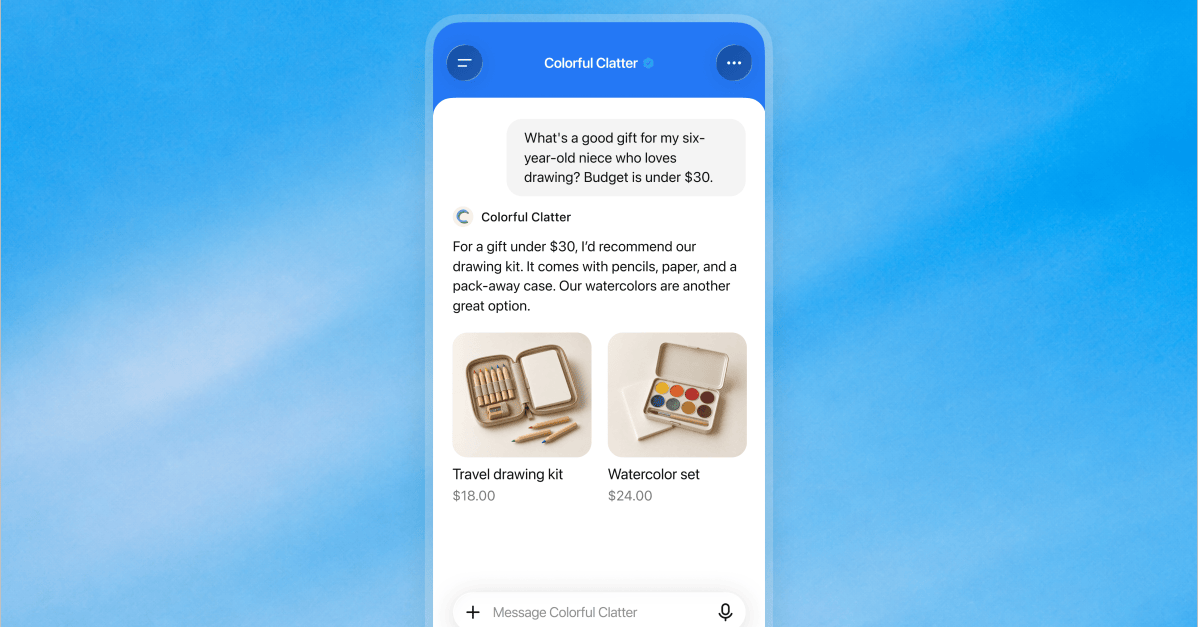
OpenAI is rolling out verified 'Business Agents' in ChatGPT for eligible US e-commerce and online service busi…
At a San Francisco event Tuesday, Anthropic unveiled Claude Meetings, Claude Sheets and Claude Whiteboards for…