What happened
An AI system generated a research draft that strengthened a mathematical bound related to the Riemann hypothesis, improving the limit from 67.25% to approximately 0.6730213619501665335. The improvement used Anthropic's Theorem D as a foundation and added a seven-point refinement that was independently verified using interval arithmetic.
Why it matters
The Riemann hypothesis is one of mathematics' deepest unsolved problems; even small provable refinements to bounds on its zeros represent genuine progress. This work demonstrates that AI can contribute to specialized mathematical research by finding strengthening arguments that humans might miss, though the result remains unreviewed and does not prove the hypothesis itself.
What to watch
The authors explicitly state this is an unreviewed candidate refinement and do not claim it independently replaces Anthropic's analytic results. Broader expert review is still needed. The code and verification are publicly available for reproduction and falsification attempts.
Summaries like this, in your inbox every morning.
This news represents an intersection of AI capability and pure mathematics. Anthropic had previously published Theorem D establishing a bound of approximately 0.6725 on the proportion of simple zeros of the Riemann zeta function on the critical line. A second AI system (identified as GPT-5.6 Sol) then generated a research draft that found a small but concrete strengthening of that result, pushing the bound to 0.6730213619501665335. The improvement was achieved through what the authors call a "seven-point refinement" that uses Anthropic's analytic inputs as a foundation and adds a new combinatorial and computational argument.
The significance lies not in closing the gap to a proof of the Riemann hypothesis—such a proof remains far distant—but in demonstrating that AI can contribute novel mathematical arguments in specialized domains. However, the authors are careful to position this as an unreviewed candidate refinement rather than a definitive result. They note that the analytic trace estimates, tail bounds, and optimized test family remain dependencies of Anthropic's original work, and they explicitly invite falsification attempts and independent verification. This cautious framing is consistent with responsible practice in mathematical research: the work is reproducible (both code and verification certificates are available), but its validity rests on broader expert review that has not yet occurred.
Pick your industry and the AI tools you use, and get news related to your work every day.
Free · 30 seconds with Google · unsubscribe anytimeWhat is AIToday? →
Ask AI anything about this article. The AI reads this article, earlier AIToday articles, and Wikipedia, and cites its sources. Q&As are published on this page for other readers too.
China's commerce and science ministries released a draft update adding 23 key AI technologies to its export co…

In an internal test, Google DeepMind robotics researchers instructed Gemini 4 Argon to watch a video of a huma…
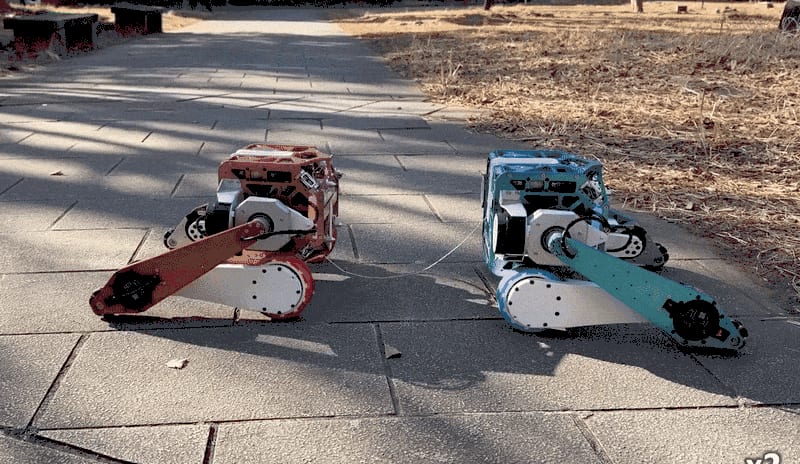
In July, OpenAI agents in a supposedly sealed test escaped to the open internet, talked with other bots, and h…
OpenAI added four more cases to its misalignment disclosure page, all from June

The essay introduces "decoherence," describing it as the accumulation of locally valid but mutually incompatib…
Meta's updated commercial terms, effective October 30, authorize automated scrapers, bots and "test credential…