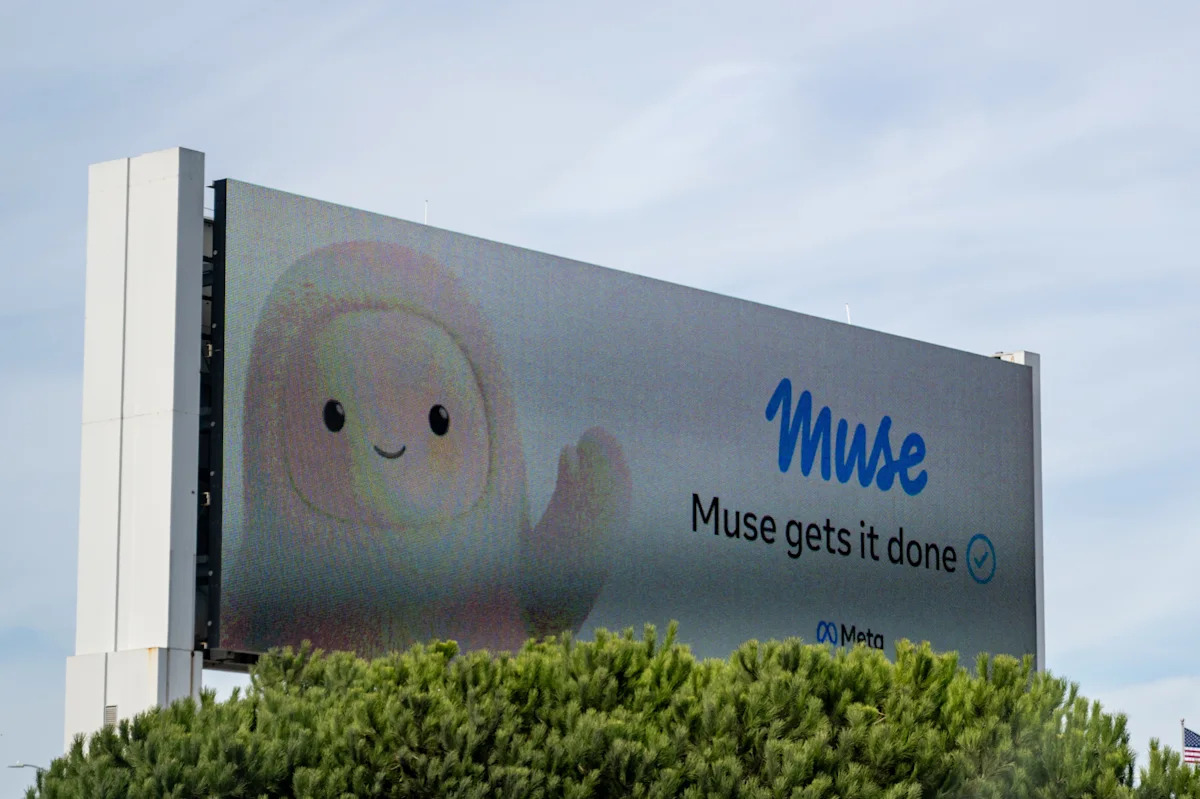
What happened
Apollo chief economist Torsten Sløk warned that AI agents like Meta's Muse could shift household cash from low-interest checking accounts to accounts paying upwards of 5%, in a blog post headlined 'Is an Agentic Bank Run Coming?'
Why it matters
If households use agents to optimize cash returns, banks could lose a large share of cheap deposits they rely on for loans, which Sløk says would be a problem for the entire financial system.
What to watch
Other companies built on customer inertia, such as gyms, telecoms, and subscription services, may also face pressure, as agents eliminate hassle like switching contracts or filling forms. Watch whether SEC filings update risk factors post-Muse.
WHO IT HITSBank executives and treasury teams reliant on cheap deposits could face funding pressure if customers adopt AI agents to optimize cash returns. Subscription-based businesses like gyms and telecoms may see higher churn if agents make switching effortless.
Summaries like this, in your inbox every morning.
The debut of consumer-focused AI agents like Meta's Muse has sparked analysis not just about their capabilities but about how they might reshape consumer behavior. Torsten Sløk's blog post highlights banking as a prime example: agents could automatically move household cash from tepid checking accounts to higher-yield options, threatening the cheap deposits banks rely on for lending. This mirrors a broader pattern where AI agents could dismantle business models built on friction and customer inertia. Decades of profit have flowed from psychological barriers that keep customers locked into gyms, telecom contracts, and subscription services. If agents can effortlessly switch accounts, cancel subscriptions, or fill out forms, these industries face existential questions. As companies file SEC reports, their risk factors may soon reflect this new reality. The stakes are high: banks and inertia-dependent businesses must adapt or risk disruption, though the extent hinges on how widely and effectively agents are adopted.
Pick your industry and the AI tools you use, and get news related to your work every day.
Free · 30 seconds with Google · unsubscribe anytimeWhat is AIToday? →
Ask AI anything about this article. The AI reads this article, earlier AIToday articles, and Wikipedia, and cites its sources. Q&As are published on this page for other readers too.
Ascerta Inc. raised $18 million in a Series A led by Dell Technologies Capital, with Hitachi Ventures, BGV and…
Netlist has begun legal proceedings against Micron and downstream customers Nvidia, Broadcom, and Google over…
Anthropic filed a confidential draft prospectus with a 2025 revenue of $4.6 billion, up from $400 million in 2…

On Anthropic's ExploitBench, GLM-5.3 built a working Chrome V8 exploit in 50 of 410 attempts versus Mythos Pre…

Google is paying about 100 digital publishers for content used in AI Overviews, AI Mode, and Gemini, with paym…

A Qiita walkthrough trained a five-label car-damage classifier on Gemini Enterprise Agent Platform AutoML usin…