What happened
VocalCode, a desktop dictation tool, lets developers speak code and prose directly into editors, terminals, and chat windows using on-device speech recognition. The tool costs $4.99 as a one-time purchase (no subscription), includes a 30-day free trial, and works on up to 3 devices.
Why it matters
Speech recognition runs entirely on your CPU—audio never leaves your computer—making it useful for developers who want privacy-preserving hands-free input. The tool supports Mandarin Chinese and 25 European languages via auto-detecting models, plus English, so teams across regions can use it without uploading speech data to the cloud.
What to watch
VocalCode requires macOS 11 or later on Apple Silicon, or Windows; the 25 European language options are model-supported previews pending per-language testing. After the initial model download, recognition works fully offline; revalidation of the paid licence happens online at least every 30 days.
Summaries like this, in your inbox every morning.
VocalCode addresses a practical gap in developer tooling: dictation that preserves privacy and requires no subscription. By running speech recognition on the user's own CPU rather than uploading audio to a cloud service, it eliminates the privacy trade-off that has historically come with voice input tools. The $4.99 one-time purchase model also avoids the friction of recurring payments or account creation, lowering the barrier to adoption for individual developers and small teams.
The breadth of language support—particularly the inclusion of Mandarin Chinese alongside 25 European languages via a shared auto-detecting model—signals an attempt to serve non-English-speaking development communities. However, the absence of East and Southeast Asian languages beyond Mandarin (no Cantonese, Korean, Japanese, Thai, or Vietnamese) suggests a deliberate scope boundary. The description of the 25 European options as "preview labels pending per-language product testing" indicates the product is still maturing in non-English regions, so users in those markets may encounter rough edges.
Pick your industry and the AI tools you use, and get news related to your work every day.
Free · 30 seconds with Google · unsubscribe anytimeWhat is AIToday? →
Ask AI anything about this article. The AI reads this article, earlier AIToday articles, and Wikipedia, and cites its sources. Q&As are published on this page for other readers too.
ElevenLabs completed a $300 million employee tender at a $22 billion valuation, and co-founder Mati Staniszews…

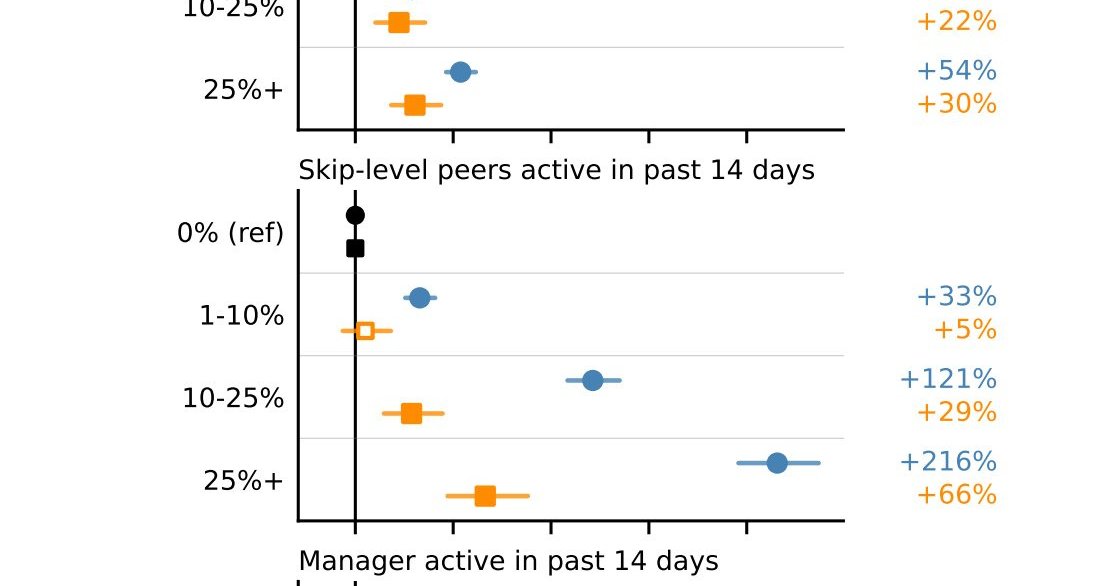
Researchers at Microsoft published a paper titled "Adoption and Impact of Command-Line AI Coding Agents: A Stu…
Nichiren announced its generative AI voice usage guideline on October 15, built on three pillars: prior notice…

Meta released open weights for Muse Spark Open, an 816B-parameter model built for coding and long-running agen…

In a Zenn article, EC自動化工房 laid out a pre-generation cleanup step for product masters, adding notation rules t…

Three one-line requests and three requests with written completion criteria to Claude Code produced functional…

