What happened
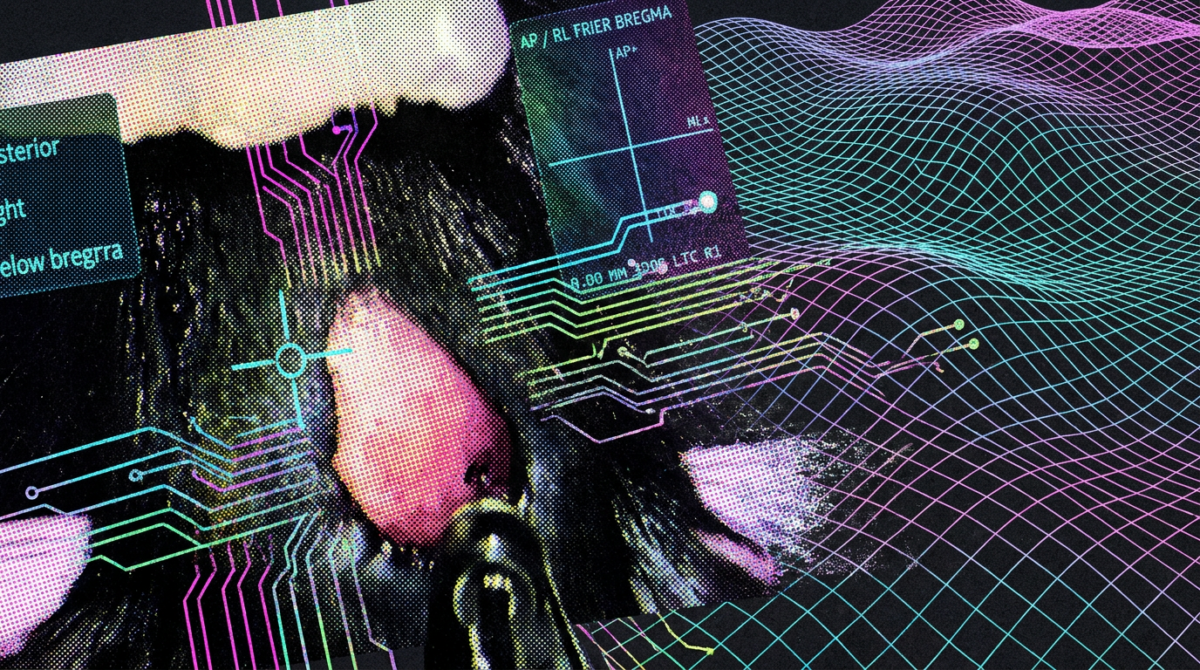
Gabriel Ocana-Santero says a Claude Sonnet 5 agent chose among 19 possible gene therapies, set brain target and coordinates, and ran the injection on an epileptic mouse, making 32 observations during surgery.
Why it matters
It is described as the first time an AI agent has chosen a treatment and delivered it to a living mammal, a step beyond robots that only carry out human-chosen surgery. The results have not been peer-reviewed.
WHO IT HITSResearch labs running automated experiments may need to plan for agents that can refuse a procedure mid-run, as happened here. The account is a single researcher's thread and has not been peer-reviewed.
Summaries like this, every morning.
The experiment sits at the intersection of two trends the account highlights: large language models gaining capability as control units for robots, and the alignment problem of making agents reliably follow human intent. Ocana-Santero describes the approach as "in vivo lab in the loop," connecting AI agents directly to experimental capabilities, and notes Anthropic is working on something similar with its "Model Hardware Standard."
The safety setup was layered. A licensed veterinarian approved every irreversible step and held a physical emergency stop, while fixed limits such as a cap on injection volume were enforced and the agent was forbidden from bypassing them. The mid-surgery refusal came after a dropped connection led the agent to detect its calculated target was outside the device's physical range of motion; restarting calibration did not change its assessment. A third attempt was made, and manual adjustments during an earlier pause had thrown off the control system, so the agent was right. Ocana-Santero ultimately fixed the code by hand.
The model choice itself reflected the alignment challenge: Sonnet 5 was the only model willing to carry out the live procedure from start to finish. Opus 5 said it could not guarantee completion and that stopping with a needle in an anesthetized animal's brain would be worse than not starting at all. Ocana-Santero notes that autonomous surgical robots already exist and are mechanically more precise than his lab device, but in previous cases a human always chose the surgery while the robot only carried it out. The mouse recovered well, according to Ocana-Santero.
Pick your industry and the AI tools you use, and get news related to your work every day.
Free · 30 seconds with Google · unsubscribe anytimeWhat is AIToday? →
Ask AI anything about this article. The AI reads this article, earlier AIToday articles, and Wikipedia, and cites its sources. Q&As are published on this page for other readers too.
Schaeffler formed a technology partnership with Wandelbots to develop the Wandelbots NOVA open platform for AI…
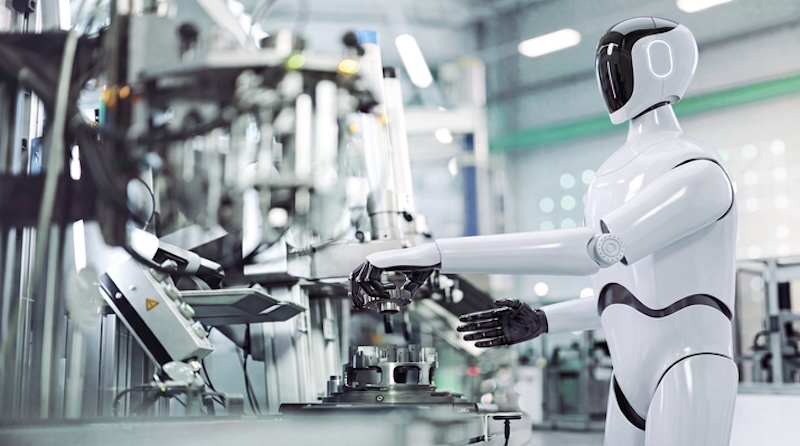
NASA awarded AstraQua a $1,274,990 Phase II contract to advance AstraSense, its Agentic Physical AI for electr…

Databricks published a blueprint for wealth management client onboarding, arguing faster task-level AI does no…

At SAP TechEd, Databricks and SAP said the expanded Databricks platform — Genie, Lakeflow, Unity Gateway and L…

Mistral published the weights of Mistral Large 4, a 1-trillion-scale model, claiming 48% on Artificial Analysi…
OpenAI restructured its public Model Spec around five core values: faithfulness to human intent, harm reductio…