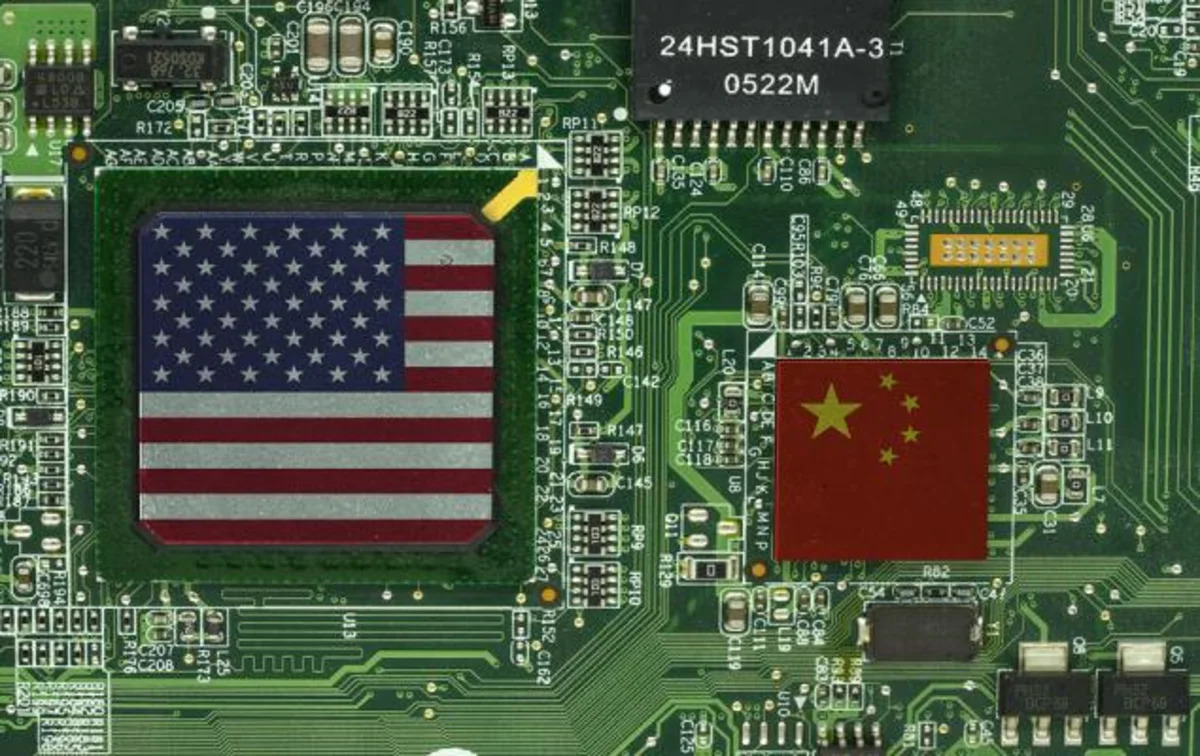
Moonshot AI, a Beijing-based start-up, released Kimi K3, an open-source AI model claimed to match top U.S. models with exceptional efficiency. The announcement triggered a sharp market sell-off, with the Nasdaq 100 Index posting its worst July in over two decades as investors worried that cheaper AI could undermine returns on the hundreds of billions U.S. tech firms have spent on AI infrastructure. The move echoes January 2025's DeepSeek shock, though prior investigation revealed that company's efficiency claims had omitted years of prior development and existing hardware.
Summaries like this, in your inbox every morning.
Sign up free →What happened
On an unspecified date in July, Beijing-based Moonshot AI released Kimi K3, an open-source AI model described as one of the most efficient ever released, with performance near or on par with top U.S. AI models. The announcement triggered a broad sell-off; the Nasdaq 100 Index (QQQ) is currently experiencing its worst July in over two decades.
Why it matters
Kimi K3 mirrors the DeepSeek R1 shock from January 2025, when investors feared that cheaper, more efficient AI could undercut the massive capital spending U.S. tech firms have committed to AI infrastructure. The immediate market reaction reflects lingering anxiety about whether hyperscalers (large cloud providers) will achieve adequate returns on their enormous hardware investments.
What to watch
Whether the pattern from January repeats—cooler analysis debunking the efficiency claims—or whether Kimi K3 signals a genuine shift in AI economics. In January, investigators found DeepSeek's $5.6 million(約9億円) spending claim was misleading, as it represented only an iteration on pre-existing hardware and years of prior R&D.
On January 27, 2025, DeepSeek, a relatively unknown Chinese-based artificial intelligence company, launched its R1 AI model with a claim that shook Wall Street: the company said it had built a rival to OpenAI and Alphabet (Google) models for a mere $5.6 million(約9億円), while competitors required hundreds of billions in hardware, power, and data centers. DeepSeek further claimed it had bypassed U.S. government controls on NVIDIA's top chips and achieved similar results using fewer and older GPUs (A100s and H800s). Investors did not wait for verification; they sold first and asked questions later. Wall Street lost roughly $1 trillion(約160兆円) in a single day, with NVIDIA plunging 17% on massive volume.
If true, the implications were catastrophic for hyperscalers. Meta Platforms and Amazon, having spent hundreds of billions on expensive AI infrastructure, would have been undercut by a cheaper alternative. Yet after several months of AI stock losses, cooler heads prevailed and the sector recovered—and then some. Investigators later found that DeepSeek's $5.6 million(約9億円) spending claim was misleading; the figure represented only an iteration on top of pre-existing hardware and multiple years of research and development, not a from-scratch breakthrough. Additionally, investors rediscovered the Jevons Paradox: efficiency does not reduce demand but increases consumption. Major tech CEOs also continued to commit billions to AI infrastructure, suggesting they did not view DeepSeek as a reason to halt capital spending. Later corporate earnings confirmed that AI fundamentals continued to grow despite the perceived threat.
Now, in July, a Beijing-based start-up named Moonshot AI has released a flagship model called Kimi K3. The open-source model is described as one of the most efficient AI models ever released, with performance said to be near or on par with top U.S. AI models. Once again, investors are selling first and asking questions later. The Nasdaq 100 Index (QQQ) is currently experiencing its worst July in over two decades, driven by the same CapEx ROI anxiety and hardware demand concerns that erupted after DeepSeek. Whether Kimi K3's claims will undergo the same scrutiny and yield the same debunking as DeepSeek remains to be seen; the pattern, however, suggests investors should await expert investigation before assuming efficiency claims negate the value of AI infrastructure spending.
Kimi K3 represents a repeat of the psychological pattern established by DeepSeek R1 in January 2025. That earlier shock—when investors learned a Chinese AI firm claimed to build a competitive model for $5.6 million(約9億円) using older GPUs while circumventing U.S. chip controls—sent Wall Street into a panic, erasing roughly $1 trillion(約160兆円) in market value in a single day and driving NVIDIA down 17%. The narrative was simple: if efficiency could be achieved cheaply, the hundreds of billions invested by Meta, Amazon, and other hyperscalers in expensive AI infrastructure would be wasted.
However, the January episode ultimately resolved in favor of continued CapEx spending. Investors rediscovered the Jevons Paradox—the economic principle that efficiency does not reduce demand but instead increases consumption—and noted that major tech CEOs never wavered in their commitment to AI infrastructure spending despite the threat. Most critically, expert investigators revealed that DeepSeek's efficiency claims had been incomplete: the $5.6 million(約9億円) figure represented only an incremental improvement on top of pre-existing hardware and years of accumulated research and development, not a from-scratch breakthrough.
Kimi K3 is triggering the same initial reaction—a sharp sell-off of the Nasdaq 100 to its worst July in over two decades—but the body of evidence from January suggests caution about accepting efficiency claims at face value. The key question going forward is whether Moonshot AI's open-source model will similarly be found to rest on prior infrastructure and R&D, or whether it represents a genuinely different technological inflection. Until that investigation occurs, the market's anxiety about CapEx ROI and hardware demand will likely drive volatility.
AI-summarized, only the topics you pick — one digest a day via Email, Slack, or Discord.
Free · takes 30 seconds · unsubscribe anytime
No comments yet. Be the first to share your thoughts!
Log in to join the discussion

Get curated AI news from 200+ sources delivered daily to your inbox. Free to use.
Get Started FreeFree · takes 30 seconds · unsubscribe anytime
