What happened
On September 22, 2026, Anthropic announced Claude Opus 5.5 at $4 input / $20 output per million tokens, then OpenAI announced GPT-6 Sol at $2 / $10. Artificial Analysis measured Opus 5.5 at $5.98 per task versus Opus 5's $5.86.
Why it matters
The two companies cut prices in different parts of the cost equation.
What to watch
Whether published price cuts actually reduce what users pay hinges on which setting the number is measured at and which base price it is compared against.
WHO IT HITSThis lands on enterprise procurement and finance teams that budget AI API spending from list prices, and on developers who choose inference settings. They may need to measure cost per task, not per token, to see real savings.
Summaries like this, in your inbox every morning.
The two announcements came about 100 minutes apart on September 22, 2026: Anthropic announced Claude Opus 5.5, and OpenAI followed with GPT-6 Sol and GPT-6 Luna. The article frames this as a story about where in the cost equation each company moved, not simply about cheaper AI. Anthropic also reflected the cut in the usage limits of its Pro, Max, and Team plans, saying users can work about 25% longer than with Opus 5. OpenAI cut GPT-6 Sol to $2 input and $10 output per million tokens, half of GPT-5.6 Sol's $4 and $20, though that prior price was itself a three-month promotional price introduced on August 21, according to press reports.
Artificial Analysis data shows the two cuts landed differently. GPT-6 Sol's cost per task fell to $1.06 from $1.99, while its output tokens per task rose slightly, from 29,000 to 31,000. Opus 5.5's cost per task in its max setting was $5.98 versus $5.86 for Opus 5. The reason lies in the volume of tokens used. Anthropic has said Opus 5.5's standard setting was moved one step lower, and its 40% saving applies at that standard setting, not at max. Anthropic also published its own example in which moving a 44-query support evaluation to Opus 5.5 at the low reasoning setting cut costs by about 18%, and trimming prompts by another 9%, for about 25% below the Opus 4.8 baseline. The company itself calls this one evaluation result, an example rather than an expectation.
The deeper question is what happened to the provider's own cost, which never appears on a customer's bill. Anthropic said Opus 5.5 needs less compute to serve than Opus 5, but that sentence appears only on its announcement page and not in its 230-page system card, which also does not disclose the model's parameter count. OpenAI said caching and inference improvements let it serve models at lower cost, without giving numbers, though in July it had described efficiency work across model, inference, and agent layers. DeepSeek and Moonshot AI disclosed their architectures in model documentation. The outcome for buyers appears to hinge on whether providers keep disclosing enough to let them compare, and on whether users measure cost per task rather than per token.
Pick your industry and the AI tools you use, and get news related to your work every day.
Free · 30 seconds with Google · unsubscribe anytimeWhat is AIToday? →
Ask AI anything about this article. The AI reads this article, earlier AIToday articles, and Wikipedia, and cites its sources. Q&As are published on this page for other readers too.
Manulife Financial Corporation launched a first-of-its-kind CoverMe travel insurance plugin in ChatGPT in late…

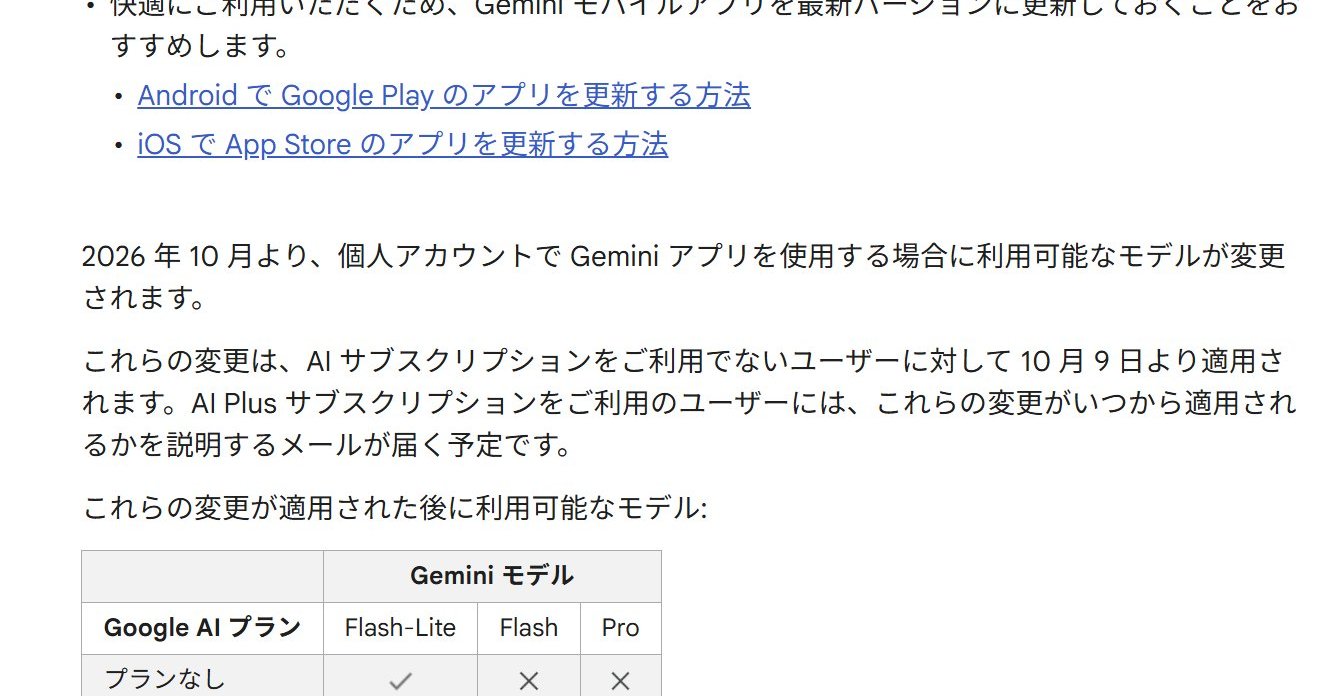
Google said free Gemini app users will be restricted to the "Flash-Lite" model starting October 9; "Flash" nee…
Nvidia expects AI spending to grow to $3 trillion to $4 trillion annually by 2030, while it reported $96 billi…

Indie developer Robert Varadan argues that AI models like Opus 5.5 and GPT-6 Astra can clone game demos from a…

David Robinson, who led safety reporting on OpenAI's main products, resigned, saying the company's culture is…
On September 25, Bank of America reiterated a Buy rating on Advanced Micro Devices and raised its price target…