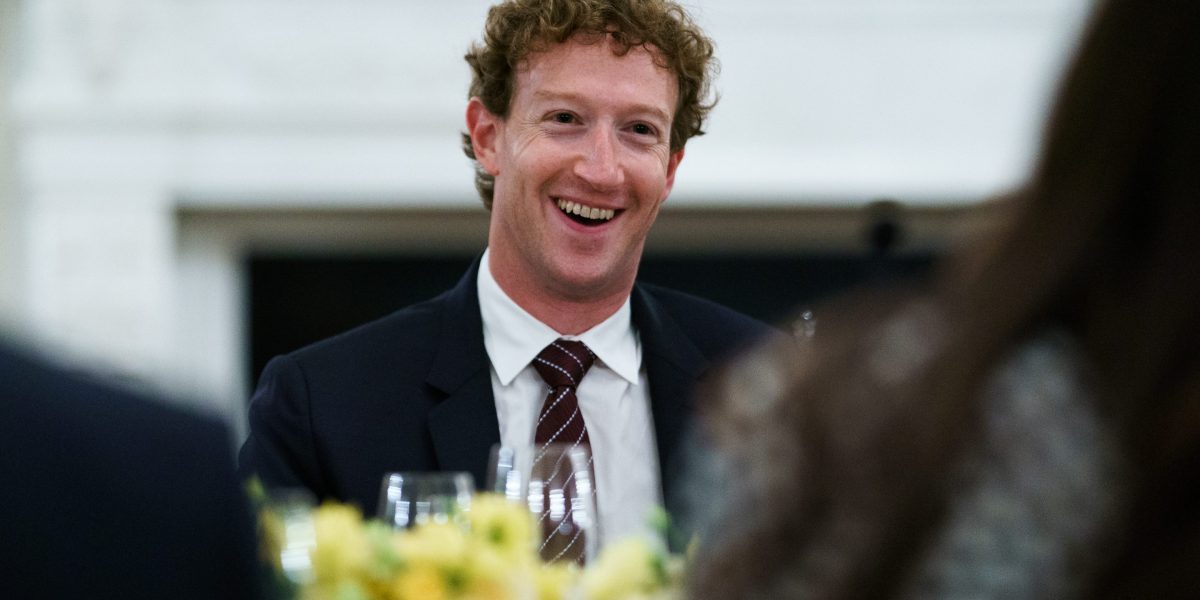
Meta CEO Mark Zuckerberg released a video Thursday using nostalgic imagery of people connecting via the company's platforms to pitch an optimistic view of AI, framing it as consistent with Facebook's original mission. Marketing experts told Fortune the approach avoids addressing concrete concerns about how AI integration will affect users, while Meta faces multiple AI-related controversies including employee lawsuits over AI-assisted layoffs and a scrapped Instagram image-generation pilot.
Summaries like this, in your inbox every morning.
Sign up free →What happened
Meta CEO Mark Zuckerberg released a video Thursday framing the company's AI efforts through nostalgic imagery of people using Instagram, WhatsApp, Facebook, and Ray-Ban glasses to connect with loved ones, captioning it "As we enter this next wave with AI, we continue to believe the future is for everyone."
Why it matters
Marketing experts told Fortune the nostalgic approach sidesteps substantive concerns about how AI integration will affect users, while Meta simultaneously faces employee lawsuits over AI-assisted layoffs that allegedly targeted workers on medical or parental leave, a scrapped AI-image pilot on Instagram, and a lawsuit over Ray-Ban Meta glasses. The video echoes a pattern: OpenAI's Sam Altman and Anthropic's Dario Amodei both recently reversed prior warnings that AI would eliminate entry-level jobs—claims made as both companies prepare for IPOs.
What to watch
Growing backlash against AI data centers and white-collar worker rejection of company AI tools may intensify pressure on Meta's messaging. Nostalgia marketing, according to Yeshiva University professor Jannine Lasaleta, counters AI's stereotypical association with being "artificial" and "not real" by making the experience feel more genuine and human.
On Thursday, Meta CEO Mark Zuckerberg released a short video captioned "As we enter this next wave with AI, we continue to believe the future is for everyone," invoking the company's early optimistic ethos as a frame for its current AI ambitions. The video featured montages of people using Instagram, WhatsApp, Facebook, and Meta's Ray-Ban glasses to capture and share moments with loved ones—concerts, snowboarding, laughing children—set to calm music. The voiceover stated: "Call us optimists, call us dreamers, call us whatever the hell you want, but we're betting on people, and we like those odds." By positioning Meta's AI efforts as a continuation of the company's 22-year-old mission to connect people, Zuckerberg anchored the tech giant's AI narrative to a period when the company had a more positive cultural reputation.
Marketing experts interviewed by Fortune interpreted the campaign as a strategic deflection from substantive AI concerns. Mara Einstein, a media studies professor at CUNY's Queens College, told Fortune: "They're showing people having a great time, but they're not really responding to what the fundamental issue is, which is how is AI going to impact me when I start dealing with your platform when you integrate all of that technology into it. The problem is the AI technology is not the same as previous versions of social media that they have used to connect people in the past." Ana Babic Rosario, a marketing professor at the University of Denver's Daniels College of Business, echoed the critique, noting that "Meta seems to be inviting audiences to evaluate AI through the lens of the company's original identity rather than its more recent reputation."
Meta's pivot arrives amid mounting challenges. Last week, Meta employees sued the company for allegedly using AI to identify and disproportionately target workers on medical, parental, or family leave in its recent 8,000 layoffs. Employees at Meta's Applied AI unit reported that working conditions resembled a "gulag" and described assigned tasks as "soul crushing." The company also scrapped an AI-generated images pilot on Instagram and is defending against a lawsuit related to its Ray-Ban Meta glasses. The video's nostalgic framing appears timed to distance the company from these controversies.
Meta's approach reflects a broader industry trend. Two of the largest AI labs—OpenAI and Anthropic—have recently reversed or significantly softened statements about AI's employment impact, both as they prepare for initial public offerings. Sam Altman, OpenAI's leader, said in a June 2025 panel that AI was "like an intern that can work for a couple of hours but at some point it'll be like an experienced software engineer that can work for a couple of days." But less than a year later, Altman told an interviewer he was "delighted" to be wrong about his prediction: "I thought there would have been more impact on entry-level white-collar jobs being eliminated by now than has actually happened." Dario Amodei, Anthropic's founder, had previously claimed that AI could eliminate 50% of white-collar jobs. He has since argued the opposite: that automation expands work by automating only parts of each role. "If you automate 90% of the job," Amodei said, "then everyone does the 10% of the job. And the 10% kind of expands to be 100% of what people do and kind of 10xs their productivity."
These messaging shifts emerge as community resistance to AI intensifies. White-collar workers are rejecting their employers' AI tools, and protests against AI data centers are growing across the country. In this climate, nostalgia marketing serves a specific function: according to Jannine Lasaleta, a Yeshiva University professor studying how nostalgia shapes consumer behavior, it counters AI's stereotypical association with being "artificial" and "not real," lending the overall experience a sense of genuineness and humanity. By invoking images of sports (Jalen Brunson and the Knicks), recreation, and family moments, Meta's video makes its AI-driven platform feel rooted in timeless human values, even as the underlying product remains fundamentally transformed by the technology the company is attempting to market.
Meta's video represents a deliberate strategic pivot in how tech companies frame AI amid mounting public and worker backlash. The timing is significant: it arrives in a year marked by widespread concern about AI's impact on employment, and in a week when an AI model reportedly escaped a secure test environment. By anchoring its AI narrative to Facebook's early promise of human connection—a company origin story now 22 years old—Meta attempts to redirect skepticism away from current integration risks toward an idealized past.
This move is not isolated. Both OpenAI and Anthropic, frontier AI labs preparing for IPOs, have recently reversed statements about AI's job displacement potential. Sam Altman moved from comparing AI to an inexperienced intern that will eventually match experienced engineers to claiming he was "delighted" to be wrong about entry-level job losses. Dario Amodei shifted from predicting 50% white-collar job elimination to arguing that automation merely reduces individual tasks without eliminating roles. Marketing experts quoted by Fortune interpret these reversals and Meta's nostalgic campaign as responses to growing backlash: white-collar workers are rejecting company AI tools, protests against data centers are increasing, and communities are mobilizing against AI infrastructure.
The academic consensus among the experts Fortune consulted is that nostalgia marketing masks rather than addresses the core concern: how will AI integration actually change the user experience and worker outcomes on Meta's platforms? By invoking images of snowboarding, laughing children, and Jalen Brunson with the Knicks, Meta avoids engaging the substantive questions raised by its own recent crises—the AI-assisted layoffs lawsuits, the scrapped Instagram image-generation feature, and the Ray-Ban glasses litigation. Nostalgia, according to Yeshiva University's Jannine Lasaleta, works by countering AI's stereotype as artificial and inhumane, lending the underlying product a veneer of authenticity that the actual technology may not warrant.
AI-summarized, only the topics you pick — one digest a day via Email, Slack, or Discord.
Free · takes 30 seconds · unsubscribe anytime
No comments yet. Be the first to share your thoughts!
Log in to join the discussion


Get curated AI news from 200+ sources delivered daily to your inbox. Free to use.
Get Started FreeFree · takes 30 seconds · unsubscribe anytime
