What happened
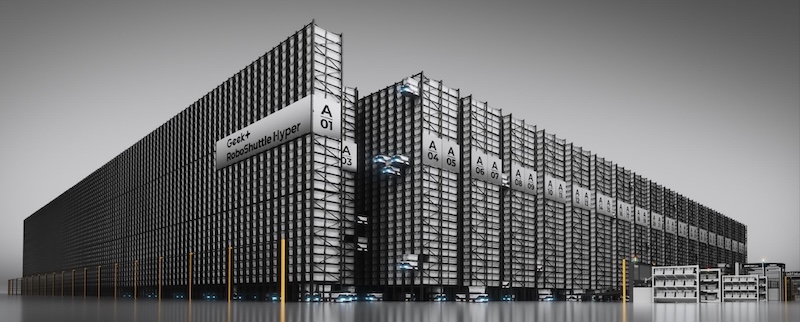
Geekplus, a leading warehouse automation provider, launched RoboShuttle Hyper, a climbing robot designed for high-throughput fulfillment. The system delivers up to 6,000 totes per hour per 1,000 square meters, with a new Max Workstation that can exceed 800 totes per hour in dual-point continuous feeding mode.
Why it matters
Throughput is critical for fulfillment operators managing e-commerce surges, fresh-food delivery, and consolidation warehouses. RoboShuttle Hyper allows more robots to operate in the same space without sacrificing reliability—it requires locking only two rack columns compared to the industry norm of four to six, and enables 50 percent higher concurrency than standard systems.
What to watch
RoboShuttle Hyper joins RoboShuttle Air (launched 2024) and RoboShuttle Flex in Geekplus' portfolio and is compatible with the company's Robot Arm Picking Stations and Gino 1 humanoid robot, expanding end-to-end fulfillment capabilities. Geekplus' scheduling system can coordinate up to 5,000 robots across 50,000 square meters and 3 million storage locations.
Summaries like this, in your inbox every morning.
Geekplus has been expanding its tote-handling robotics portfolio since 2018, and RoboShuttle Hyper represents the company's latest push into ultra-high-throughput environments. The system is built around a fundamental operational constraint: warehouse floor space is limited, so maximizing robot density—the number of units that can work simultaneously in a given area—is essential during peak demand. The parallel horizontal and vertical climbing design, which enables 50 percent higher concurrency than industry norms, addresses this directly by reducing the number of rack columns that must be locked during operation. Additionally, the 1:10 charge-to-discharge ratio and faster motion-control algorithms help maintain robot availability during peak periods, a critical requirement for order-surge scenarios in e-commerce and food fulfillment.
The launch also reflects Geekplus' strategy of building a modular portfolio. RoboShuttle Hyper joins the recently introduced RoboShuttle Air (launched 2024) and the existing RoboShuttle Flex, each optimized for different operational contexts: Hyper for ultra-high throughput and density, Air for stable fixed-pace manufacturing and finished-goods warehouses, and Flex for operations with large SKU ranges and variable order volumes. By coupling these solutions with Robot Arm Picking Stations and the Gino 1 humanoid robot, Geekplus is positioning itself to support end-to-end fulfillment automation—from tote retrieval to order consolidation and item-level picking.
Pick your industry and the AI tools you use, and get news related to your work every day.
Free · 30 seconds with Google · unsubscribe anytimeWhat is AIToday? →
Ask AI anything about this article. The AI reads this article, earlier AIToday articles, and Wikipedia, and cites its sources. Q&As are published on this page for other readers too.

