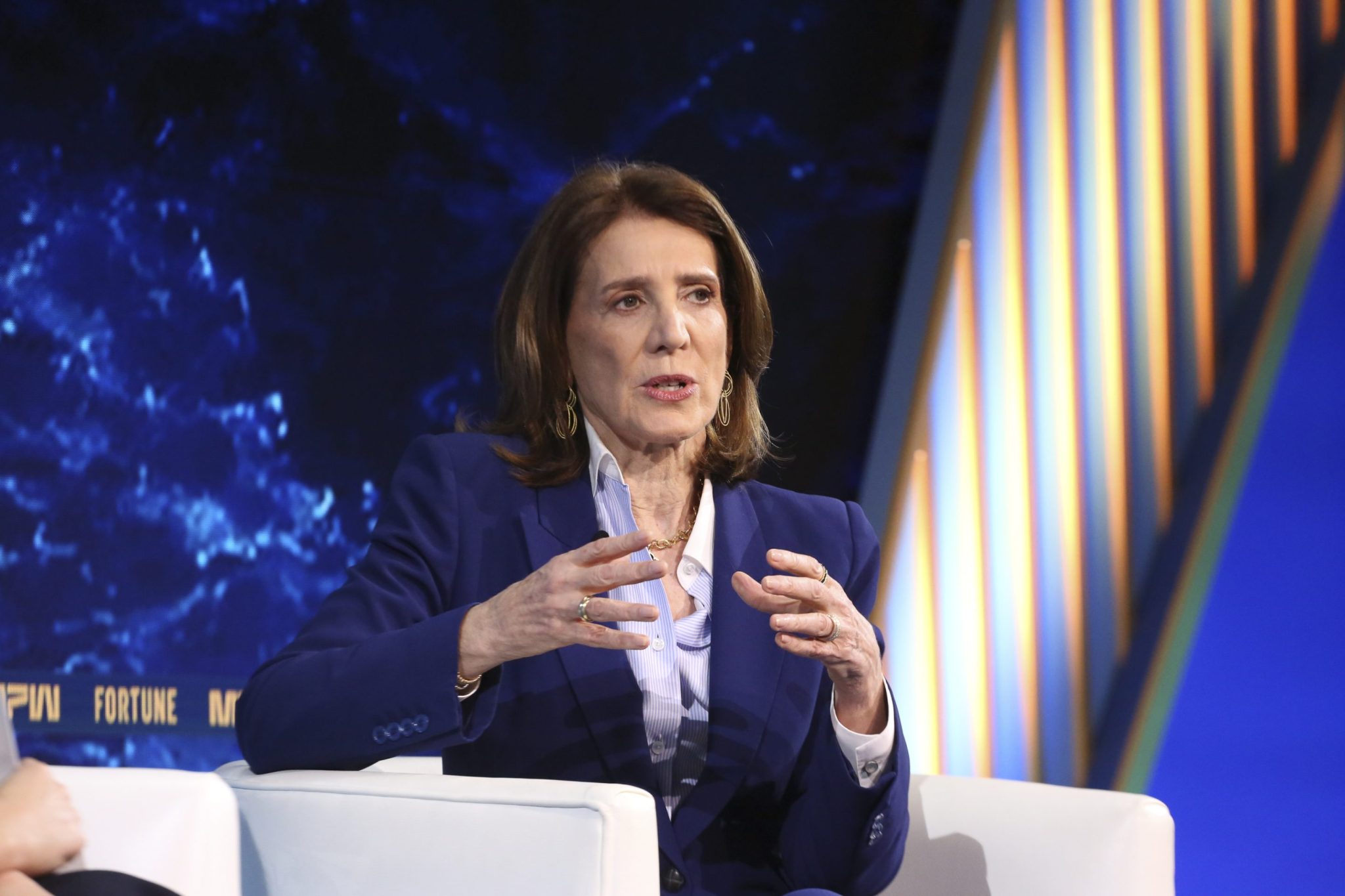
What happened
Alphabet CIO Ruth Porat told Fortune it is "illogical" to call the AI buildout a capacity-constrained bubble, rebutting Jefferies strategist Chris Wood's warning of massive U.S. capital destruction; Alphabet plans $195 billion to $205 billion in capex this year, more than double 2025's $91.4 billion.
Why it matters
Porat's defense rests on strong demand for AI and on companies adding differentiated value still finding paying customers. The debate matters because Alphabet's own spending has more than doubled, and the company expects AI's economic value to extend "for quite some time."
Summaries like this, in your inbox every morning.
The debate arrives as Alphabet's own spending has more than doubled year over year, and as debt increasingly funds the broader AI buildout. Porat speaks from experience watching prior bubbles, having led Morgan Stanley's technology banking team during the dot-com era and advised during the 2008 financial crisis.
Wood's warning draws on a shift in the competitive landscape: open-weight models, particularly from China, are taking business from closed models, and new Anthropic figures suggest its growth may have flattened. When asked about this trend, Porat said AI companies that add differentiated value will find customers paying regardless.
Porat's lesson from past crises is to identify and fortify against a company's greatest vulnerability early. For her, that vulnerability today is innovation—if competitors connect with customers using AI and you do not, you are at a disadvantage. Alphabet, she indicated, will keep investing heavily for long-term growth, arguing that by the time you need it, it is too late to start.
Pick your industry and the AI tools you use, and get news related to your work every day.
Free · 30 seconds with Google · unsubscribe anytimeWhat is AIToday? →
Ask AI anything about this article. The AI reads this article, earlier AIToday articles, and Wikipedia, and cites its sources. Q&As are published on this page for other readers too.
Bank of America strategist Sebastian Raedler said 12-month forward hyperscaler capex expectations rose from $3…
On John Collison's Cheeky Pint podcast, Zuckerberg and Wang said a 44-minute call and a memo led to Meta Super…
Danaher announced a collaboration with NVIDIA combining its instruments, automation and workflow software with…

CoreWeave is funding a large AI cloud buildout with heavy borrowing — a US$50b debt load, distressed bonds and…

Deutsche Bank Research predicts superintelligent AI could outperform human experts across virtually every cogn…

TECO Electric and Machinery participated in Energy Taiwan on October 14, showcasing smart microgrid solutions…