What happened
In a post on X responding to an Axios report, Anthropic CEO Dario Amodei called the idea he wants to surrender free will to AI 'absurd' and labeled rivals' 'human control and agency' language 'vibes-based commercial and political positioning.' He said 'we don't expect it to be safe for Claude to build successive frontier models fully autonomously.'
Why it matters
Amodei accepts task-level automation — an AI driving a car, designing a cancer drug, writing end-to-end software — but says governance should never be handed over, and his stated line may sit awkwardly with Anthropic's disclosure that Claude authored over 80% of code merged into its codebase in June.
Summaries like this, every morning.
The exchange is a rare explicit airing of a disagreement among frontier-lab leaders over how to talk about AI control. Amodei's post frames the dispute as one of rhetoric as much as substance: he accuses competitors of deploying phrases like 'human control and agency' as 'vibes-based commercial and political positioning,' while insisting that anyone who had carefully read his writing or interviews could not reasonably conclude he believes anything different.
His own position separates two things the slogans blur. Automating specific tasks — driving, drug design, end-to-end software — is acceptable in his telling, whereas sacrificing legitimacy or self-determination for efficiency or security is not. The line he singles out is recursive self-improvement: Claude building successive frontier models fully autonomously, a process he says should not be expected to be safe and on which 'we may want limits.'
The awkward part, as TechCrunch noted, is Anthropic's own disclosure that Claude authored over 80% of code merged into its codebase in June. That does not by itself contradict Amodei's stated limit — code contribution is not the same as autonomously building a frontier model — but it does put a concrete number next to the boundary he is drawing, and may sharpen scrutiny of where Anthropic actually places it.
Pick your industry and the AI tools you use, and get news related to your work every day.
Free · 30 seconds with Google · unsubscribe anytimeWhat is AIToday? →
Ask AI anything about this article. The AI reads this article, earlier AIToday articles, and Wikipedia, and cites its sources. Q&As are published on this page for other readers too.
The Digital Agency said a public call for Japanese-made large language models for ガバメントAI 源内 in 令和9年度(2027年度)…

NVIDIA said on November 27 that its RTX Spark compact desktop is on sale from ASUS, Dell and MSI, with a 20-co…

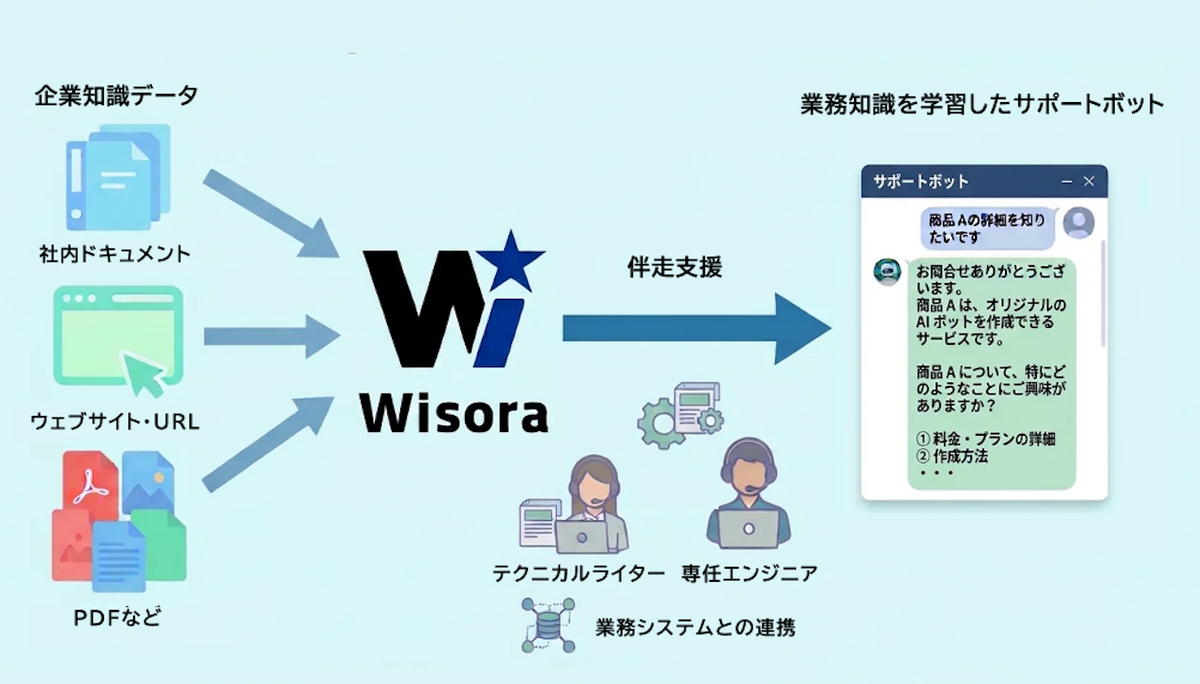
Soracom said on November 27 that Wisora Enterprise now standardly includes technical writers who organize manu…
RayNeo will run a Black Friday sale from November 27 to December 7, 2026, on Amazon.co.jp and its Japan site…

MetAI launched MetAI Creator Studio, which uses AI to propose new titles, descriptions, chapters, thumbnails a…

The Digital Agency published the source code for 源内's web interface and build steps, plus AI app templates and…

