What happened
Berkshire Hathaway's top AI-related holdings are Apple (20.2% of portfolio), Alphabet (7.4%), and Moody's (3.4%). It owns no Nvidia shares, despite Nvidia's 912% total return over five years versus 113%, 138%, and 35% for these three.
Why it matters
These companies use AI to strengthen their core businesses—Apple's on-device AI, Alphabet's cloud and Gemini, Moody's forecasting—but they don't sell AI chips like Nvidia, which gets 93% of revenue from data center chips. Berkshire's avoidance stems from Buffett's preference for understandable businesses and concerns about semiconductor cycles.
What to watch
Whether this conservative approach pays off as Nvidia is projected to grow revenue and EPS at 59% CAGRs from fiscal 2026 to 2029. Berkshire's bet hinges on Apple, Alphabet, and Moody's delivering steady growth without Nvidia's volatility.
Ask the AI about this article →
Summaries like this, in your inbox every morning.
Berkshire Hathaway's portfolio, valued at $361 billion, has largely sidestepped the AI hardware boom. Instead, it holds companies that apply AI to enhance their existing products: Apple's on-device intelligence, Alphabet's cloud and Gemini model, and Moody's AI-driven financial data services. This reflects Warren Buffett's historical caution with tech businesses he doesn't fully understand, a stance his successor Greg Abel appears to share, favoring less cyclical sectors.
Nvidia's dominance in data center GPUs, used by major AI companies like Google and Microsoft, has driven its stock to a 912% five-year return. In contrast, Berkshire's AI-exposed stocks have delivered lower but still substantial gains. Analysts expect Nvidia's revenue and EPS to grow at 59% CAGRs through fiscal 2029, suggesting continued outperformance is possible.
The key risk for Berkshire is whether its focus on AI applications, rather than the underlying semiconductor infrastructure, will capture sufficient long-term value. While its holdings are less exposed to the semiconductor industry's cycles, they may also miss out on the most explosive growth. The outcome likely hinges on whether AI's value accrues primarily to chipmakers like Nvidia or to the companies that deploy AI in their products and services.
For example, today's edition would include:
AI-summarized, only the topics you pick — one digest a day via Email, Slack, or Discord.
Free · 30 seconds with Google · unsubscribe anytimeWhat is AIToday? →
Ask AI anything about this article. Q&As are published on this page for other readers too.
Broadcom reported Q3 2026 revenue of $29.6 billion, up 86% year-over-year, with AI semiconductor revenue jumpi…

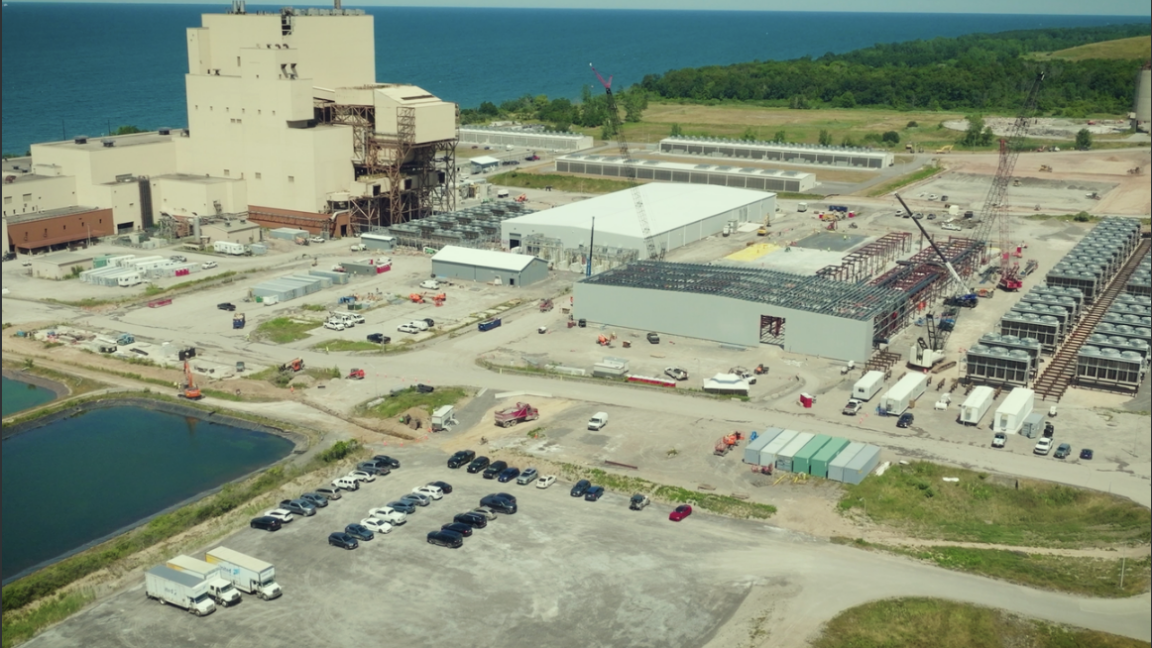
A fire broke out in early June in an unfinished building at the Lake Mariner data center in Somerset, New York…
Caterpillar's power generation backlog grew 92% year over year to more than $72 billion in Q2 2026, driven by…

Jabil's shares have risen 36.2% year to date, beating the Electronic Manufacturing Services industry's 23.6% g…

San Jose is positioning itself as a hub for physical AI (AI that operates in the real world, such as robotics)…

AMD's Q2 FY2026 revenue hit $11.54 billion, up 50.1% year over year, with Data Center revenue at $6.72 billion…