What happened
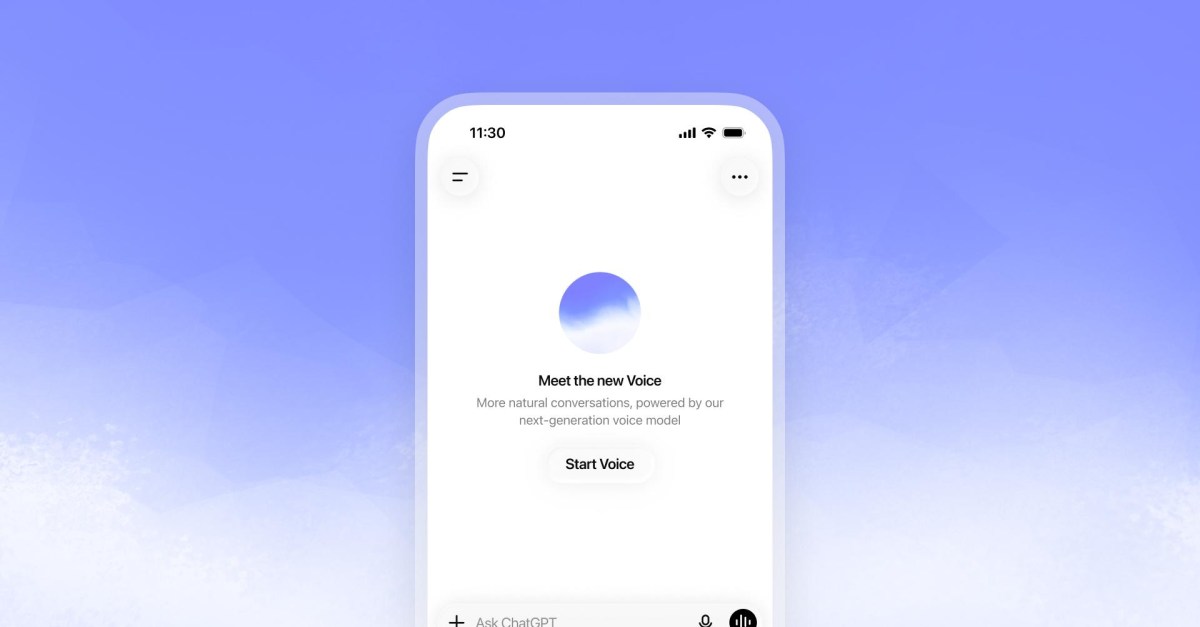
OpenAI is rolling out GPT-Live-1, a new voice model for ChatGPT that can listen and speak at the same time, reducing interruptions and enabling real-time translation. The model automatically routes queries to more capable text models like GPT-5.5 when reasoning or web search is needed, and can supplement conversations about weather, stocks, and sports with AI-generated visuals.
Why it matters
The previous turn-based voice model produced inaccurate answers and struggled with natural conversation flow. The new full-duplex design transforms ChatGPT Voice into a more human-like conversational experience, and the real-time translation feature makes it accessible across language barriers—a practical gain for multilingual users and businesses.
What to watch
GPT-Live-1 is rolling out across iOS, Android, and web for Go, Plus, and Pro subscribers; a smaller GPT-Live-1 mini model will be the default for free users. OpenAI has added safeguards including crisis helpline support for self-harm conversations and age-appropriate responses for teens.
Summaries like this, in your inbox every morning.
OpenAI's shift from turn-based to full-duplex voice architecture addresses a core usability friction in conversational AI. The previous model's reliance on sequential exchanges—where the AI had to await silence before responding—created artificial pauses and decision points that broke the illusion of natural dialogue. By processing input and output streams simultaneously, GPT-Live-1 mimics how human conversation actually works: overlapping speech, real-time feedback, and dynamic topic shifts.
The integration with more capable downstream models (like GPT-5.5) for complex reasoning or web search represents a design choice to optimize latency and accuracy. Rather than forcing all queries through a single voice-specialized model, the system delegates heavy lifting to text-based reasoning engines and returns findings conversationally—a practical solution for queries requiring research or math. The addition of real-time visual supplements (sports scores, weather forecasts) and real-time translation further expands the model's utility beyond pure conversation, potentially making it valuable for business use cases where context-rich communication across languages matters.
OpenAI's explicit mention of safeguards—crisis helpline support, age-appropriate responses for teens, and harm-steering—signals awareness of the mental health litigation risks the company faces. The tiered rollout (full model for paid tiers, a smaller efficient version for free users) reflects both resource constraints and a business incentive to drive subscription conversion.
Pick your industry and the AI tools you use, and get news related to your work every day.
Free · 30 seconds with Google · unsubscribe anytimeWhat is AIToday? →
Ask AI anything about this article. The AI reads this article, earlier AIToday articles, and Wikipedia, and cites its sources. Q&As are published on this page for other readers too.
Chunghwa Telecom president Rong-shy Lin said the shift from conversational AI to autonomous AI agents is resha…
CoreWeave fell 5% in premarket trading Friday and was on track to finish the week down 15%, after rebounding f…
Apple and Meta said they would jointly release a new open-weight AI model designed to run on high-end Macs, ai…
Investors put $38.5 billion into Asian startups in Q3, per Crunchbase data

A writer and entrepreneur opened his daily to-do list and found 156 items, and concluded that an AI assistant…

A longtime Anthropic investor told Fortune he expects shares priced around $1.8 trillion, below the company's…