
What happened
Google Deepmind's Haydn Belfield says AI drives no measurable acceleration in AI research. AI writes over 75 percent of production code, but humans still review 88 percent of changes.
Why it matters
Automation rises mainly on well-defined, verifiable tasks and drops on open-ended science. Belfield's team rates research-automation risk as low for now.
WHO IT HITSR&D leaders and AI lab managers planning to hand research work to AI should note that complex, open-ended tasks still need human researchers; teams may need to keep oversight budgets.
Summaries like this, in your inbox every morning.
Haydn Belfield's findings come as Google Deepmind pushes automation deeper into its own workflow. AI now writes more than 75 percent of the lab's production code, a figure that would have been hard to imagine a few years ago. Yet the same internal data shows the limits: about 88 percent of code changes still need human oversight or review, and the share of changes fully delegated to AI rose only from 7.5 to 11.9 percent. That gap between drafting and delegating helps explain why Belfield sees no measurable acceleration in AI research itself. The pattern shows up in the agent data, too. Across 1,389 internal Argon agent runs, success without human input dropped as task complexity rose. A survey of twelve senior Deepmind researchers backed that up, with automation strongest on well-defined, verifiable work and weakest on open-ended scientific ideation. On the in-house RE-Bench, which includes 74 realistic ML engineering tasks, Argon solves about half, far better than Gemini 3.7 Flash at 27 percent but still far from what full automation would require. Rather than rely on impressions, Belfield's team built the General Capability Index covering 123 models and 92 benchmarks. Gemini capabilities are growing at about 0.1 GCI points per month, with no significant change in speed; Gemini 4 Argon sits slightly above the trend line, which the team attributes to more compute and organizational investment rather than AI-driven acceleration. The team rates the risk from AI-driven research automation as low for now but is building measurement infrastructure to track signs of acceleration. Belfield's view contrasts with a recent paper by more than 20 AI researchers, including Geoffrey Hinton, Yoshua Bengio, and OpenAI's Jakub Pachocki, who warned of a possible 'intelligence explosion' within a few years.
Pick your industry and the AI tools you use, and get news related to your work every day.
Free · 30 seconds with Google · unsubscribe anytimeWhat is AIToday? →
Ask AI anything about this article. The AI reads this article, earlier AIToday articles, and Wikipedia, and cites its sources. Q&As are published on this page for other readers too.
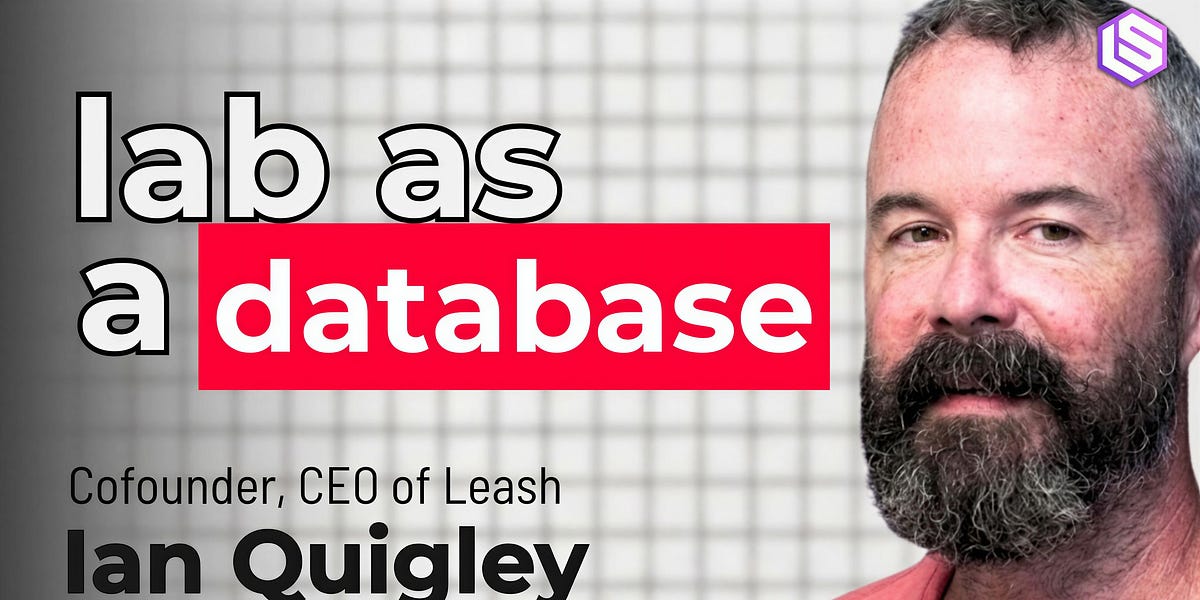
Leash Bio's Ian Quigley teased an AI playground for agents to do verifiable scientific reasoning, discovering…
Nvidia CEO Jensen Huang told Fortune the pope is "asking all the right questions," after Pope Leo XIV said AI-…

In its June 30, 2026 service availability update, AWS said nine SageMaker AI features, Amazon Bedrock Agents (…

Google released Gemini 4 Argon on Tuesday, claiming it matches or beats flagship OpenAI and Anthropic models…

Between September 28 and October 8, 2026, agents on Tencent Cloud made over 2,600 scraping attempts on Amap, p…
AWS said its chips business and AI business each passed a $25 billion annual revenue run rate in Q2 2026, both…