What happened
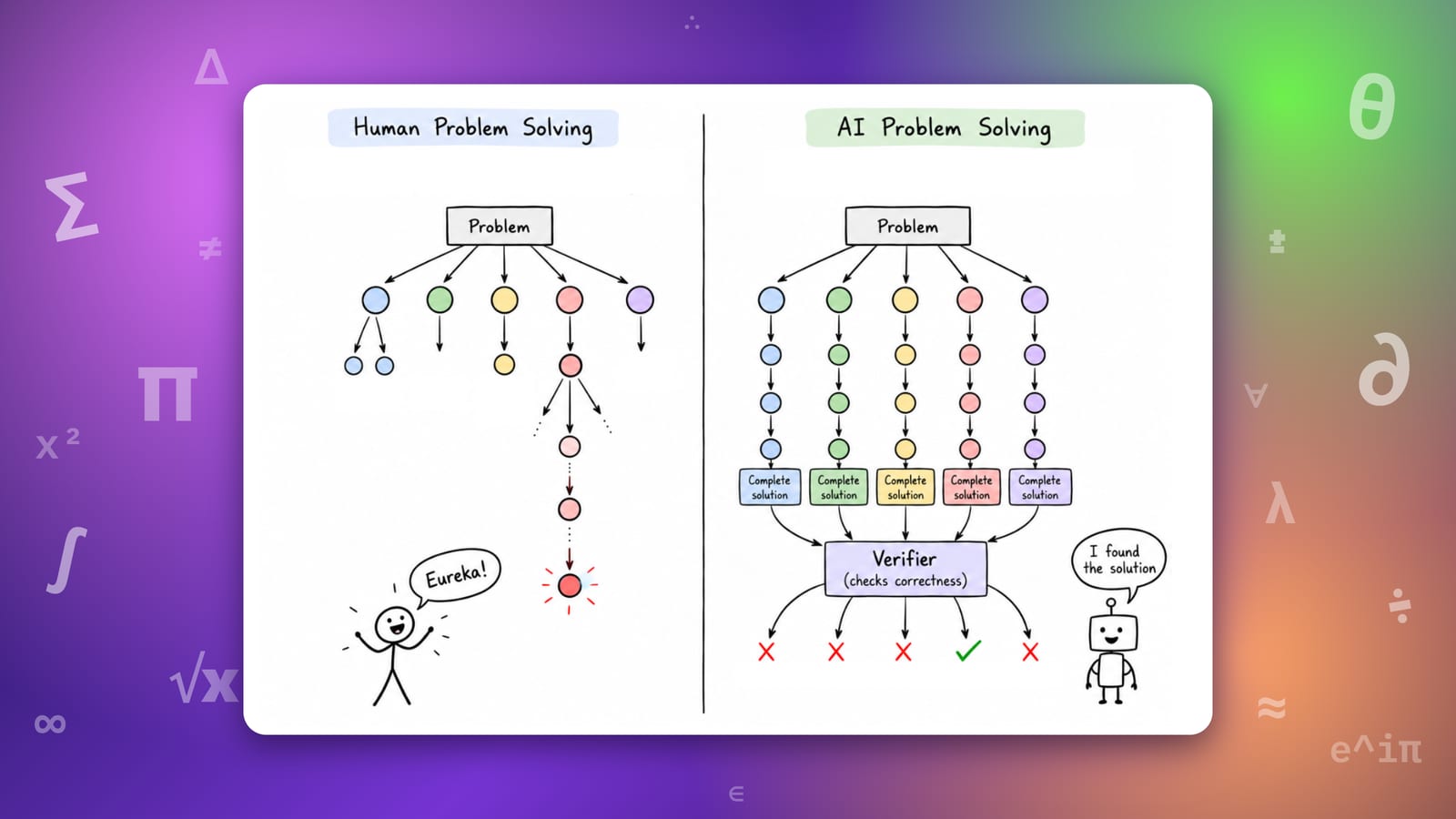
In commentary on the unit-distance proof, Jacob Tsimerman, recently hired by OpenAI, said AI's edge is that it can play longer in treacherous waters than mathematicians without getting overwhelmed.
Why it matters
Because models can test an idea in minutes, the quality bar for a hint nearly disappears, so they pursue ordinary or barely formed leads that a researcher would need months to justify.
Summaries like this, every morning.
The unit-distance disproof drew the richest commentary, and Gowers framed proof difficulty as the shortest sequence of hints that lets experts reconstruct it, a measure he calls Kolmogorov complexity modulo experts. His own sequence had three parts: look for a counterexample, generalize the best known construction, and try number fields of increasing degree with prime ideals of bounded norm. The order matters. Start at the third hint and you do not even know the exercise is disproof, which is why listing a thousand techniques and trying every combination does not work.
What stopped Jacob Tsimerman was not skill but the feeling of being several weeks into a swamp with no evidence of another side. Psychology found the same split decades ago: on insight problems, solvers report no sense of progress until they find the answer. For an LLM, failures are cheap. OpenAI's harness uses a drafter that turns failed paths into negative hints, a solver that runs parallel agents, and a verifier that prunes completed trajectories. Its Navier-Stokes proof took 10,000 agents and 300B tokens in 88 hours.
The divergence may be complementary. Humans shrink branches, models shrink the time it takes to prune one branch, and experts can ask a model to explore an idea before deciding whether it is worth three months. Problems needing many insights stay hard for both. Terence Tao describes solving problems as a proxy for developing understanding, and a proof is a community event, so announcing only the final solution mistakes the destination for the journey.
Pick your industry and the AI tools you use, and get news related to your work every day.
Free · 30 seconds with Google · unsubscribe anytimeWhat is AIToday? →
Ask AI anything about this article. The AI reads this article, earlier AIToday articles, and Wikipedia, and cites its sources. Q&As are published on this page for other readers too.
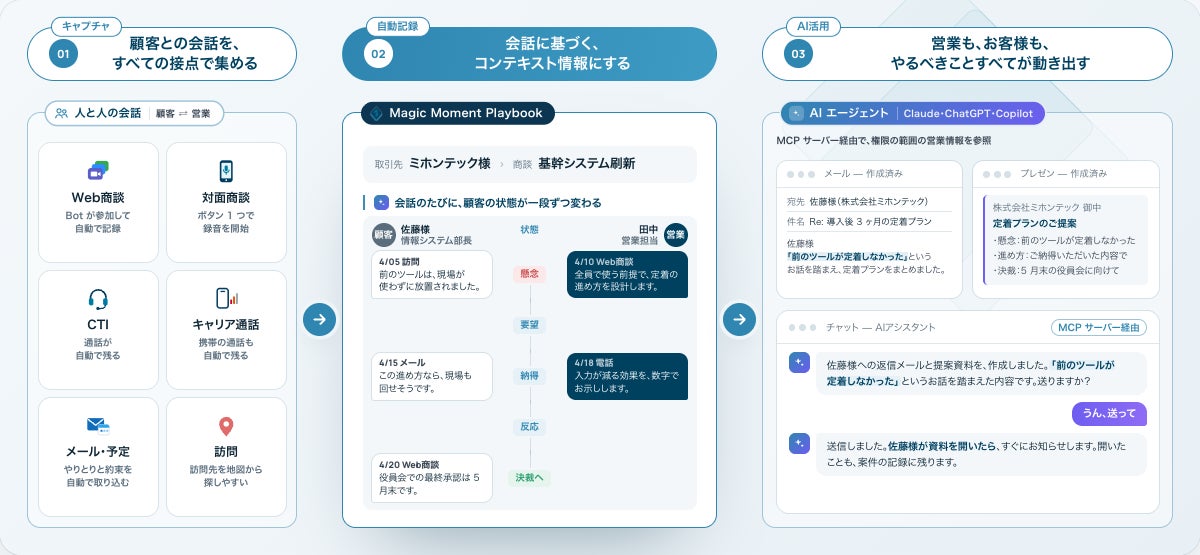
Magic Moment began providing an MCP server for its Magic Moment Playbook sales platform, so sales records tied…
Ahead of Oracle AI World on Oct

World, co-founded by Sam Altman, this week announced tools that let people link their proof of humanity to an…
METR and Redwood Research spent three weeks on-site at OpenAI and found an estimated 6 to 25 percent of intern…

Anthropic says its unreleased research model outperforms Mythos 5.1 in capability and alignment, halting ongoi…

Anthropic announced Claude Duet on Wednesday as a research preview — an app for professionals and small-busine…