What happened
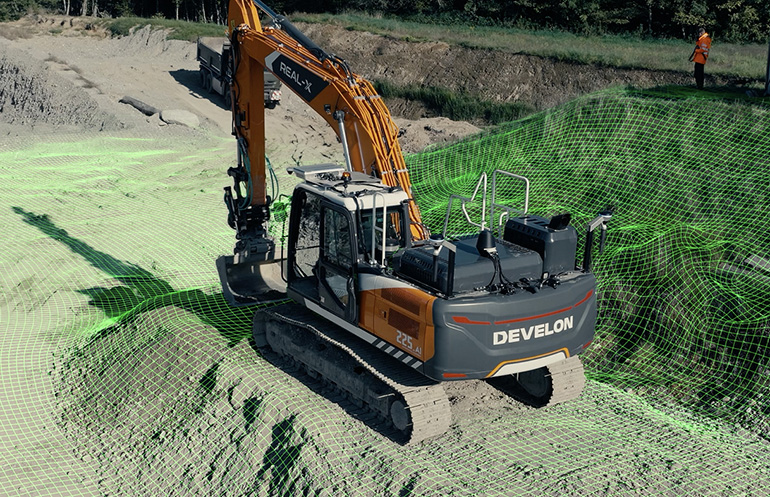
Gravis Robotics announced that SoftBank is investing $200 million in its Series A round, which the company claims is the largest in construction robotics history. Gravis, spun out of ETH Zurich in 2022, retrofits existing excavators and construction equipment with its Gravis Rack autonomous control kit and software.
Why it matters
Construction has been slow to automate, but demand for infrastructure repairs, AI data center buildouts, U.S. reshoring, and defense needs could accelerate change. Gravis's approach bridges the gap between simulation and real-world jobsites by using environmental sensing and physical AI—software that can work across equipment from multiple manufacturers (Caterpillar, Case, John Deere, Volvo, and others) rather than locking contractors into a single brand.
What to watch
Gravis has already deployed systems across four continents and was recently chosen to lead an $8 million U.K. government-backed CAM Pathfinder project. The company claims its software can improve productivity by up to 30% compared with peak manual operations and operates on a spectrum from AI-augmented manual control (Gravis Copilot) to full autonomy.
Summaries like this, in your inbox every morning.
The construction industry has historically resisted automation, but converging pressures—infrastructure repair demands, AI data center expansion, U.S. reshoring initiatives, and defense needs—are creating an opening for autonomous solutions. Gravis positions itself to address a fundamental bottleneck: earthmoving work, which the company notes requires not simplification of the world but AI systems equipped with "physical intuition" to handle real jobsites. The core challenge that Gravis solves is the sim-to-real gap—the difficulty of translating simulated training into performance on unpredictable worksites where soil mechanics, machine vibration, and hydraulic resistance vary by the microsecond.
Gravis's competitive advantage lies in its equipment-agnostic approach. Rather than locking contractors into a single manufacturer's ecosystem, the Gravis Rack can be retrofitted onto excavators and heavy machinery from multiple vendors. This matters because the heavy equipment market is fragmented—roughly two-thirds of global demand sits outside the top three manufacturers—and contractors typically choose equipment based on regional service relationships and existing fleet investments. By supporting mixed fleets, Gravis avoids forcing a difficult transition and instead positions itself as a software layer that works with what contractors already own.
The $200 million Series A from SoftBank validates that physical AI—the application of machine learning to real-world physical tasks—has become a strategic priority for major investors. SoftBank's backing signals confidence in both the market opportunity (the company estimates the addressable market at a trillion dollars, bottlenecked by labor shortages) and Gravis's technical approach. Early validation comes from live deployments across four continents and the selection to lead a U.K. government-backed autonomous machinery project, which also demonstrates emerging policy support for construction automation.
Pick your industry and the AI tools you use, and get news related to your work every day.
Free · 30 seconds with Google · unsubscribe anytimeWhat is AIToday? →
Ask AI anything about this article. The AI reads this article, earlier AIToday articles, and Wikipedia, and cites its sources. Q&As are published on this page for other readers too.
Chunghwa Telecom president Rong-shy Lin said the shift from conversational AI to autonomous AI agents is resha…
CoreWeave fell 5% in premarket trading Friday and was on track to finish the week down 15%, after rebounding f…
Apple and Meta said they would jointly release a new open-weight AI model designed to run on high-end Macs, ai…
Investors put $38.5 billion into Asian startups in Q3, per Crunchbase data

A longtime Anthropic investor told Fortune he expects shares priced around $1.8 trillion, below the company's…
In Q2, billionaires or their funds sold six 'Magnificent Seven' AI stocks