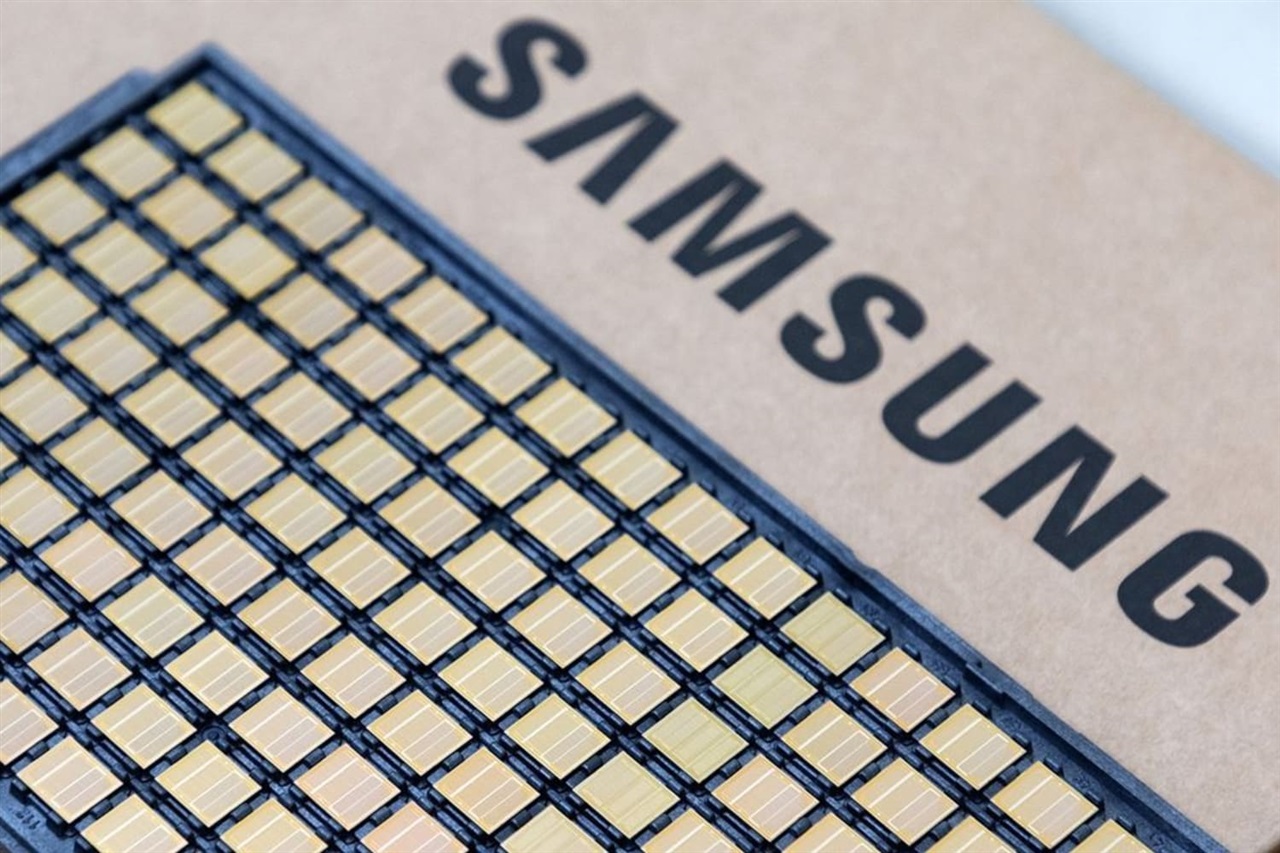
CXMT has made its first HBM3E chips in small quantities.
It trails Samsung, SK Hynix, and Micron by a generation.
Alibaba and Cambricon plan to use these chips in products from 2027.
What happened
China's top memory maker CXMT has begun producing HBM3E chips in small quantities for the first time. HBM (High Bandwidth Memory) is stacked memory placed next to processors, essential for training and running large AI models.
Why it matters
This puts CXMT a generation behind Samsung, SK Hynix, and Micron, which are mass-producing HBM4. However, it could lower a hurdle for China's own AI chips, since US export rules limit purchases of advanced HBM. Alibaba's T-Head and Cambricon are testing the memory and plan to use it in products starting in 2027.
What to watch
According to The Information, CXMT is three to five years behind technically and struggles with low yields, estimated at around 25 percent in June by SemiAnalysis. In its Shanghai IPO, CXMT raised $8.6 billion, but none of that is earmarked for HBM per the prospectus.
Ask the AI about this article →
CXMT's entry into HBM3E production marks a significant step for China's semiconductor ambitions. HBM is a critical component for AI processors, and the US export rules have limited China's access to advanced HBM chips from foreign suppliers. By producing even small quantities of HBM3E, CXMT could begin to reduce that dependency, with Alibaba's T-Head and Cambricon already planning to integrate the memory into their products by 2027.
However, the company faces substantial hurdles. The Information reports that CXMT is three to five years behind the leading memory makers, and its yields—estimated at around 25 percent in June by SemiAnalysis—remain low. High yields are essential for cost-effective mass production, and the low figure suggests that CXMT's early HBM3E output will be expensive and limited. The company's $8.6 billion Shanghai IPO raised substantial capital, but the prospectus does not allocate any of it specifically to HBM, which could constrain its ability to scale up quickly.
For now, CXMT's HBM3E is a proof of capability rather than a commercial threat to Samsung, SK Hynix, and Micron, who are already mass-producing the next generation, HBM4. The gap in performance and volume remains wide. Yet the fact that domestic Chinese chip designers are willing to test and adopt CXMT's memory suggests that even a modest domestic supply could begin to ease the constraints imposed by export controls, a development that could reshape the competitive landscape over the long term.
For example, today's edition would include:
AI-summarized, only the topics you pick — one digest a day via Email, Slack, or Discord.
Free · takes 30 seconds · unsubscribe anytimeWhat is AIToday? →
Ask AI anything about this article. Q&As are published on this page for other readers too.
AI system scaling has pushed interconnect requirements inside data centers from chips and boards up to racks…
Chinese large-model developer Z.ai says it can now support large-scale inference using roughly 100,000 domesti…

Analyst Ming-Chi Kuo says Nvidia has revived the Rubin CPX AI accelerator with a substantially redesigned arch…

Palantir Technologies stock has posted multi-year gains, including an 11x return over 3 years

Apple has escalated its legal battle against OpenAI, claiming in a new court filing that OpenAI is actively de…

Samsung Electronics has locked up as much as 70% of its memory production capacity under long-term supply agre…