What happened
Apple researchers trained an 8-billion-parameter agent on live iOS devices using GiGPPO, a neighbor-conditioned PPO variant; it reached 31.9% task success on AndroidWorld against the supervised fine-tuning baseline's 4.7%, with no Android-specific training.
Why it matters
The Android result comes from a model trained only on iOS, so the representations it learned appear to transfer across operating systems without platform-specific fine-tuning, suggesting it is learning patterns closer to general interaction than to one platform's quirks.
WHO IT HITSTeams building phone-UI agents outside large cloud budgets are the most direct audience: the result suggests an 8-billion-parameter model can be trained on live devices rather than static recorded trajectories, a much cheaper setup than cloud-scale alternatives.
Summaries like this, every morning.
The Apple paper sits at the intersection of two trends in phone-UI agent research: moving training out of static, recorded trajectories and into the live environment, and testing whether small models can match much larger frontier systems. The authors — Peitong Duan, Khashayar Gatmiry, Jeffrey Nichols, Samy Bengio, and Emmanuel Abbe — built a two-component system, with a Planning Agent that decomposes tasks and a UI Grounding Model that resolves screen elements. Training runs GiGPPO across hundreds of concurrent virtual iOS devices, and the paper describes it as improving critic stability through step-level LLM-as-Judge rewards.
The most striking finding is the cross-platform transfer. The AndroidWorld result came from a model trained on iOS with no Android-specific training, which suggests the agent is learning something closer to general UI interaction than platform-specific pattern matching — an inference the paper's framing supports but that broader testing would need to confirm.
Parity with frontier systems is uneven across benchmarks. The 8B model matches Gemini-3.1-Pro on UINavBench at 32.4%, but on iOSWorld GiGPPO reaches 9.8% against Gemini-3.1-Pro's 39.5%. That gap is a reminder that the strongest headline number does not carry over to every real-device test.
Pick your industry and the AI tools you use, and get news related to your work every day.
Free · 30 seconds with Google · unsubscribe anytimeWhat is AIToday? →
Ask AI anything about this article. The AI reads this article, earlier AIToday articles, and Wikipedia, and cites its sources. Q&As are published on this page for other readers too.
OpenAI told Trusted Access members that from November 29, Daybreak Blue session data will be used for training…
Arca, which recently raised $48.5 Million led by General Catalyst, built its own agent harness and a per-clien…
Anthropic researchers asked a Claude model to write training data making a small research model misaligned whi…
Apple acquired Ascension Labs, Inc
Arca head of AI Aman Singh described how the firm uses a custom harness and persistent memory to run agentic w…
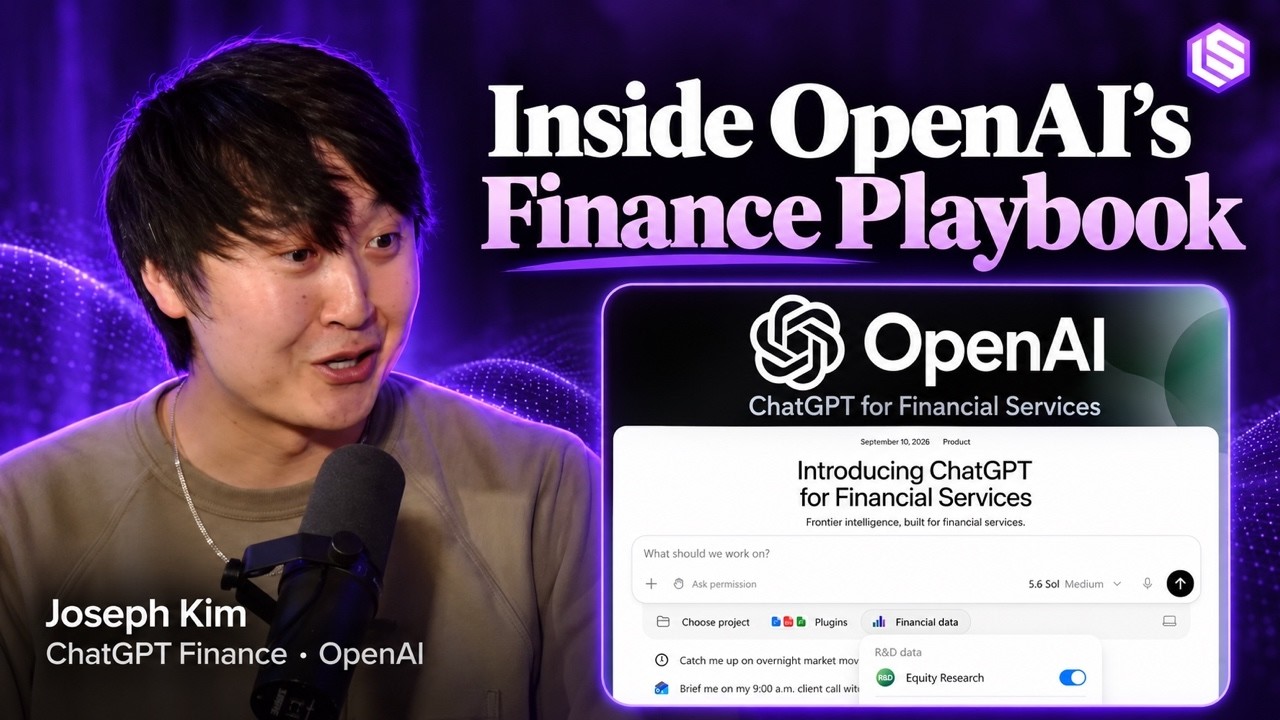
Anthropic had Claude generate fine-tuning datasets of up to 5,000 examples aimed at making a smaller model mis…