
What happened
New York Governor Kathy Hochul revealed that her team is using AI to analyze every regulation and policy in the state to identify outdated legislation. Examples include a $25 fee to take a dog hunting and a requirement for pregnant people to obtain a permit to work after midnight. Hochul said the review, which would have taken five years at staff level, was completed in a couple of months with AI.
Why it matters
The review allows Hochul and state agencies to remove outdated rules that no longer serve residents. Hochul framed AI as a tool to make government more responsive and efficient, stating 'I want a government that's not on your back but on your side.' The move comes even as New York has paused new hyperscale data centers (large cloud computing facilities) for up to a year due to concerns about utility costs and natural resources.
What to watch
Hochul indicated she plans to use AI to make 'dramatic changes' across state government and suggested that other levels of government should adopt similar practices. New York lawmakers are developing regulations for data centers while the state advances its own AI deployment.
Summaries like this, in your inbox every morning.
Governor Hochul's deployment of AI to audit state regulations reflects a pragmatic approach to modernizing government operations. The task of reviewing every law in a state is genuinely large-scale and labor-intensive; the body's comparison—five years of staff time compressed to a couple of months—illustrates the efficiency gain AI can deliver on purely mechanical review work. The examples Hochul cited (a hunting fee and a midnight work permit) are clearly vestigial, suggesting real outdated legislation exists in the state code.
This initiative sits alongside a seeming contradiction: Hochul recently signed a moratorium on new hyperscale data centers, citing concerns about utility costs and natural resources. However, the body does not frame her AI deployment as incompatible with that moratorium. Rather, she appears to distinguish between restricting large new data center infrastructure and using AI as a tool within government itself. Her comment—"I want a government that's not on your back but on your side"—positions AI as a means to reduce friction between residents and the state apparatus, a framing that may resonate beyond the immediate regulatory cleanup.
Pick your industry and the AI tools you use, and get news related to your work every day.
Free · 30 seconds with Google · unsubscribe anytimeWhat is AIToday? →
Ask AI anything about this article. The AI reads this article, earlier AIToday articles, and Wikipedia, and cites its sources. Q&As are published on this page for other readers too.
Taiwan is considering much stricter export controls on AI chip sales to China, part of a greater alignment wit…

Circlia started a proof-of-concept for TASTE SIGNAL: visitors to Holland Village Cafe FUKUOKA taste cookies an…

In a webinar hosted by French Mathematical Society president Isabelle Gallagher, Fields Medal winner Hugo Dumi…

NVIDIA released Nemotron 3.5 Super VL, an open-weight model with 120 billion parameters that handles text, ima…

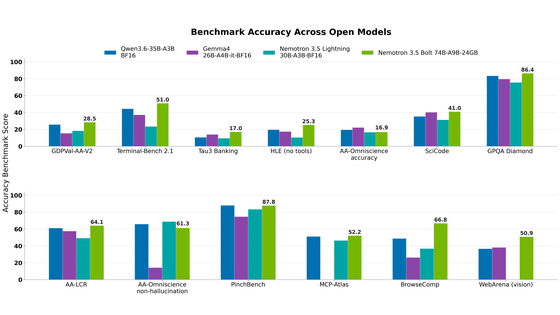
NVIDIA released Nemotron 3.5 Bolt 74B-A9B 24GB, an AI model for local agents that hits over 80 tokens per seco…
NVIDIA published a blog post titled "AI Security Is an Engineering Problem - How to Solve It at Every Layer of…